On this page
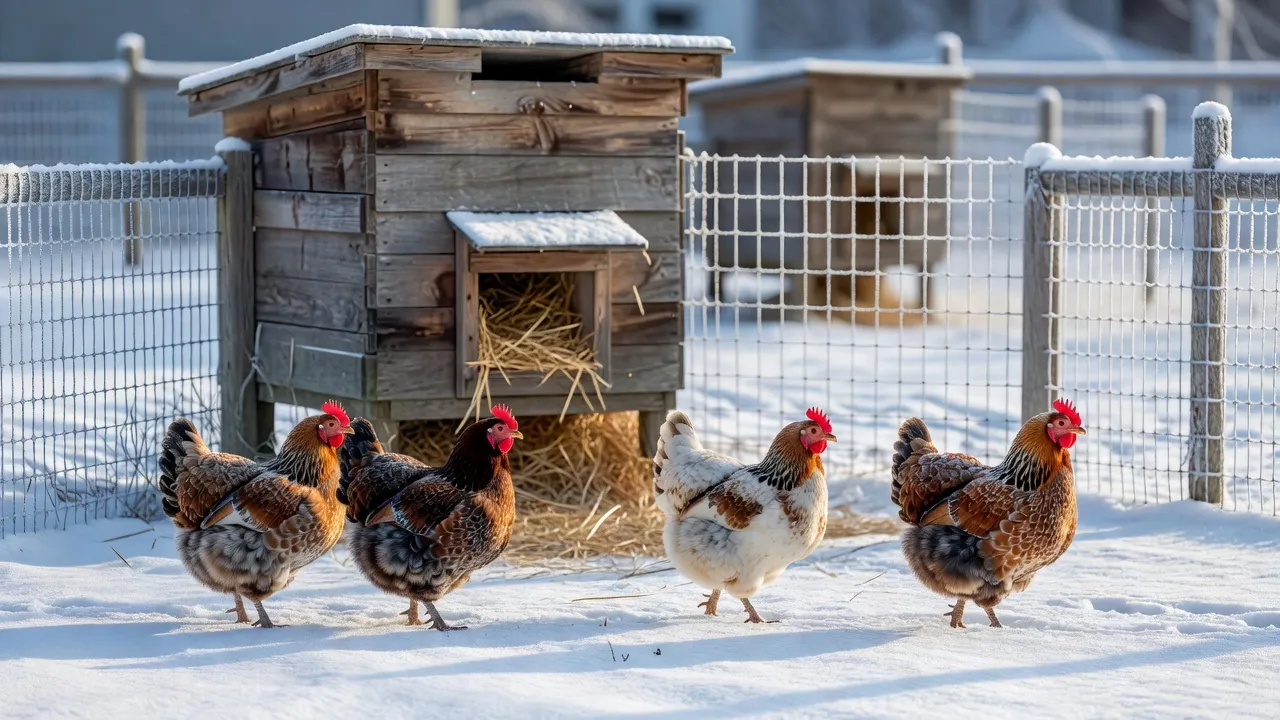
Chicken molting in winter is normal. Shorter days set it off, most hens stop laying while new feathers grow in for about eight weeks or longer, and a half-bare hen needs more protein, a dry, draft-free coop and as little handling as you can manage.
Short answer
Normal, and it passesmost molts run about eight weeks, from Texas A&M's vet school
Feed a higher-protein diet, keep oyster shell in its own dish, keep the coop dry and out of the wind, and leave the hen alone while her pin feathers grow. Call a vet if she stops eating or drinking, or acts sick.
The short version
- Day length triggers the molt more than cold does. Days shorten from June 22 to December 22 (Oregon State Extension).
- Most molts take about eight weeks, with a range of one to three months (Texas A&M).
- Hens usually have their first full molt at about 18 months of age (Texas A&M).
- Feathers drop in order: head, neck, breast and body, wings, then tail (Mississippi State Extension).
- A 20 percent protein diet is usually adequate while hens regrow feathers (Texas A&M).
- Molting hens may need extra heat or protection until the feathers are back (University of Maryland Extension).
- A bare patch in one spot is picking, not molt (Oregon State).
Why do chickens molt in winter?
Hens molt when the days get shorter. Decreased day length stimulates the molt more than changes in temperature, and how far you live from the equator shifts the timing (Texas A&M College of Veterinary Medicine). The molt usually starts in fall and can run well into winter, which is why so many keepers find feathers all over the coop in November and December.
The molt is a rest, not a breakdown. It replaces old, worn feathers and rejuvenates the oviduct, the organ that makes eggs, and the hen puts most of her energy into feathers instead of eggs (Oregon State Extension). Your best layers often molt last. Late molters lay for 12 to 14 months before they molt and look ragged by fall, while early molters are usually the poorer layers (Mississippi State Extension).
Stress can start a molt at any time of year. In domestic birds a molt can follow almost any stress, and rapid feather loss across the whole flock usually means a serious one, such as no water, no feed or a lighting problem (Oregon State). In winter, that points straight at a frozen waterer or a coop light timer that failed. The keep chicken water from freezing guide and the chicken coop light guide cover both.
How long does a chicken molt last?
Expect about two months for most hens, and longer for a slow one. The sources measure it a little differently.
| Source | How long the molt takes | Notes |
|---|---|---|
| Texas A&M College of Veterinary Medicine | About eight weeks, range one to three months | From feather loss to replacement; varies by bird and environment |
| Mississippi State Extension | Late molters two to three months; early molters four to six months | Late molters drop feathers in groups and return to laying sooner |
| Merck Veterinary Manual | Three to four months, sometimes longer | Flocks on natural light, counted as the molt period |
| Utah State University Extension | No number given | A hen that keeps laying through the molt takes longer to finish |
Sources checked November 3, 2026. The Texas A&M article is dated February 2021, Oregon State’s PNW 565 was reviewed in 2023, and the Utah State fact sheet is from 2009.
The spread comes from the birds. A late molter loses feathers in groups and regrows them all at once, so she is back in production sooner. An early molter drops a few at a time and can drag it out for months (Mississippi State). Older hens molt more often and for longer, since molts become more frequent and prolonged after two to three years of age (Oregon State).
What order do chickens lose feathers in?
The order is fairly fixed. Feathers go from the head first, then the neck, breast, body, wings and tail (Mississippi State Extension). On the wing, the 10 primary flight feathers drop from the innermost to the outermost (Utah State).
That order matters in a cold snap. The neck and body lose cover before the wings and tail, so a mid-molt hen faces the coldest nights with less insulation where she needs it most. Replacement feathers begin to grow shortly after the old ones are shed (Mississippi State).
What should you feed molting chickens in winter?
Feed protein. A 20 percent protein diet is usually adequate during a molt, and it differs from a laying diet, where the focus is calcium for shells (Texas A&M). Check with your vet if you are unsure what your flock needs.
Read the bag before you switch. Look for a feed whose label lists about 20 percent protein, and check it for medication. Do not switch layers to a medicated starter, because medications in starter diets may leave residues in eggs and the different nutrient levels cut egg production (Oregon State). Keep oyster shell free choice in a separate feeder (Oregon State) so any hen still laying gets her calcium. The oyster shell guide covers the setup.
Keep treats small. Scratch, table scraps and garden waste unbalance the diet, so give only what hens clean up in about 15 minutes, or none (Oregon State). Cold weather raises the bill on top of the molt, since feed intake can rise up to 25 percent in cold weather (University of Minnesota Extension). The winter feeding guide covers scratch, grit and treats in the cold.
How do you keep molting chickens warm?
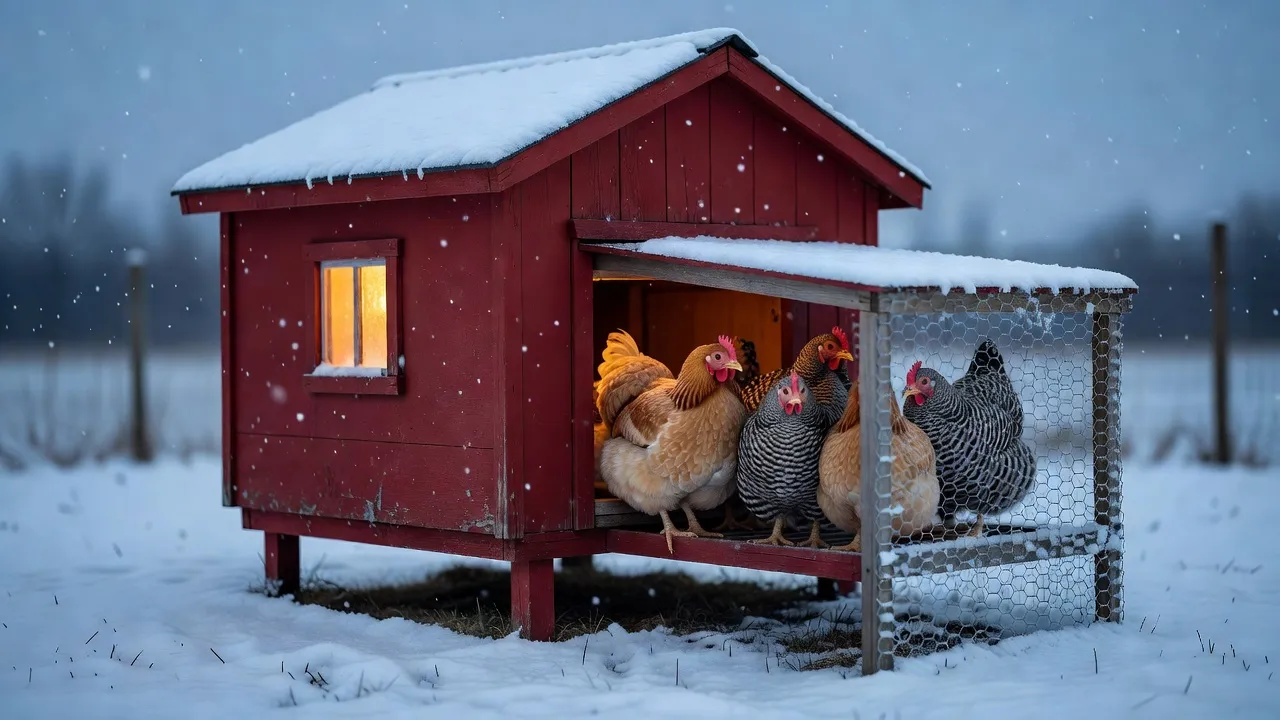
Protect the bare birds first. Hens that are molting may need some extra heat or protection until their feathers grow back in (University of Maryland Extension). Protection comes before heat:
- Fix leaks and holes that let wind or wet into the coop. Damp air feels much colder than dry air (UMD).
- Give a wooden roost with a flat top, like a 2x4, so birds can cover their feet with their feathers. Skip metal and plastic pipe, which conduct cold (UMD). The roost bar guide covers height and spacing.
- Bed deep. Three to four inches of pine shavings or straw insulate the floor, and deep litter makes some heat as it breaks down (UMD).
- Keep the high vents open so moisture leaves. The ventilation guide shows how much vent area you need.
Heat is the last step. Supplemental heat goes in once the coop itself drops below 35°F, at nest box or lower roost height (University of Minnesota Extension). If a mid-molt hen faces that, read heating a chicken coop first, then compare the safest coop heaters. The how cold is too cold guide has the cold tolerance figures.
Should you handle a molting hen?
As little as you can. Replacement pin feathers are very fragile and easily damaged, so limit handling, handle with care and keep other stress down (Texas A&M). Watch the flock for pecking, because bare skin and new quills draw attention from flock mates (Texas A&M).
Should you light the coop to stop a winter molt?
You can delay laying losses, but you cannot skip the molt. Even with a lighting program hens eventually molt, and a molt during long days is often incomplete, so the hen may never return to full production (Oregon State Extension). Let hens molt in their second winter by turning the lights off for about six weeks, then return to long days (Oregon State).
Extra light buys winter eggs, not more eggs overall. Artificial light increases the eggs laid during winter but not the total, and continuous light makes birds more stressed and irritable (Merck Veterinary Manual). Every hen should molt at least once a year (Merck). The coop light guide covers hours and timers if you light the coop.
When is it not a molt?
A molt is flock-wide and orderly. It does not cause bare spots in one place, and bare spots are almost always the result of picking (Oregon State). Check the hen for wounds and check the flock for a bully.
Behavior tells you more than feathers. Feather loss and a pause in laying are expected, but changes in eating, drinking or behavior can point to a larger health problem (Texas A&M). A drop in laying is often the first sign of disease, with lethargy, lameness, coughing or a dull look to follow (Oregon State).
When to call a vet
Call a veterinarian if a molting hen stops eating or drinking, sits hunched and still, coughs, or has wounds from pecking. Molting is normal, but a sick bird can look like a molting one at first.
The winter chicken care guide covers the rest of the cold season, from coop prep to water.
Questions people ask
Is it normal for chickens to molt in winter?
Yes. Molting usually starts in fall and can run into winter, because shorter days trigger it more than temperature does (Texas A&M College of Veterinary Medicine). Domestic hens can also molt at any time after a stress (Oregon State Extension).
How long does a chicken molt last?
Most molts take about eight weeks from feather loss to regrowth, with a range of one to three months (Texas A&M). Early molters can take four to six months, while late molters finish in two to three (Mississippi State Extension).
What should I feed a molting chicken?
A higher-protein diet. A 20 percent protein diet is usually adequate during a molt (Texas A&M). Keep oyster shell in its own dish for any hen still laying, and keep scratch and treats to what the flock cleans up in about 15 minutes (Oregon State Extension).
Do molting chickens need heat in winter?
Sometimes. Molting hens may need extra heat or protection until their feathers grow back (University of Maryland Extension). Start with a dry, draft-free coop and deep bedding, then read the heating guide before you add a heater.
Why are my chickens losing feathers but not molting?
Bare spots in one place are almost always picking, not molt, because a molt does not cause localized feather loss (Oregon State Extension). A whole flock dropping feathers fast points to a serious stress such as no water, no feed or a lighting problem.
Do chickens lay eggs while molting?
Most stop until the molt ends (Mississippi State Extension). Laying and molting both take a lot of energy, so a hen that keeps laying takes longer to finish her molt (Utah State University Extension).
Sources
- Oregon State University Extension: Why did my chickens stop laying? (PNW 565, reviewed 2023)
- Texas A&M College of Veterinary Medicine: Hen molting, what to egg-spect (2021)
- Mississippi State University Extension: Molting of laying hens
- Utah State University Extension: Molting and Determining Production of Laying Hens (2009)
- Merck Veterinary Manual: Laying and Reproduction in Backyard Poultry
- University of Maryland Extension: Winter Weather and Small Flocks (FS-1133, updated 2023)
- University of Minnesota Extension: Caring for chickens in cold weather

Written by Kyle
Kyle has kept backyard chickens on his own small farm for five years. He reads the extension research, the spec sheets and the owner complaints, then tells you what he would buy and what he would skip.