
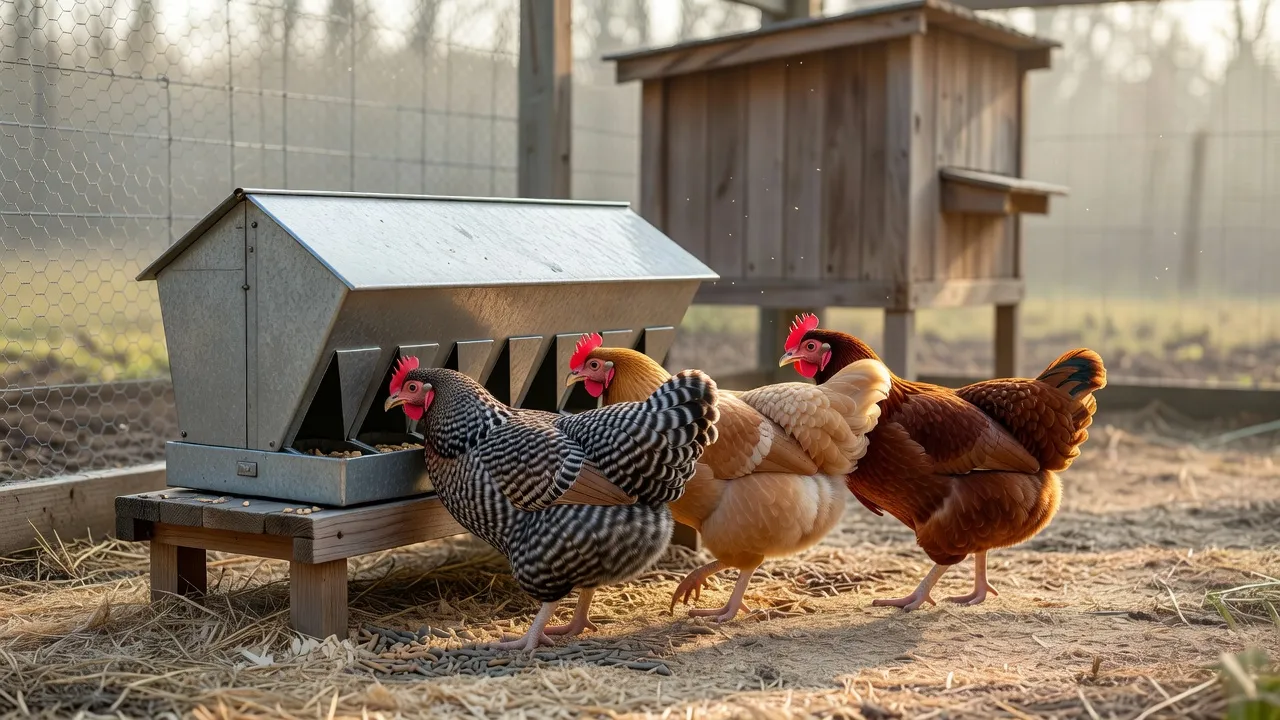
Chicken Feeders
Feeders that cut waste, keep feed dry and keep rats out.
A good chicken feeder holds a week of feed, keeps it dry and hands it out only to hens. Everything else is a trade between price, waste and rats. Here is what to know before you buy, with a link to each guide in this hub.
Size it to the flock. A laying hen eats about a quarter pound of feed a day (University of Kentucky), so multiply hens by days by 0.25 lb. Ten hens for a week need about 17.5 lb. Allow 2 to 3 linear inches of feeding space per adult bird (Utah State Extension) and set the bottom of the feeder at about back height (Alabama Extension).
Cut the waste. Pellets spill less than crumbles, and covered ports or a lid stop hens raking feed onto the floor. The best chicken feeders guide compares six covered feeders sized from 8 lb to 65 lb, with a sizing table and the owner complaints linked.
Keep out the rats. Rats eat whatever food is abundant, and Norway rats favor cereal grains (UC IPM), so an open feeder at night feeds them. The rat-proof chicken feeder guide sets each maker’s trigger weight against rat weight and covers the coop fixes that finish the job.
Try a treadle if rats or wild birds win. A treadle feeder opens its lid only under a hen’s weight. The treadle chicken feeder guide covers the pros and cons, how long training takes and what to do with bantams.
Feed is half of the setup. Chickens drink about twice as much water as they eat by weight (University of Kentucky), so pick a feeder and a waterer together: the best chicken waterers are the next stop. If rats are already around, the predator-proof coop guide covers the building side.
Not sure where to start? Spilled feed means a hooded port feeder. Rats mean a closed feeder, feed pulled at dusk and a sealed coop. Wild birds and rain mean a treadle or a covered trough.
Kyle's top picks
Kyle's top pick The Best Chicken Feeders for Backyard Flocks
The best chicken feeder for most flocks is a covered feeder that holds a week of feed. Kyle compares six picks with sourced intake numbers and owner complaints.
See the picks →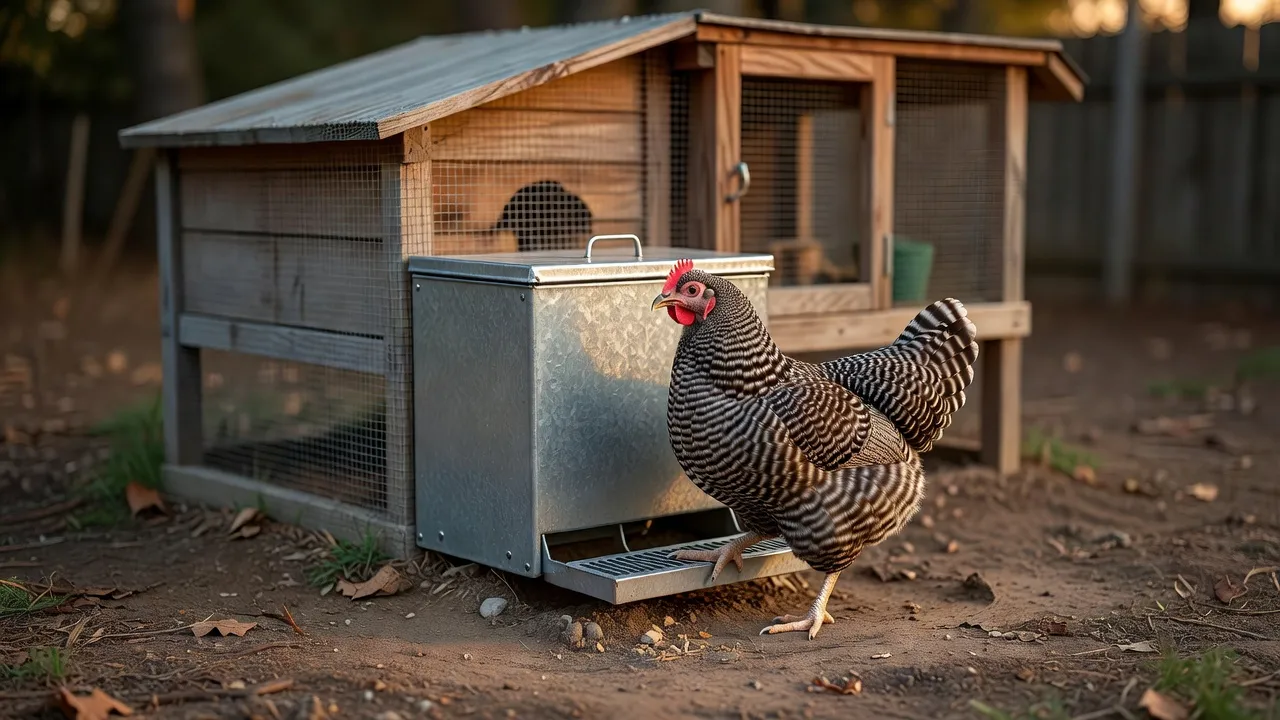
The Best Rat-Proof Chicken Feeders
No chicken feeder is rat proof on its own. Kyle compares four rodent-resistant feeders by trigger weight against rat weight, then covers the coop fixes.
See the picks →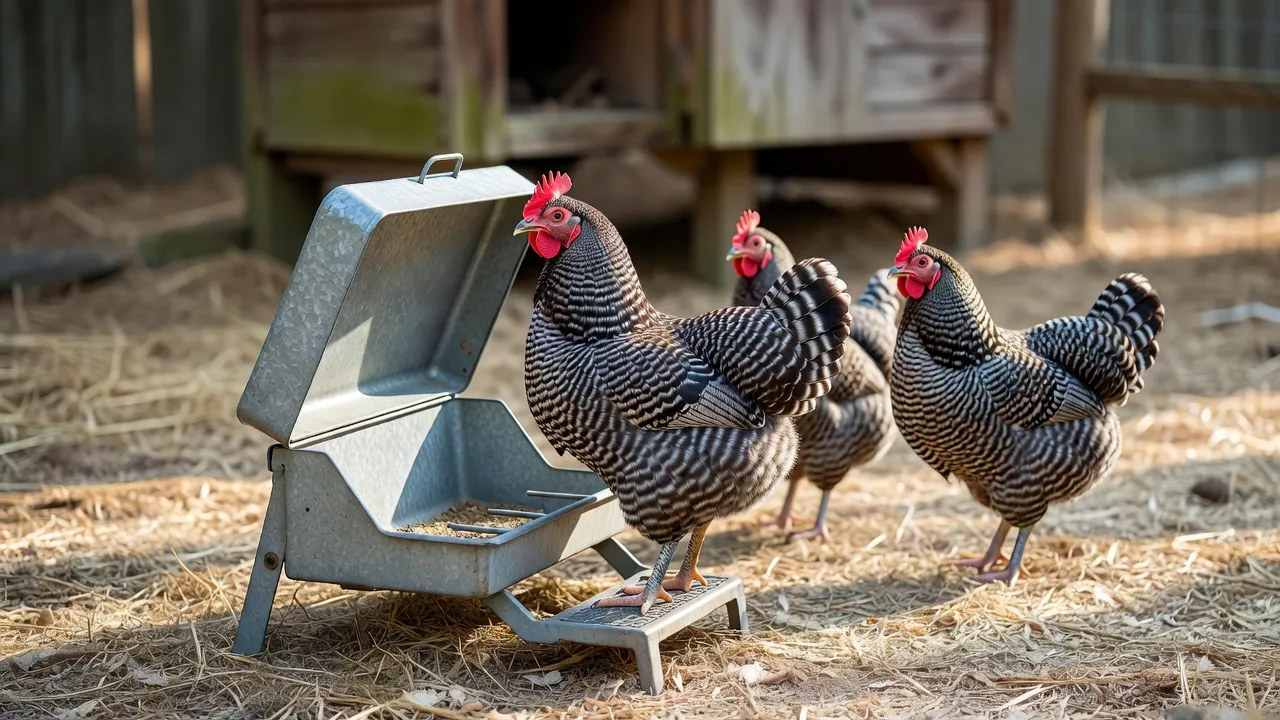
Treadle Chicken Feeders: Do They Work and Which to Buy
A treadle chicken feeder pays off for adult hens with rats or wild birds at the feeder. Kyle covers pros, cons, training time, bantams and the best picks.
See the picks →Questions people ask
How much does a chicken eat per day?
A laying hen eats about a quarter pound of feed a day, according to University of Kentucky Extension. Alabama Extension gives 100 to 150 grams. Ten hens finish a 50 lb bag in about 20 days.
How much feeder space does each chicken need?
Utah State Extension allows 2 to 3 linear inches per adult chicken and 1 inch per chick. Twelve hens need 24 to 36 inches of feeding width, which you count from the ports or trough edge.
How high should a chicken feeder be?
Set the bottom of the feeder at about back height, which Alabama Extension links to less wasted feed. Utah State puts the feeder level with the mid to upper breast of the birds. Place it so hens cannot roost on it.
Should I feed pellets or crumbles?
Pellets waste less. Alabama Extension says adult chickens waste more feed when they eat crumbles, and the University of Kentucky says pelleting means less spillage. Switch to pellets before you pay for a pricier feeder.
Keep exploring
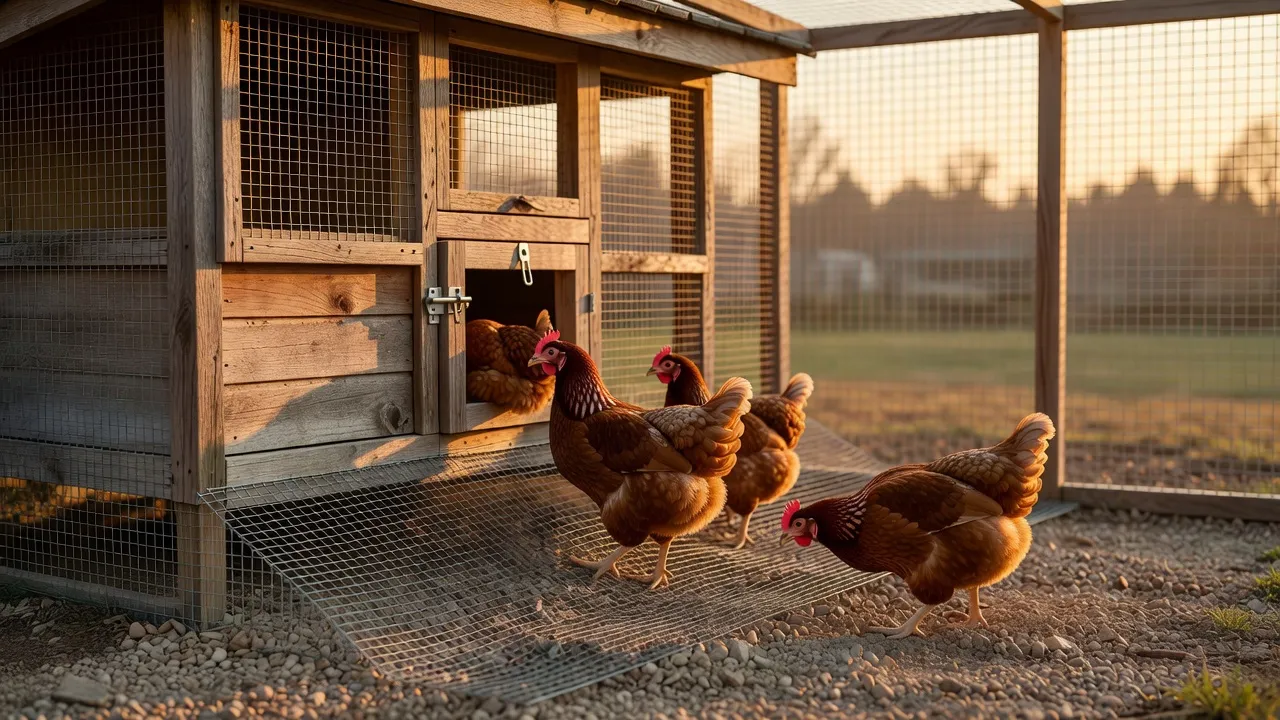
Predator Proof Your Chicken Run and Coop
Make a chicken run and coop predator proof with hardware cloth, buried wire, a roof and two-step latches. Kyle's guides cite extension services for every figure.
Open the hub →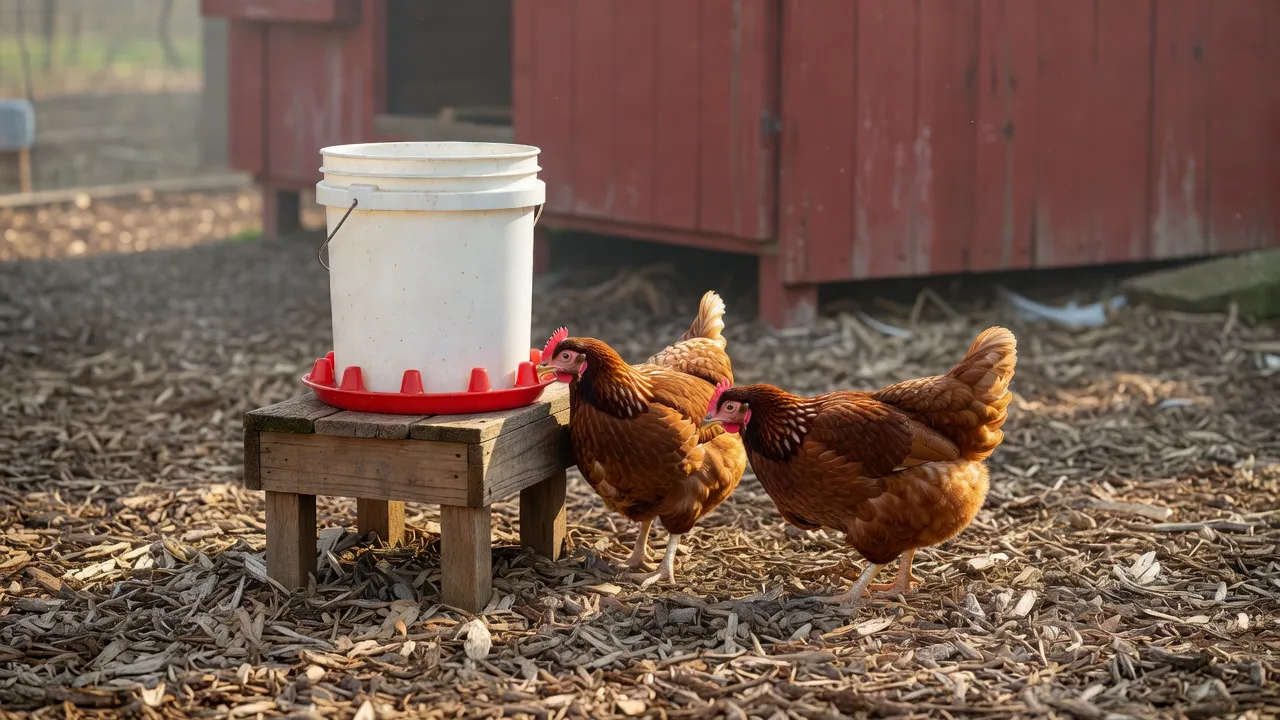
Chicken Waterers
A chicken waterer has to hold water, resist tipping and survive winter. Kyle compares heated, nipple and automatic waterers and links the owner complaints.
Open the hub →