On this page
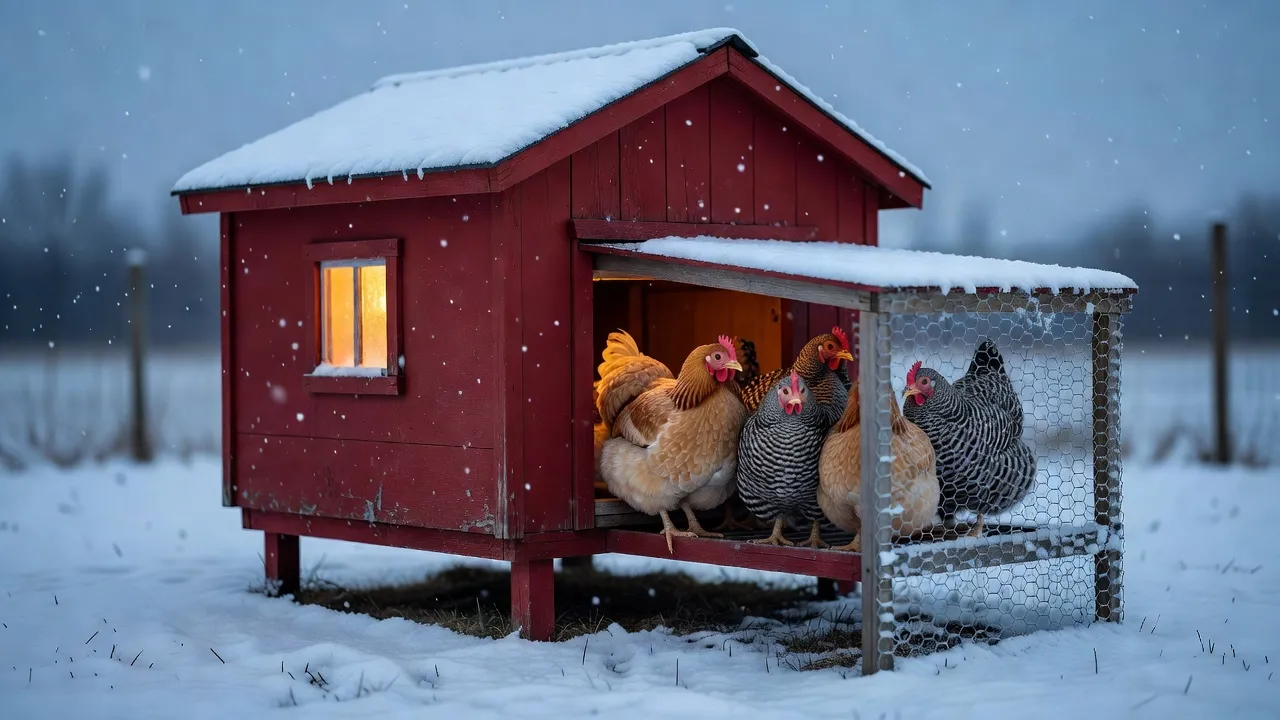
Heating a chicken coop is optional for hardy hens in a dry, draft-free coop, and worth doing for light breeds in hard cold. Two extension services give opposite headlines, and both are right for the flock they describe. This page sorts them by breed, climate and moisture, then covers what to fix before you plug anything in.
Short answer
Fix the coop, then decidedry bedding, no drafts and open vents come before any heater
University of Maine Extension says acclimated chickens in a draft-free coop on dry bedding do not need heat. University of Minnesota Extension says to add supplemental heat when the coop falls below 35°F. If your birds are hardy breeds and the coop stays dry, start with no heat. If they are small, thin or showing cold stress, add a radiant panel at roost height.
Short answer by situation
Your breed, your coop’s moisture and your cold snaps decide the call. The table gives Kyle’s reading of the two extension sources for the situations keepers ask about most.
| Your situation | Kyle’s call | Why |
|---|---|---|
| Plymouth Rock, Wyandotte, Ameraucana or Orpington hens, acclimated, dry and draft-free coop | No heat. Watch the flock. | UMaine says acclimated birds do fine, and UMN says these breeds over-winter well |
| The coop is damp, smells of ammonia or has drafts at roost level | Fix moisture and drafts first | UMN says ammonia or condensation means more ventilation, not more heat |
| Small, lightly feathered or large-combed breeds, or old, thin or sick birds | Add a low-watt radiant panel on a thermostat | UMN says these birds need extra care and may not adapt to cold |
| Birds huddle, hold up a foot or puff their feathers | Check moisture and drafts, then add heat | UMN lists these as signs of cold stress |
| A sudden cold snap hits birds raised in mild weather | Treat them as not yet acclimated and heat temporarily | Kyle’s reading of UMaine’s “acclimated” condition, not an extension rule |
| The coop stays above 35°F | No heat | UMN’s threshold for supplemental heat is 35°F |
What the extension services say
University of Minnesota Extension says to provide supplemental heat when coop temperatures fall below 35°F, placed at the height of the nest boxes or the lower roost rung. It says radiant heaters, a group that includes brooder plates, panels and hanging heaters, warm the birds and not the surrounding air.
University of Maine Extension’s Donna Coffin takes the other side: chickens do not need a heat source in winter as long as they are acclimated, in a draft-free shelter and on dry bedding, and the only effect of cold she names is fewer eggs from laying hens. A Maine farmer quoted in the same story says birds that acclimate grow extra down, and that moisture, more than cold alone, causes frostbite.
The two sources agree more than the headlines suggest. A chicken’s average body temperature is 106°F, UMN says, and most poultry keep heat production and heat loss in balance when the surrounding air runs 60 to 75°F. Below that range, a bird that loses more heat than it can produce cools down, and that is cold stress. Both sources treat a dry, draft-free coop as the base. The gap is the starting line for heat: UMN picks a number, UMaine picks a condition. You can use both. Keep the coop dry, let the flock acclimate in autumn, and use 35°F as the point to check the birds most at risk.
Birds that need help
Heavy breeds cope with cold best, and small, thin or old birds cope worst. UMN names Plymouth Rock, Wyandotte, Ameraucana and Orpington as breeds that over-winter well. It says smaller breeds, breeds with less feathering and breeds with large combs and wattles may need extra care to keep warm and hold weight. Old age, low body weight and poor health can stop a bird adapting, UMN adds, and prolonged cold stress can reduce performance and lead to death.
Mixed flocks add a second problem. UMN says heavier or more dominant birds can peck at others and keep them off feed, water and the roost, so lighter birds lose weight and warmth. If you keep mixed breeds, watch the pecking order before the first hard freeze and separate by size if the small ones get pushed out.
Keepers in hard climates report that the no-heat advice has limits. In the r/BackYardChickens thread on heat, one owner says a silkie died when the temperature fell to 15°F and a reply says silkies are not winter hardy; another commenter says colder continental climates can create a real need for heat. A commenter on a video arguing against heat says they need a heat lamp or heat board at certain times of an Alaska winter that runs six months, and that the birds wear out. These are owner reports, not controlled results, and neither one is a reason to keep a heat lamp: the panel does the same job with less fire risk.
Not vet advice
If a bird is limp, will not eat, or has a comb or toes that look damaged by cold, call a vet. Cold stress and illness look alike, and a heater does not treat either one.Do this before you add heat
Most winter trouble comes from moisture, drafts and thin bedding, and none of those are fixed by a heater. Work through this list first.
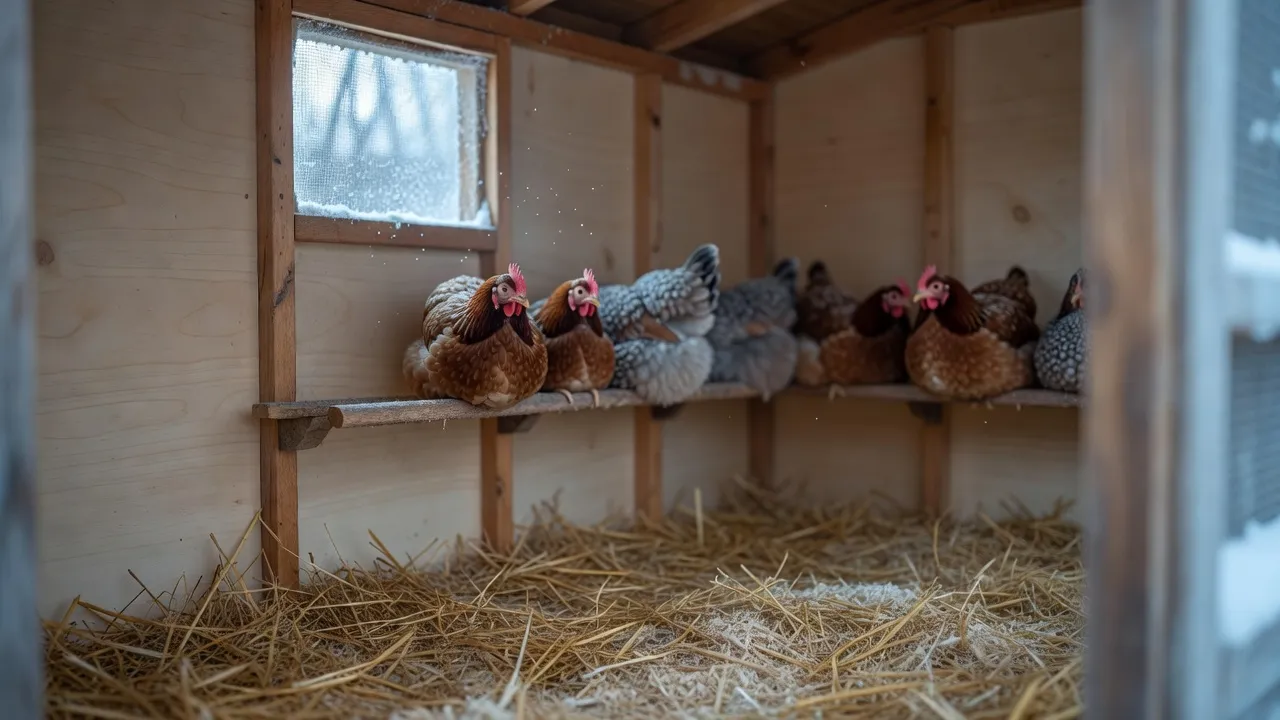
- Ventilate for moisture. UMN says air exchange prevents moisture build-up and ammonia, and that high moisture plus cold makes condensation, which causes frostbite. Ammonia smell or damp on windows means you need more ventilation and a cleaner floor. Open vents high on the coop, away from where birds sleep, and see how much ventilation a coop needs.
- Seal the drafts. UMN says to inspect for holes and cracks and seal them, which also keeps rodents out. Insulation, if you add it, must be closed off so hens cannot peck it. The insulation guide covers materials.
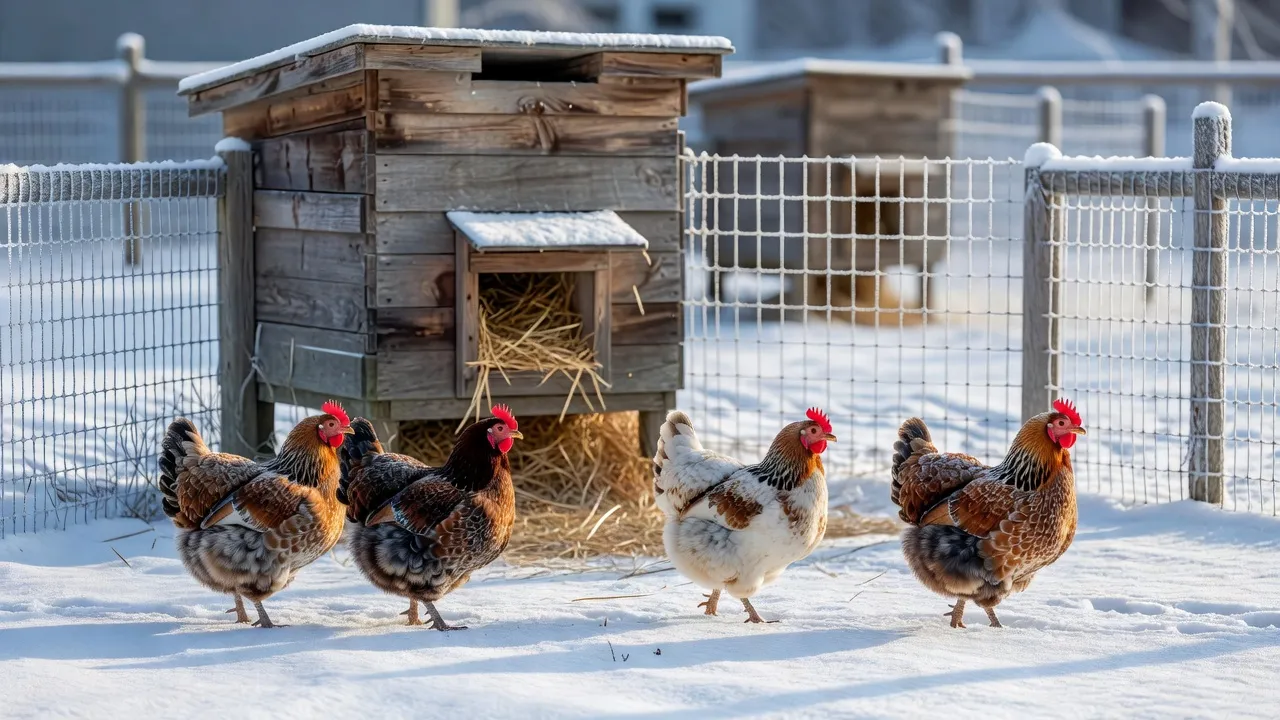
- Bed deep and dry. Manure is 70% water, so UMN says to pick it up often or bed 4 to 6 inches deep in straw or shavings, stir the top layer as it soils and add fresh on top. Deep bedding gives some natural heat as manure breaks down and needs a deep clean in spring.
- Give them a wooden roost. UMN says roosts should start at least 12 inches above the floor with 9 inches per chicken, and to use wooden 2 by 4 or 2 by 2 boards, because metal and plastic hold the cold and can cause frostbite.
- Feed more and keep water open. UMN says intake can rise by up to 25 percent in cold weather, and that you need to keep water from freezing with heated founts, heated bases or a covered heated dog dish. Keep a spare waterer on hand. Kyle’s picks are in heated chicken waterers, and keeping chicken water from freezing covers the no-electric options.
Track the cold, not the guess
A thermometer and a morning walk-through beat any rule of thumb. UMN says to put a thermometer on the wall at nest-box height and at the lower roost rung, so you see the temperature where the birds sit. Read it every morning for a few cold weeks and you will know whether your coop ever reaches 35°F, which is the number the heat decision hangs on.
Then watch the birds. Huddling, a foot held up to the breast and puffed feathers are the signs UMN gives for a cold bird, and they show up before frostbite does. Collect eggs early: UMN says most hens finish laying before noon, and fresh eggs are largely water and prone to freezing, so collect them early.
Do not confuse light with heat. UMN says layers want about 14 hours of light a day, added in the morning before sunrise, because chickens cannot see well in the dark. Light feeds egg production. It does not warm the coop.
If you heat, do it safely
Use a radiant panel, not a heat lamp. A wall-mounted radiant heater built for coops is the option Coffin suggests for keepers set on heat. The Maine Fire Marshal’s office lists heat lamps, extension cords, bedding and water heaters as the four top causes of coop fires. Mount the panel at nest-box or lower-roost height, run it on a thermostat, plug it into a GFCI-protected outlet wired by an electrician and use only listed equipment, per NFPA. UMN says to use extension cords only short term and never to run power to the coop.
Cost is the other check. A 150 W panel running nonstop uses 3.6 kWh a day, about $0.65 a day or $20 a month at 18.16 cents per kWh, according to the EIA’s 2026 year-to-date US residential average. A thermostat that runs it half the time halves that. For models, prices and a cost calculator, read the roundup. For a panel-only comparison by watts and mounting, see radiant flat panel coop heaters compared.
The full set of winter guides sits in the winter chicken coop hub.
Questions people ask
How cold is too cold for chickens?
The extension sources here give no single number for healthy, acclimated hens. University of Minnesota Extension uses 35°F in the coop as the point to add supplemental heat, and says huddling, a lifted foot and puffed feathers are signs of cold stress. University of Maine Extension says acclimated birds in a draft-free coop with dry bedding do not need heat. Moisture matters as much as the thermometer: wet air plus cold causes frostbite.
Do chickens need heat in winter?
Not always. University of Maine Extension says chickens do not need a heat source when they are acclimated, draft-free and on dry bedding. University of Minnesota Extension advises supplemental heat below 35°F in the coop, and says smaller breeds, lightly feathered breeds and breeds with large combs and wattles need extra care. See the safest coop heaters if yours is one of those flocks.
What should I do before adding a heater?
Seal drafts, keep vents open for moisture, bed deep and dry, and give birds a wooden roost. University of Minnesota Extension says ventilation controls the moisture and ammonia that lead to frostbite, and that manure is 70% water. Start with coop ventilation and insulation.
Is a heat lamp a safe way to heat a coop?
Kyle says no. The Office of the Maine Fire Marshal lists heat lamps among the four top causes of coop fires, along with extension cords, bedding and water heaters. A wall-mounted radiant panel on a thermostat is the safer way to add heat.
Do chickens eat more in winter?
Yes. University of Minnesota Extension says feed intake can rise by up to 25 percent in cold weather, so keep feeders topped off and store extra feed in a metal, moisture-proof container.
Sources
- University of Minnesota Extension: Caring for chickens in cold weather
- Bangor Daily News: Don't put heat lamps in your chicken coop (UMaine Extension and the Maine Fire Marshal's office)
- NFPA: DIY chicken coop fire and electrical safety
- EIA Electric Power Monthly: average price of electricity by sector (2026 year to date)
- r/BackYardChickens: PSA, chickens don't need heat overwinter (owner thread)
- YouTube: Do Not HEAT your CHICKEN COOP this WINTER (Acres Of Adventure Homestead, viewer comments)

Written by Kyle
Kyle has kept backyard chickens on his own small farm for five years. He reads the extension research, the spec sheets and the owner complaints, then tells you what he would buy and what he would skip.