
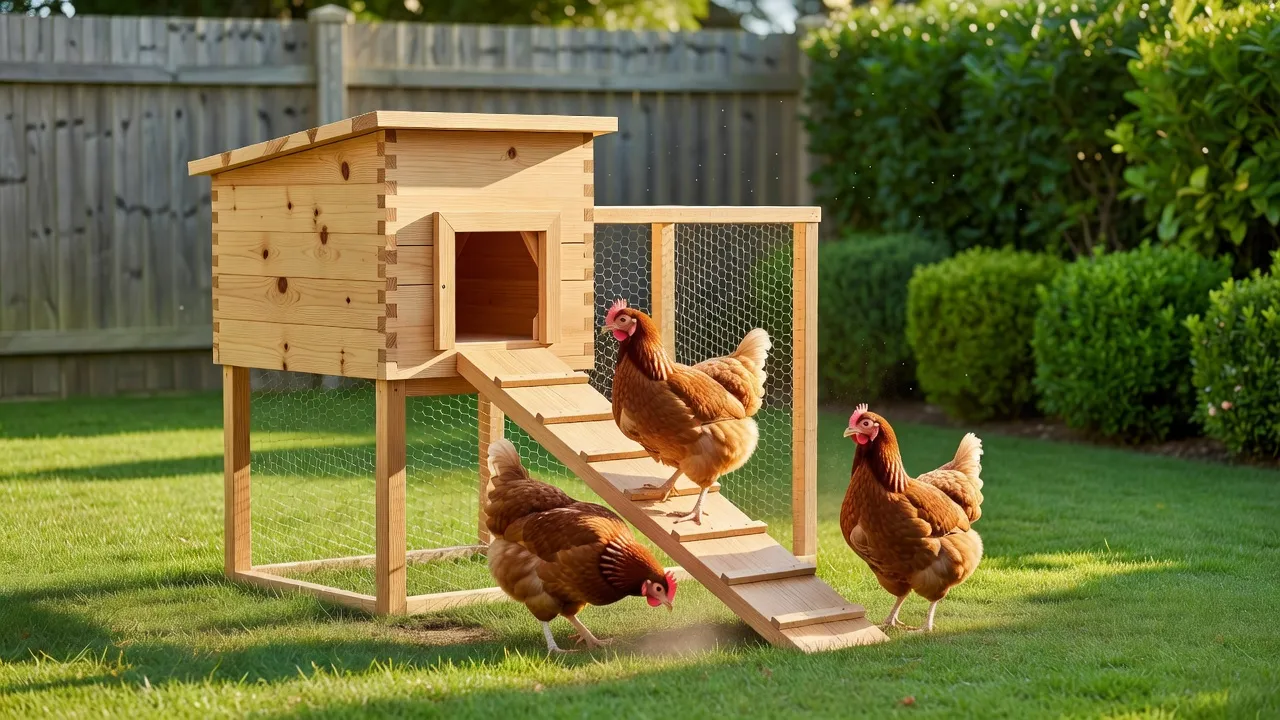
Chicken Coops
Coop kits, portable coops and walk-in coops, sized for real flocks.
Chicken coops come as kits, portable coops and walk-ins, and the right one depends on your flock size more than on style. The number to know is floor area. Cornell Cooperative Extension asks for 2.5 to 3.5 square feet per bird inside the coop and 4 to 5 more outside. Penn State Extension sets bare minimums of 1.5 square feet inside and 8 in the run for each laying hen. Divide a coop’s floor by those figures and you have its real capacity, which is often well under the maker’s “up to” number. The space table and city rules section of the run guide shows the extension numbers next to the Portland and Seattle codes.
Start with a kit if you have 3 to 10 hens and want something delivered. The best chicken coop kits guide sorts five by flock size and shows why the 10-bird kits on that page fit 5 to 8 hens. On Chicken Coop HQ’s pages on 2026-10-09, kits ran from about $440 for 2 to 3 hens to about $2,300 for 9 to 12.
Choose a walk-in chicken coop if you have 8 or more hens or you hate bending over to clean. A 5 by 8 foot walk-in gives 10 hens 4 square feet each. That guide has a size and price ladder from 4 by 4 to 8 by 10 feet, and it covers shed conversions.
Choose a portable chicken coop or tractor if you have grass to rotate across and the will to move the coop. Hens that live in the pen need about 6.5 to 8.5 square feet each, so a tractor holds fewer hens than its label says. Meat birds on a short grow-out can live at 1.5 to 2 square feet.
Whichever you pick, the coop is half the setup. Size a run with the chicken run guide, cover every opening with hardware cloth using the hardware cloth guide, and plan nest boxes and ventilation before the first hen moves in. The predator-proofing guide covers the rest.
How much space do chickens need in a coop?
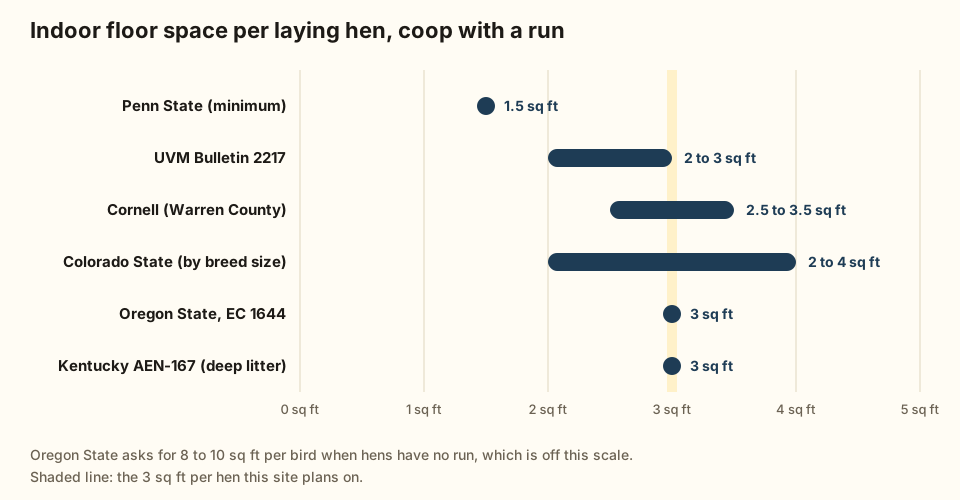
Plan on about 3 square feet of indoor floor per hen if they also have a run, and 8 to 10 if they live inside full time. That is Oregon State Extension’s rule, and it sits in the middle of what other extension services publish. The lowest figures come from commercial-style minimums, and the higher ones assume deep litter or heavy breeds.
| Source | Indoor floor per bird | Run per bird | Notes |
|---|---|---|---|
| Cornell Cooperative Extension | 2.5 to 3.5 sq ft | 4 to 5 sq ft | Outside area on top of the coop floor |
| Penn State Extension | 1 bantam, 1.5 laying hen, 2 large | 4, 8 and 10 sq ft | Minimums |
| University of Kentucky, AEN-167 | 2 bantam, 3 laying hen, 4 large, on deep litter | 4, 8 and 10 sq ft | Minimums close to commercial and welfare standards; backyard flocks often get more |
| Oregon State, EC 1644 | 3 sq ft with run access, 8 to 10 without | Not stated | Reviewed 2023 |
| UVM Bulletin 2217 | 2 to 3 sq ft | Not stated | Winter care bulletin |
| Colorado State, Boulder County | 2 to 4 sq ft by breed size | 6 to 10 sq ft by breed size | 3 to 3.5 sq ft for heavy breeds over 12 weeks |
Sources checked October 24, 2026.
For six hens with a run, that works out to 9 square feet on Penn State’s minimum, 15 to 21 on Cornell’s range and 18 on Oregon State’s rule or Kentucky’s deep litter figure. Eighteen square feet is a 3 by 6 or 4 by 4.5 foot floor, measured inside the walls. Ten hens need 30 square feet on Oregon State’s rule, which is a 5 by 6 foot coop.
I would plan on 3 square feet a bird for a coop with a run, and closer to 4 for heavy breeds or a deep litter floor. Floor area is not the whole story. Each hen also needs roost length, which the chicken roost bar guide covers, and enough nest boxes. The count for any flock is in how many nesting boxes per chicken.
Type your hen count into the calculator to get the floor, run and nest numbers from the table above in one place.

Coop size calculator
Indoor floor, run and nest boxes for your flock of laying hens.
Indoor floor to plan for
18 sq ft
- Oregon State rule18 sq ft (3 per hen)
- Cornell range15 to 21 sq ft
- Penn State bare minimum9 sq ft
- Run, Penn State minimum48 sq ft
- Nest boxes, Penn State count3
- Square floor, inside the walls4.2 × 4.2 ft
Measure the floor inside the walls. Nest boxes that hang off an outside wall do not count as floor. Figures come from Oregon State EC 1644, Cornell Cooperative Extension and Penn State Extension, listed in the sources below.
Swipe sideways to see the whole figure, or open it full size.
Size the floor, roost, nests and run together
Floor area is the number people check, but a coop that passes on floor can still fail on roost length or nests. Size it by four parts: floor, roost, nest boxes and run. Here are the extension figures for five laying hens that also have a run:
| Part | Rule used here | Five hens need |
|---|---|---|
| Coop floor | 3 sq ft per bird (Oregon State) | 15 sq ft |
| Roost | 8 to 10 in per bird, from the roost bar guide range | 40 to 50 in of bar |
| Nest boxes | 2 for the first four hens, then 1 per four (Penn State) | 3 boxes |
| Run | 8 sq ft per laying hen minimum (Penn State) | 40 sq ft |
For a DIY build, think in plywood. A 4 by 8 foot sheet is 32 square feet, so one uncut sheet makes a floor big enough for five hens with room to spare, and at Oregon State’s 3 square feet per bird it holds up to ten hens that have a run. Building to full sheets means fewer cuts and less waste. Put the nests on an outside wall with a hinged lid, and you collect eggs without stepping in and the boxes do not eat floor space.
Kyle's top picks
Kyle's top pick The Best Chicken Coop Kits for Every Flock Size
Compare chicken coop kits by published dimensions, price and shipping. Check usable indoor floor area against extension space rules before choosing.
See the picks →
The Best Portable Chicken Coops and Tractors
The best portable chicken coop is sized by floor area, not the maker's bird count. Kyle sorts tractors and coops on wheels by real capacity, with sources.
See the picks →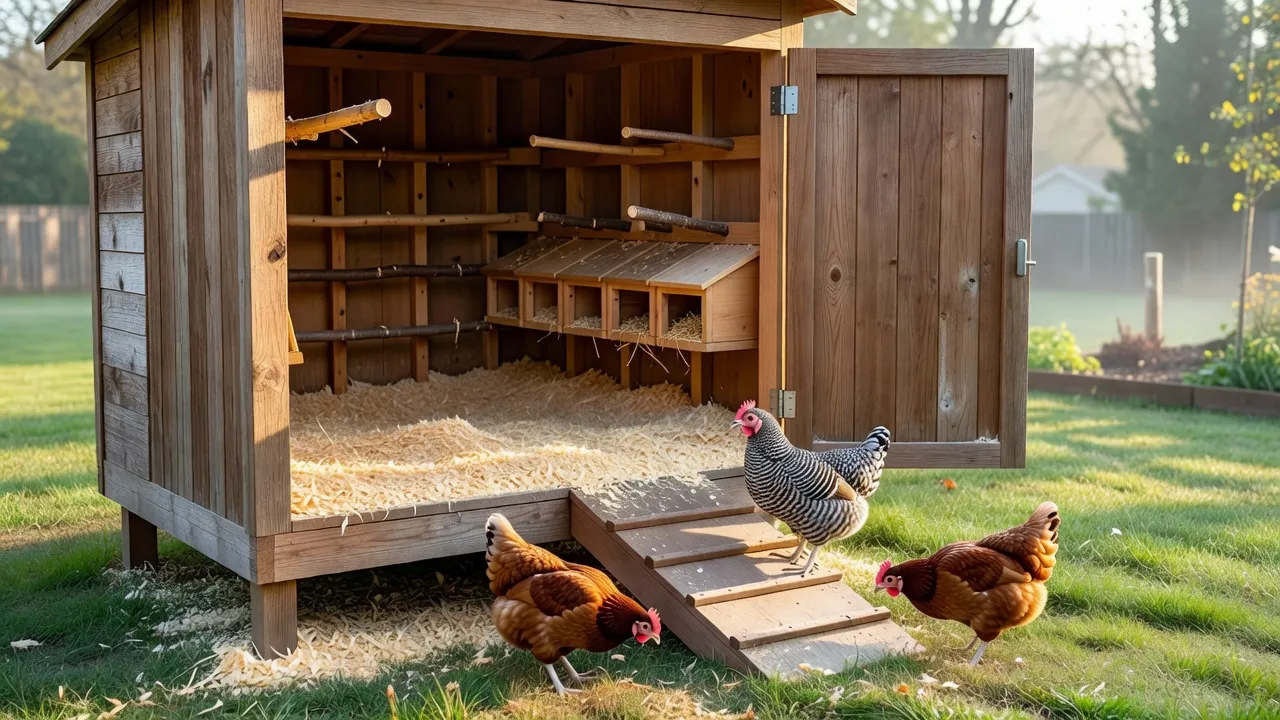
The Best Walk-In Chicken Coops
A walk-in chicken coop needs about 3 square feet of floor per hen, so a 5 by 8 foot coop holds 10 with room to spare. Kyle compares sizes and prices, with sources.
See the picks →Questions people ask
How big should a chicken coop be?
Plan on 2.5 to 3.5 square feet of floor per bird inside and 4 to 5 more outside, from Cornell Cooperative Extension. Penn State Extension sets lower minimums of 1.5 square feet inside and 8 in the run per laying hen. Ten hens need 25 to 35 square feet inside on Cornell's range, which is a 5 by 8 foot coop or larger.
What is the best type of chicken coop?
A kit suits 3 to 10 hens and arrives ready to assemble, a walk-in coop suits 8 or more hens and easy cleaning, and a portable coop suits a small flock and fresh grass. None of them beats matching floor area to hens. See the kits guide to compare sizes.
How much does a chicken coop cost?
On 2026-10-09, Chicken Coop HQ listed coops from $229.99 (a 2-bird hutch) to $4,399, and Large Chicken Coops listed walk-ins from $1,395 for a 4 by 4 to $23,995 for a 10 by 60. Mobile Chicken House listed a 5 by 6 foot portable coop from $1,710. Add a run, hardware cloth and freight.
Does a chicken coop need a run?
Yes. Penn State asks for 8 square feet of run per laying hen and 10 for large breeds, and Cornell asks for 4 to 5 square feet outside per bird. A tractor is the exception, because its pen is the run. The run planning guide shows how to size and protect one.
Keep exploring
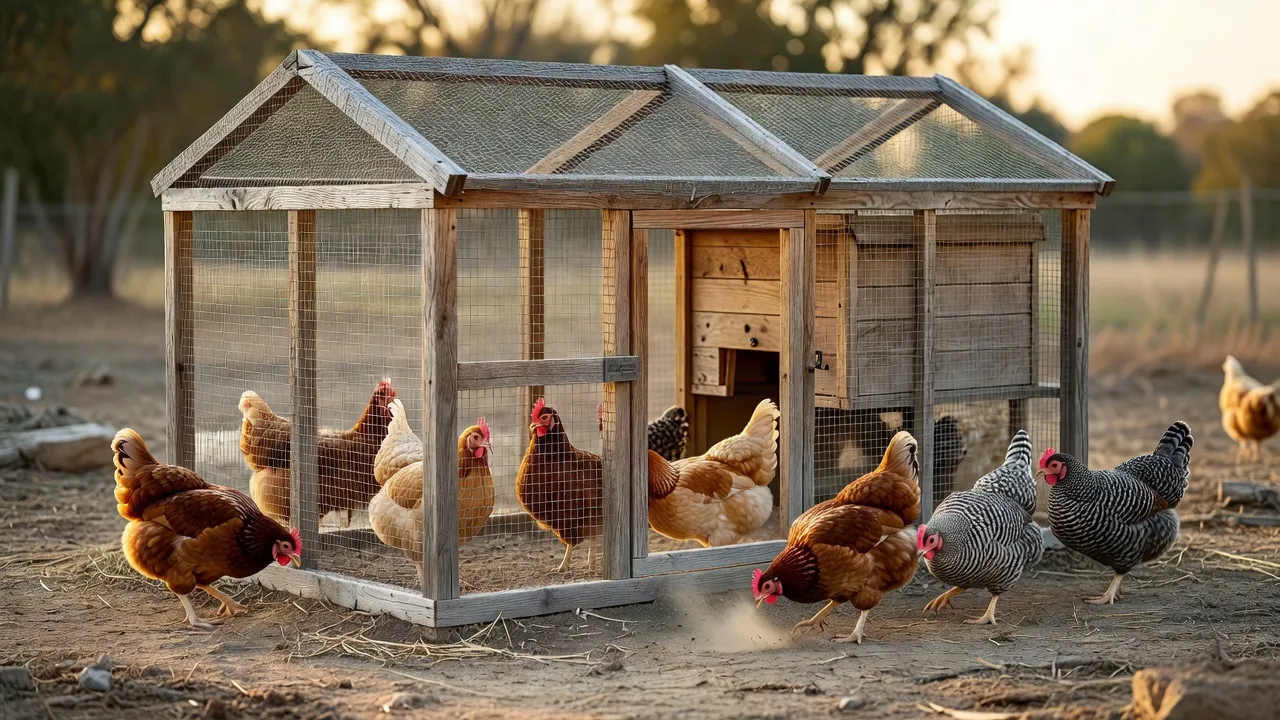
Chicken Runs
A chicken run needs 8 to 10 square feet per hen, strong wire, a roof and ground that drains. Kyle's guides cover sizing, building and wood chips.
Open the hub →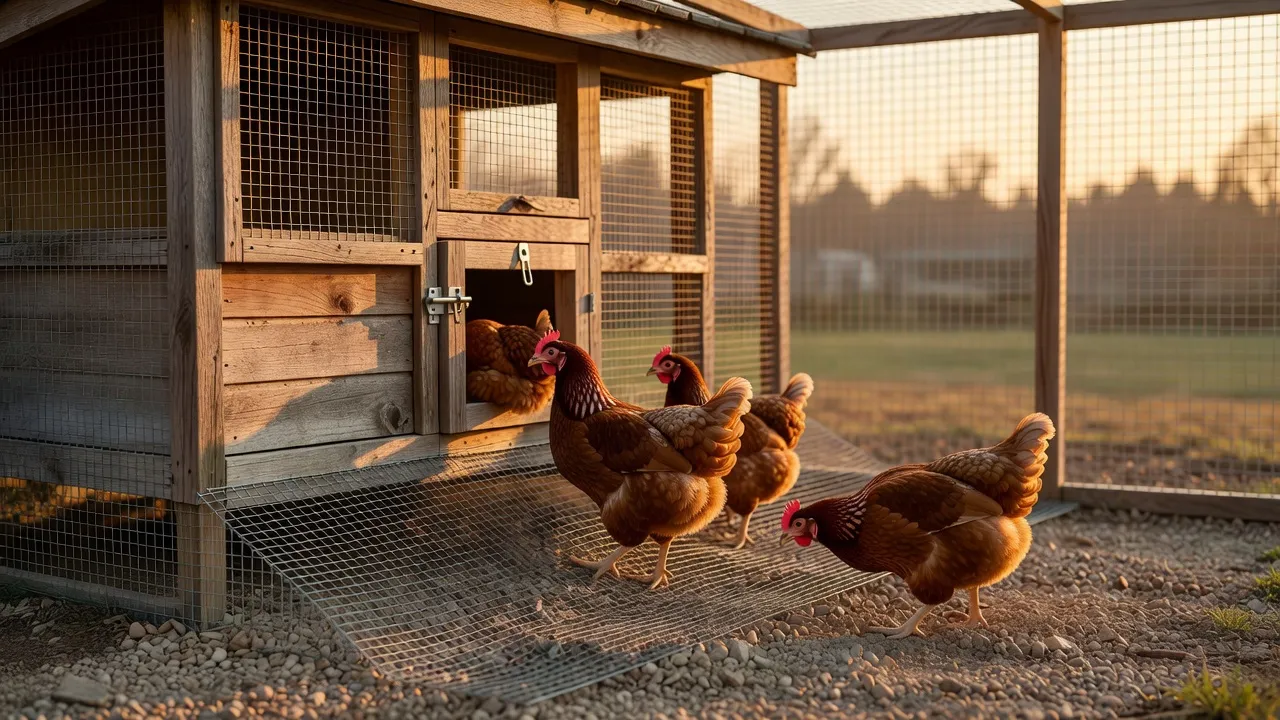
Predator Proof Your Chicken Run and Coop
Make a chicken run and coop predator proof with hardware cloth, buried wire, a roof and two-step latches. Kyle's guides cite extension services for every figure.
Open the hub →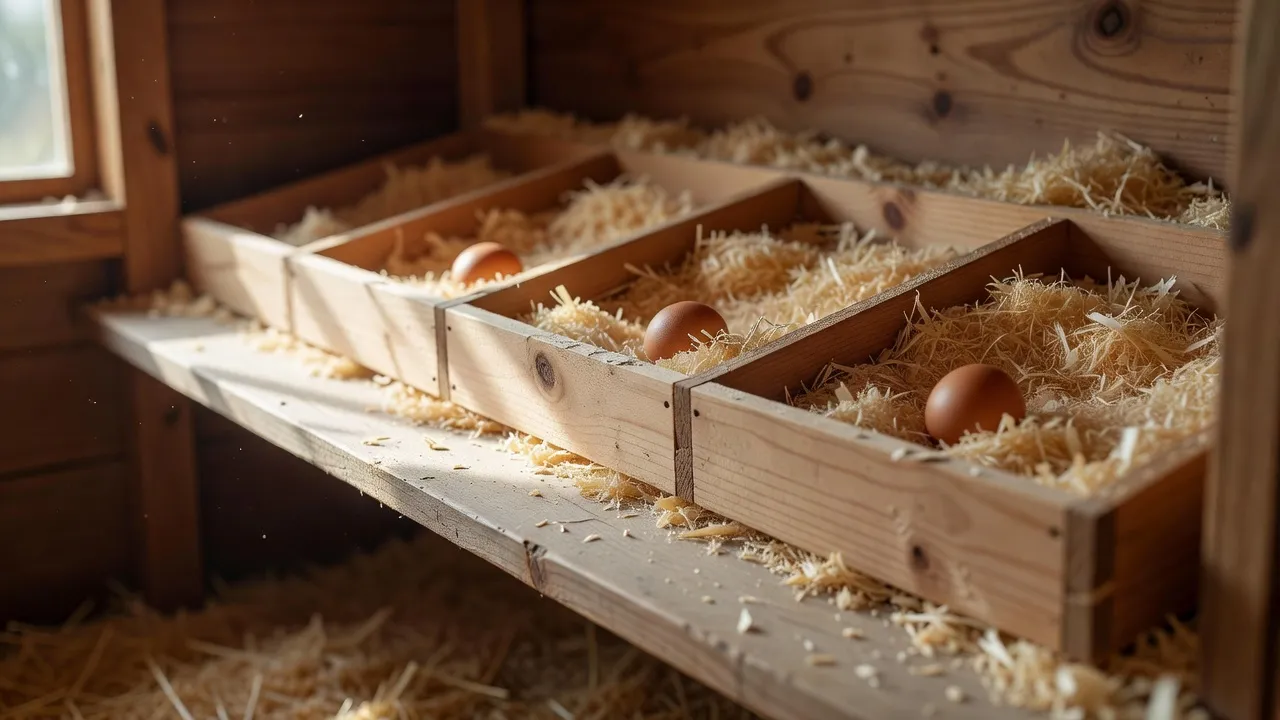
Nesting Boxes for Chickens
Nesting boxes for chickens: how many to build, what size and height they need, and which to buy. Kyle's coop gear guides, with every figure sourced.
Open the hub →