
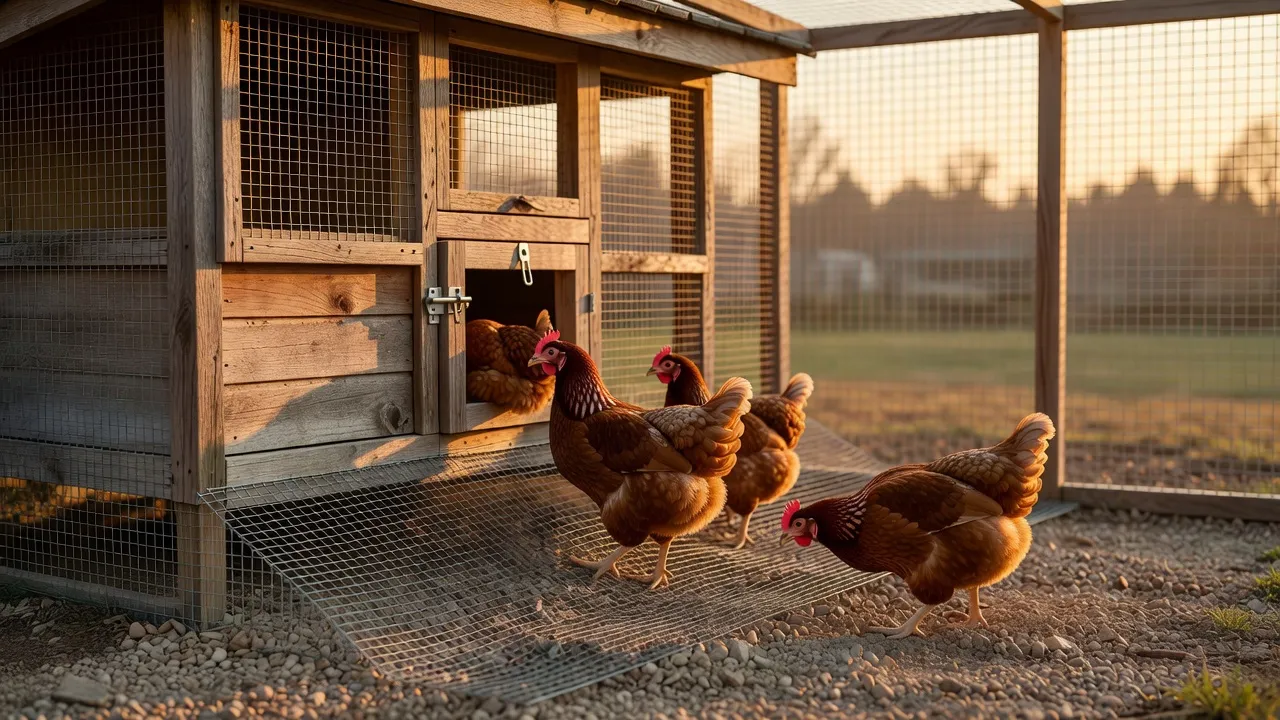
Predator Proof Your Chicken Run and Coop
Hardware cloth, dig barriers, roofs and latches: the layers that keep raccoons, foxes and hawks out.
A predator proof chicken run needs four things: small-mesh hardware cloth on every wall, wire that goes underground or lies flat at the base, a roof, and latches a raccoon cannot work. Add a door that shuts at dusk and a nightly headcount and you have the plan. Predation is the most common cause of death in small flocks, so I would do this before buying another feeder or heater.
Each predator beats a different weak spot, which is why one fix never works alone. Raccoons reach through large openings, coyotes dig under surface fencing, hawks and owls strike from above and rats move in beneath a low coop. To protect chickens from predators, you cover all of those at once. Oklahoma State’s advice is blunt: prevention is the key, and trapping comes after the structure is sound.
The short version
- Mesh: hardware cloth with openings under 1 inch. I’d buy ½-inch, 19-gauge, galvanized.
- Base: bury the wire at least 12 inches and turn it about 6 inches outward (Penn State), or lay a flat apron around the run.
- Roof: cover the run. It keeps birds of prey out and stops raccoons climbing in.
- Latches: two separate moves on every door, lid and hatch.
- Night: shut the birds in before dark and count them. Owls may strike just before dark.
Where to start
Begin with how to predator-proof a chicken coop. It names the six layers, matches nine common predators to the layer that stops each, and gives burial depths, roof options and latch advice from extension services.
Then buy the mesh with the hardware cloth guide. It covers mesh size, gauge, the galvanizing and the roll math for your coop and run.
Some of the work sits in other hubs. Size the run itself with the chicken run for your coop guide. Take the feeding station out of the rat’s reach with a rat-proof chicken feeder. If you want the door to close on a schedule, see the best automatic chicken coop doors and read why auto doors fail first.
Guides
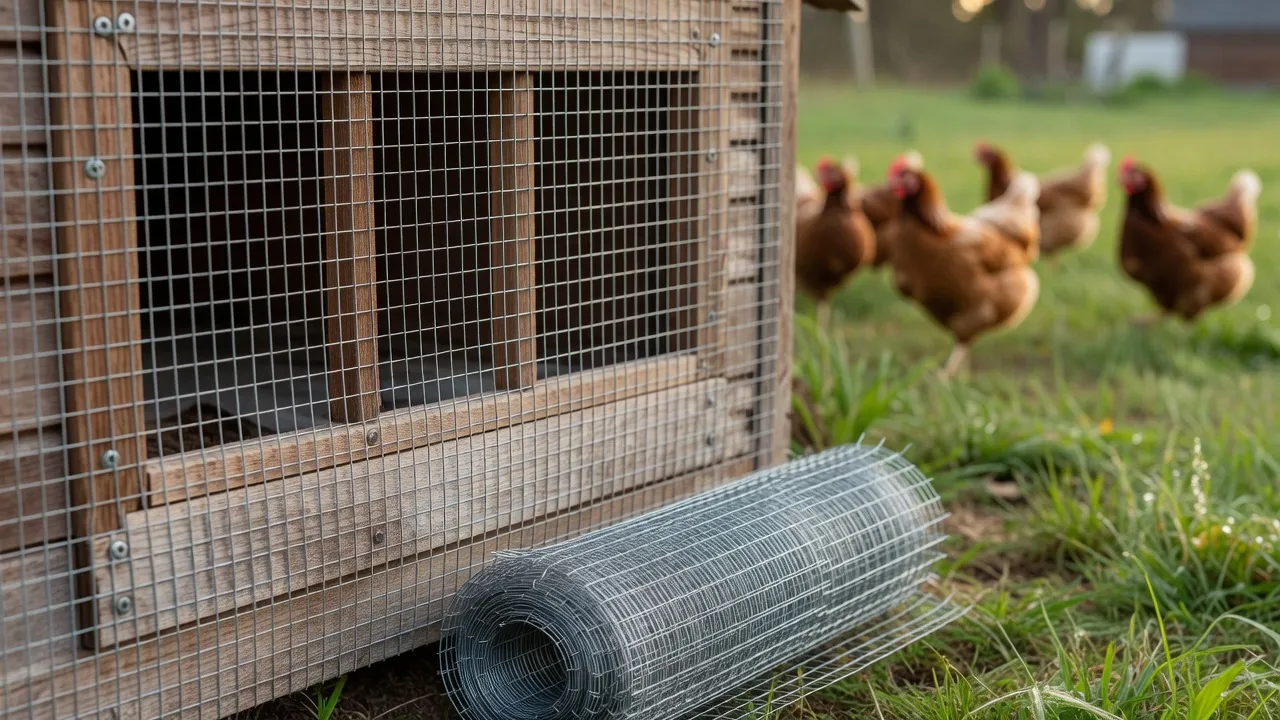
Hardware Cloth for Chicken Runs and Coops: Gauge, Mesh and How Much to Buy
The best hardware cloth for a chicken run is ½-inch, 19-gauge, galvanized after welding. Mesh by predator, gauge, how many rolls to buy and how to fasten it.
Read the guide →How to Predator-Proof a Chicken Coop and Run
Predator proof a chicken coop with six layers: hardware cloth, a dig barrier, a roof, two-step latches, a dusk door and a headcount. Extension specs, no fluff.
Read the guide →Questions people ask
How do I make a chicken run predator proof?
Cover every wall with hardware cloth (openings under 1 inch; I'd buy ½-inch), bury the wire or lay it flat as an apron, roof the run and fit latches that take two moves. Then shut the birds in before dark. The step-by-step plan covers each layer.
What is the best wire for a predator proof chicken run?
Galvanized, welded hardware cloth. Oklahoma State wants holes smaller than 1 inch, and Colorado State says 1-by-2-inch or smaller welded wire loses fewer birds. My pick is ½-inch, 19-gauge; see the hardware cloth guide.
Do I need to bury the wire around a chicken run?
Yes, or lay it flat as an apron. Cornell says to bury fencing at least 6 inches, and Penn State says at least 12 inches with an outward turn. Without a dig barrier, a digging predator walks under the fence.
Can a chicken coop be 100 percent predator proof?
No coop is guaranteed, and keepers debate it, as in this r/BackYardChickens thread. Layers make a flock much harder to hit, and Oklahoma State calls prevention the key.
Should I trap the predator that keeps getting my hens?
Fix the coop and run first. Oklahoma State says trapping or shooting should come after prevention, and that removal is often recurrent because other predators take the place of the ones you remove. Check your local wildlife rules before trapping anything.
Keep exploring
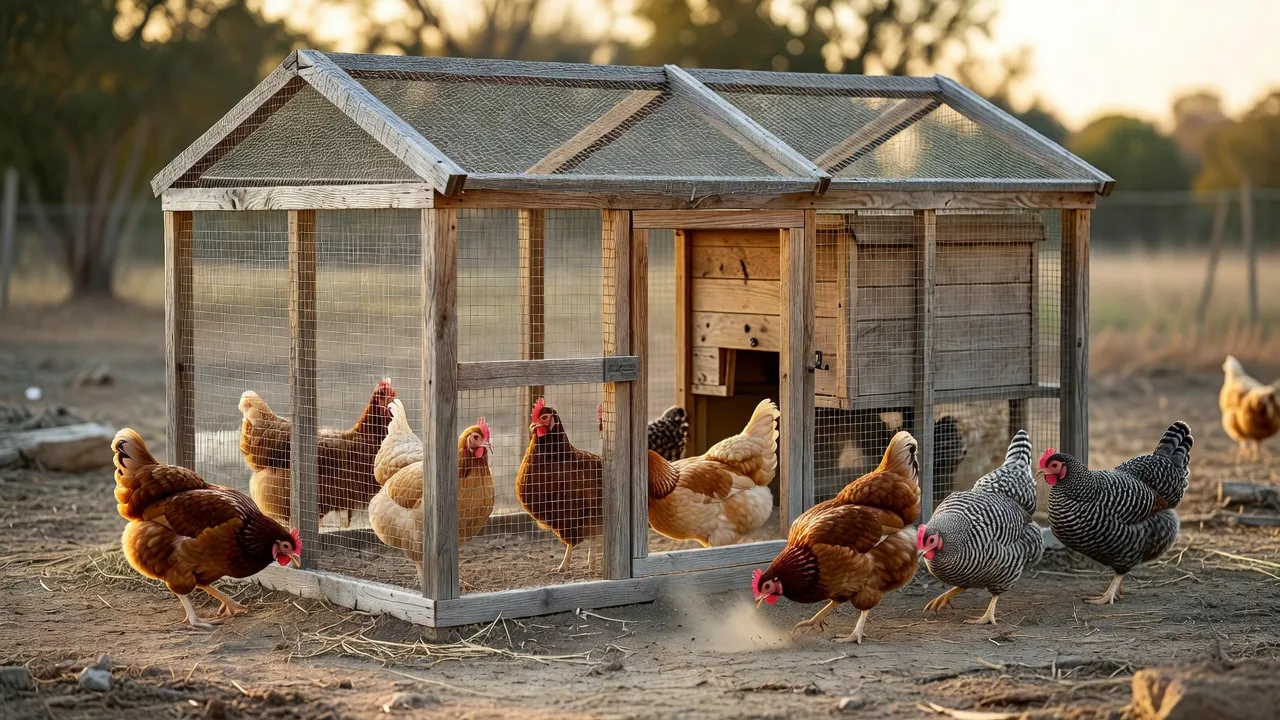
Chicken Runs
A chicken run needs 8 to 10 square feet per hen, strong wire, a roof and ground that drains. Kyle's guides cover sizing, building and wood chips.
Open the hub →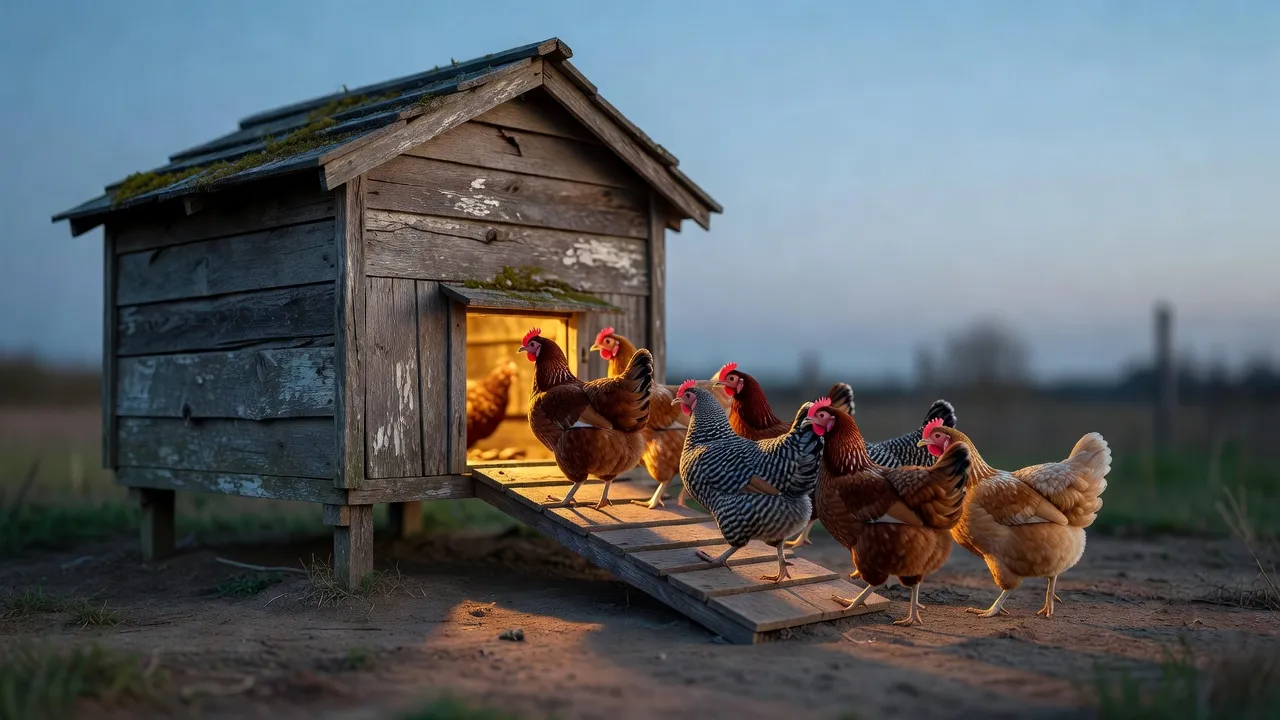
Chicken Coop Doors
Choosing a door for your chicken coop? Kyle sorts automatic doors worth buying from ones that fail, with prices, specs and owner reports, all sourced.
Open the hub →
Chicken Coops
Chicken coops come as kits, portable tractors and walk-ins, and a coop sold for 10 hens often fits 5 to 8. Kyle explains what to buy for your flock, with sources.
Open the hub →