
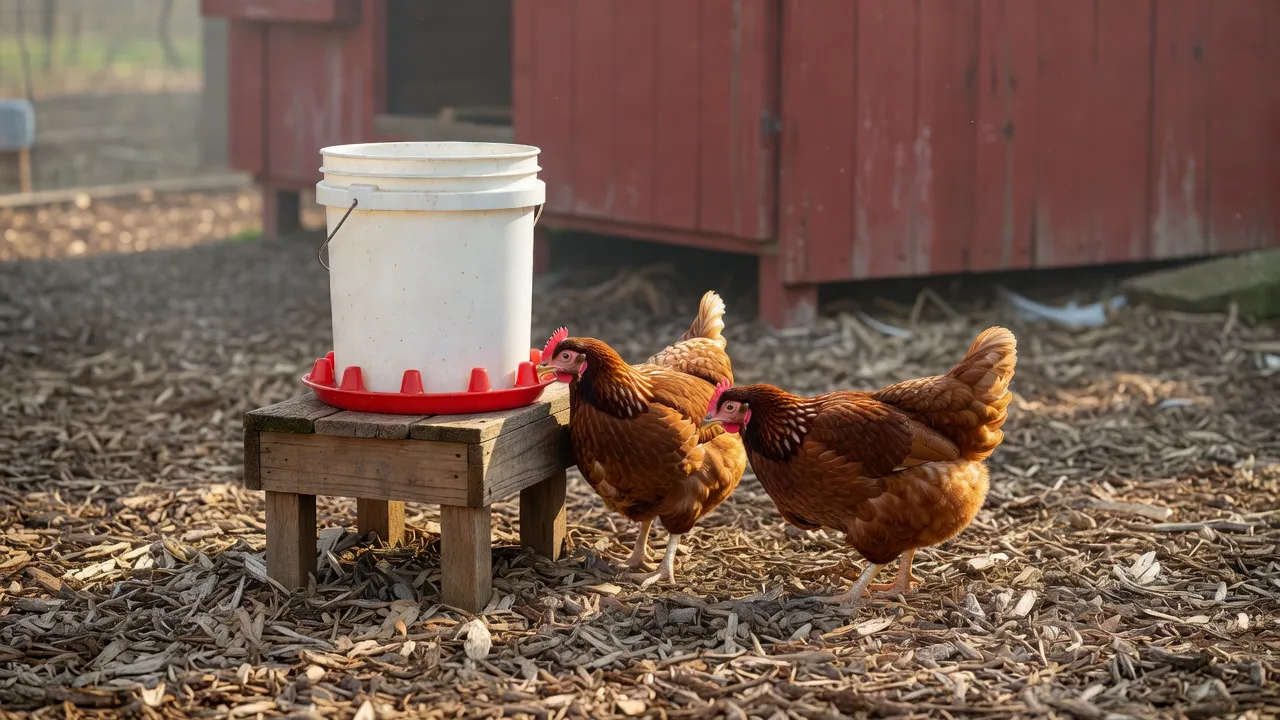
Chicken Waterers
Heated, nipple and automatic waterers, and how to keep water from freezing.
A good chicken waterer keeps water clean, delivers enough of it and survives winter. Hens drink about twice their feed weight, which the University of Kentucky puts at 5.55 gallons per 100 layers a day at 68°F and 10.57 gallons at 89.6°F. Penn State Extension sets the floor at 5 gallons per 100 birds daily and says laying hens should never go more than 12 hours without water. Size the reservoir to that, and the rest is cleaning and freezing.
My default for a small backyard flock is a covered 5-gallon bucket with nipples or cups. The best chicken waterers guide ranks that bucket against a small-flock version, a heated fount and a heater belt, with prices checked 2026-10-09 and owner complaints linked. If hens ignore the nipples, or you want to know how many a flock needs, the chicken nipple waterer guide covers how they work, the one-per-10-hens rule and training.
If refilling is the chore you resent, read the automatic chicken waterer guide. It compares hose-fed nozzles, float-valve kits and big buckets, and it works out refill intervals from the same intake figures.
Winter is where waterers fail. If water turns to ice overnight, start with how to keep chicken water from freezing, which ranks electric and no-power fixes. Then compare heated chicken waterers by watts, capacity and running cost. A 100 W heater running nonstop costs about $13 a month at 18.16 cents per kWh (EIA), and a thermostat cuts that. Heating the coop itself is a different job, covered in the winter hub.
Water and feed travel together, so a bigger feed bill means a bigger water bill. The feeder guides cover the other half of the daily chore.
Kyle's top picks
Kyle's top pick The Best Chicken Waterers for Backyard Flocks
The best chicken waterer for most flocks is a covered 5-gallon nipple bucket. Kyle compares specs, prices and owner complaints, with a flock-size table.
See the picks →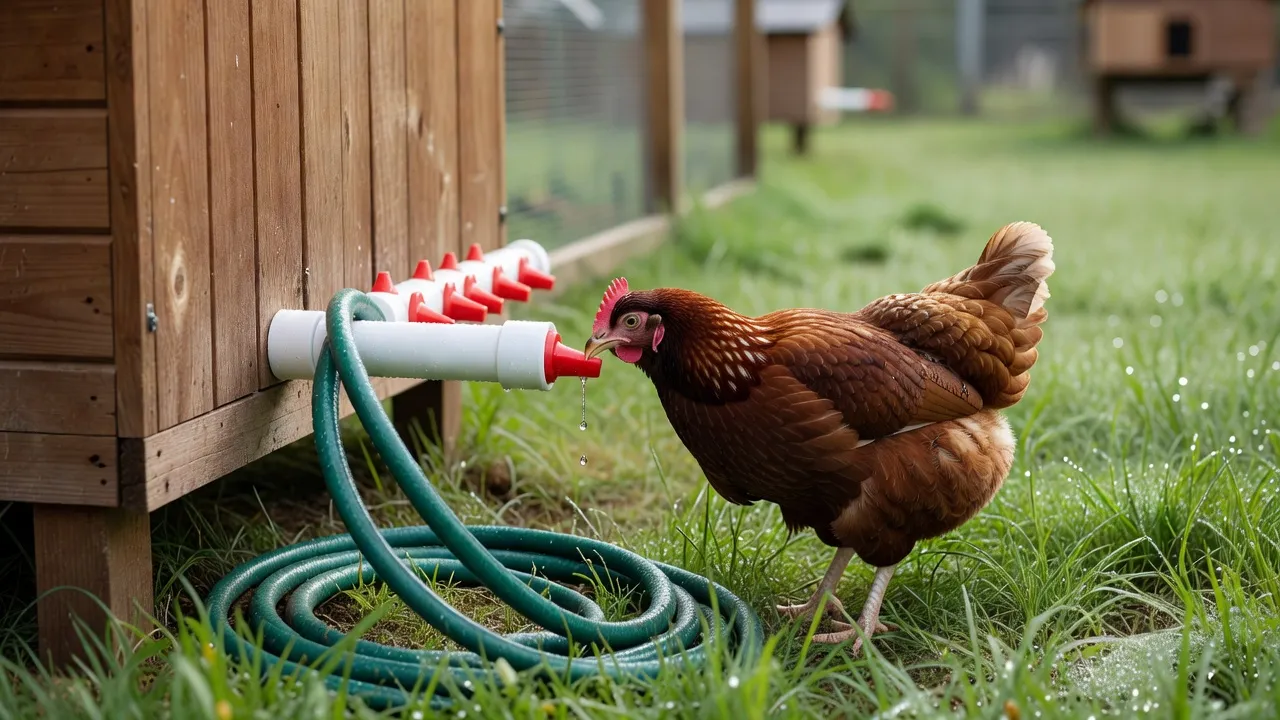
The Best Automatic Chicken Waterers
The best automatic chicken waterer depends on your chore: hose-fed nozzles end refilling, a float valve trims it. Kyle compares picks with refill math.
See the picks →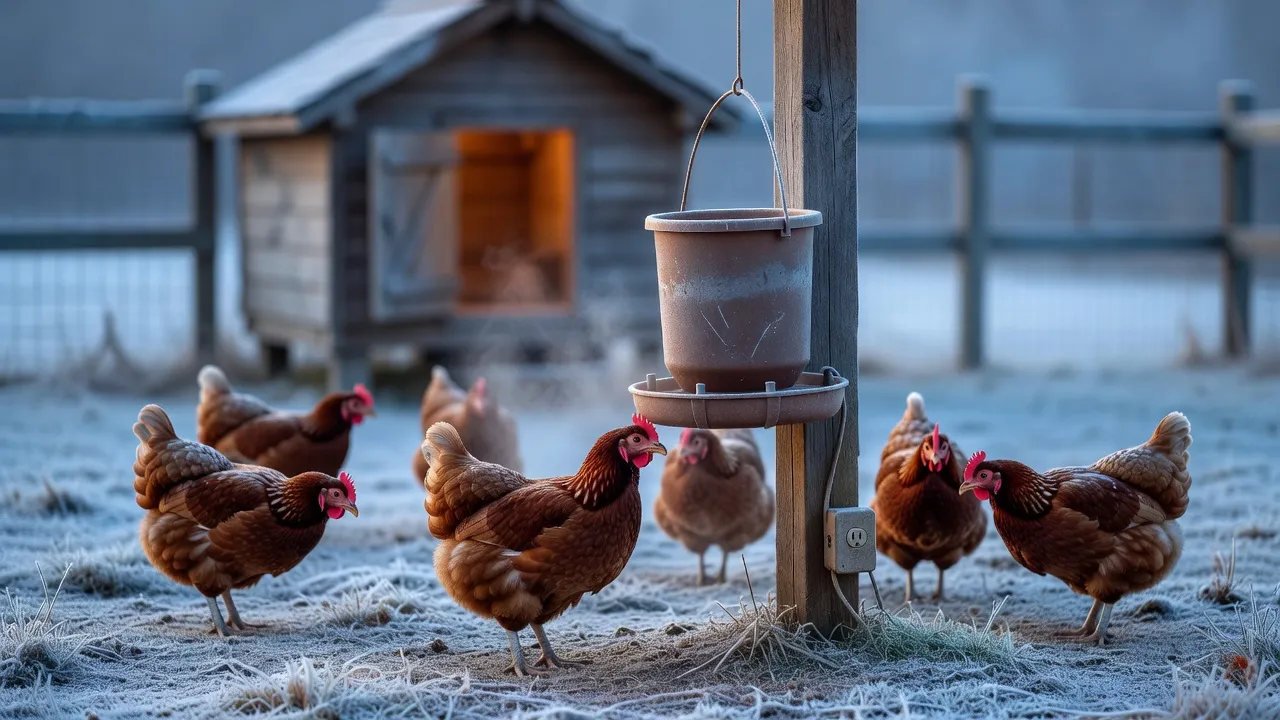
The Best Heated Chicken Waterers for Freezing Weather
Kyle's pick for the best heated chicken waterer, with watts, monthly running cost, capacity and owner complaints side by side. Specs come from the makers.
See the picks →Guides
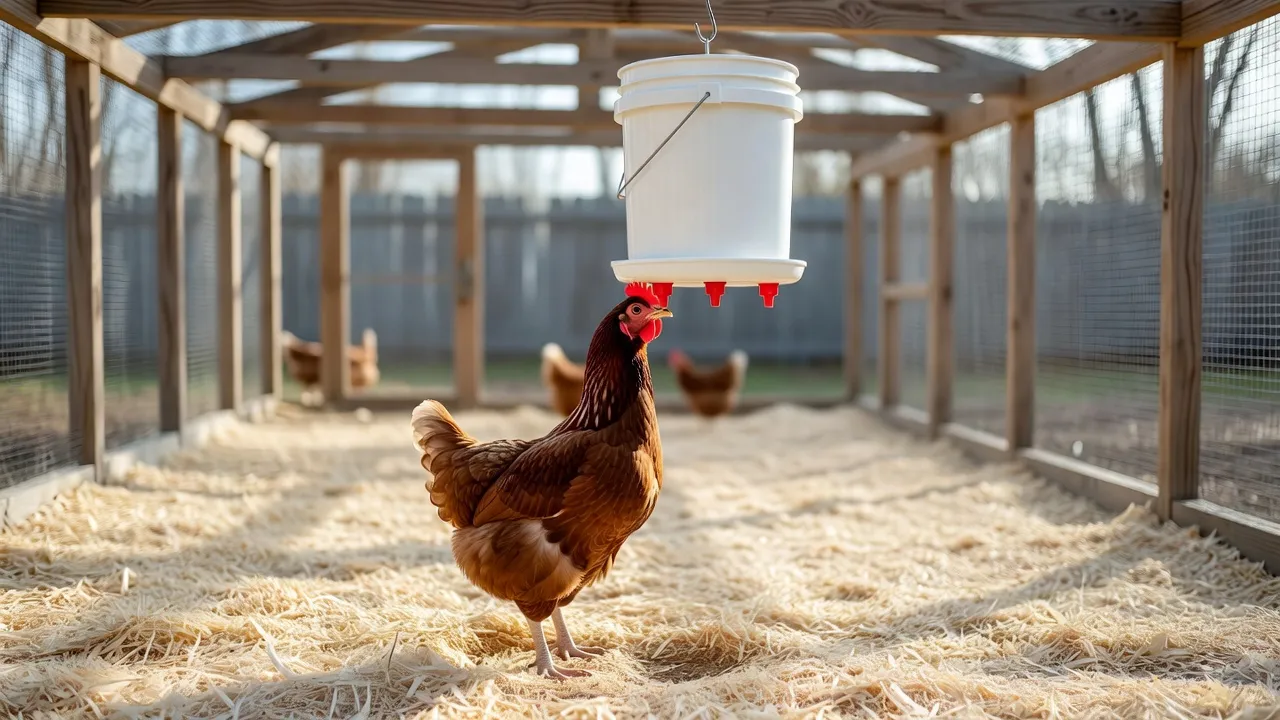
Chicken Nipple Waterers: Do They Work?
Does a nipple for a chicken waterer work? Yes, with the right height, training and a freeze plan. Vertical vs horizontal, hens per nipple, DIY build.
Read the guide →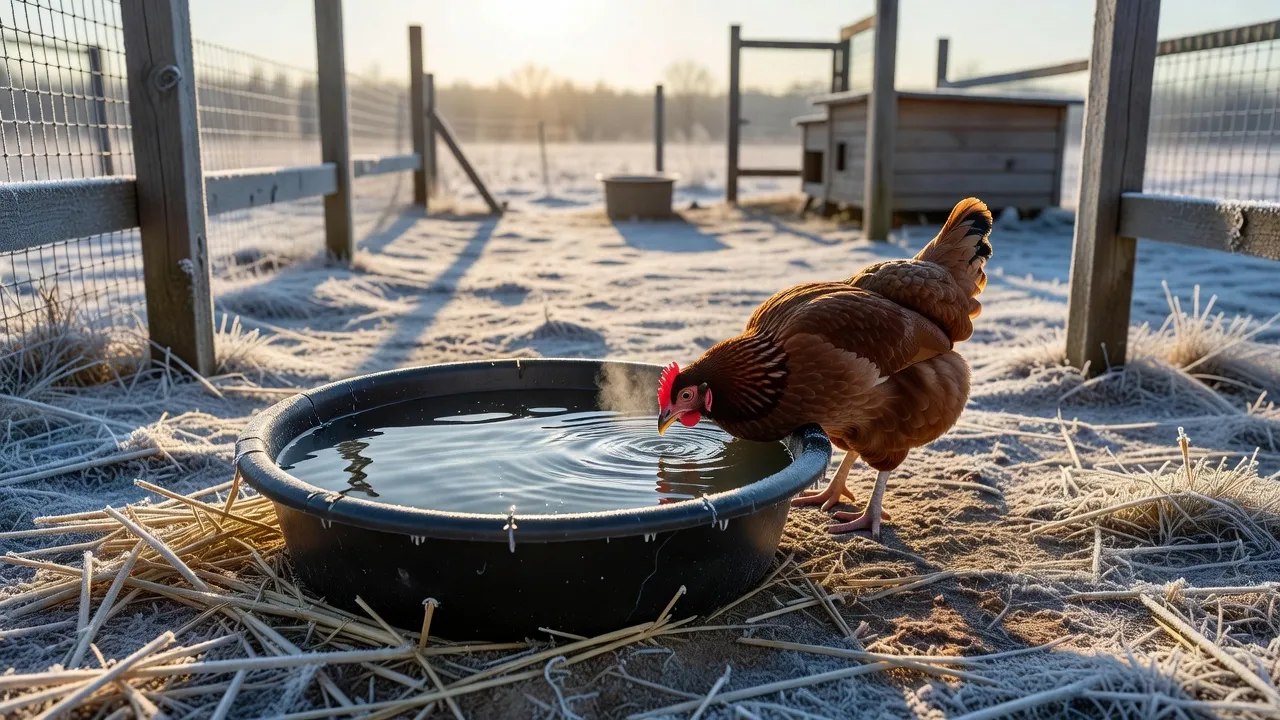
How to Keep Chicken Water from Freezing
Eight ways to keep a chicken waterer from freezing, with and without power, compared by running cost and the lowest temperature each holds. Sources linked.
Read the guide →Questions people ask
What is the best chicken waterer?
For most backyard flocks it is a covered 5-gallon bucket with nipples or cups, because droppings stay out of the water and a fill lasts about nine days for 10 hens at 68°F. Kyle ranks it against a small-flock bucket, a heated fount and a heater belt in the best chicken waterers guide.
How many waterers does a flock need?
Count one nipple or cup per 10 hens, per Hy-Line's laying guide, or 1 inch of open water space per hen, per Penn State Extension. Kyle recommends two stations so one failure never leaves the flock dry. The nipple waterer guide covers sizing and training.
How do I keep chicken water from freezing?
Heat it or insulate and shelter it. A heated fount or a heater belt on a bucket works for most coops, and there are no-power fixes for mild freezes. The freeze-proofing guide ranks them, and the heated waterer picks compare watts and running cost.
Are automatic chicken waterers worth it?
They pay off past about 15 hens or when you travel, because a 5-gallon bucket then empties in under a week. A hose-fed or float-valve line ends the refilling but needs a water line and a daily check. The automatic chicken waterer guide works out refill intervals.
How much water do chickens drink?
Hens drink about twice their feed weight. The University of Kentucky lists layers at 5.55 gallons per 100 birds a day at 68°F and 10.57 at 89.6°F.
Keep exploring
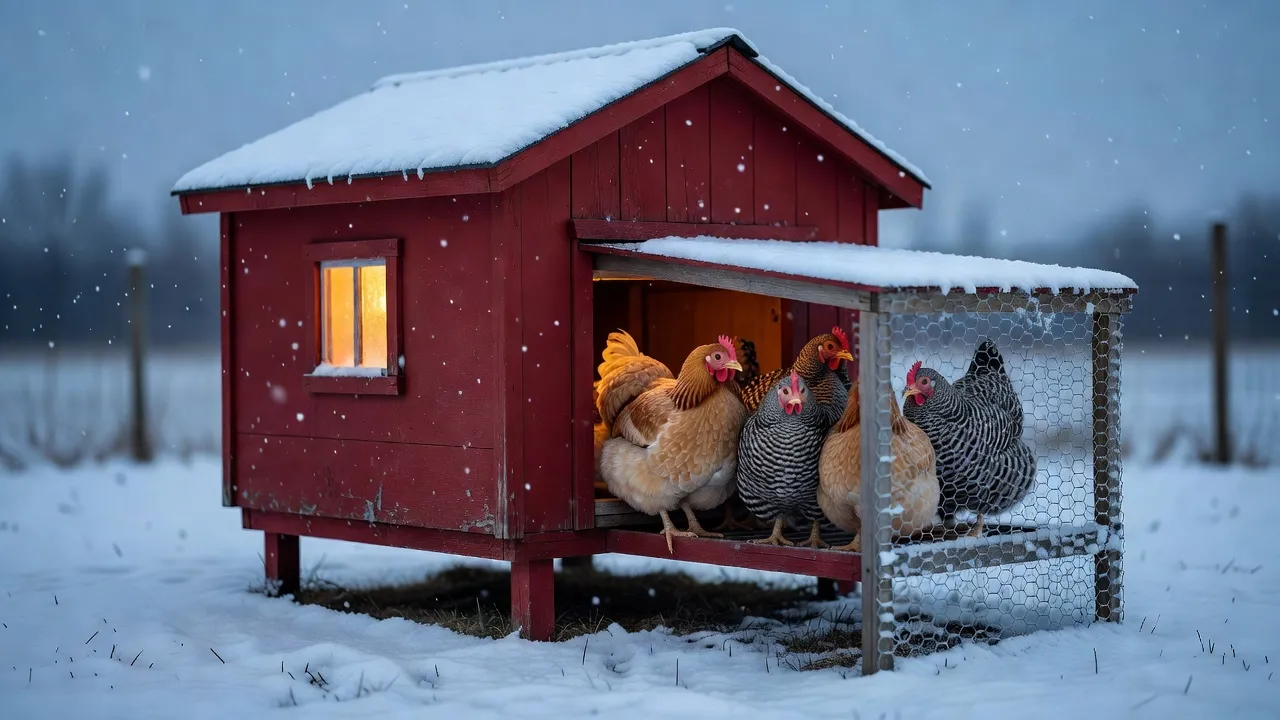
Winter Chicken Coop Gear
Everything for a winter chicken coop in one place: heaters, insulation and ventilation, with running costs from real electricity rates and sourced guidance.
Open the hub →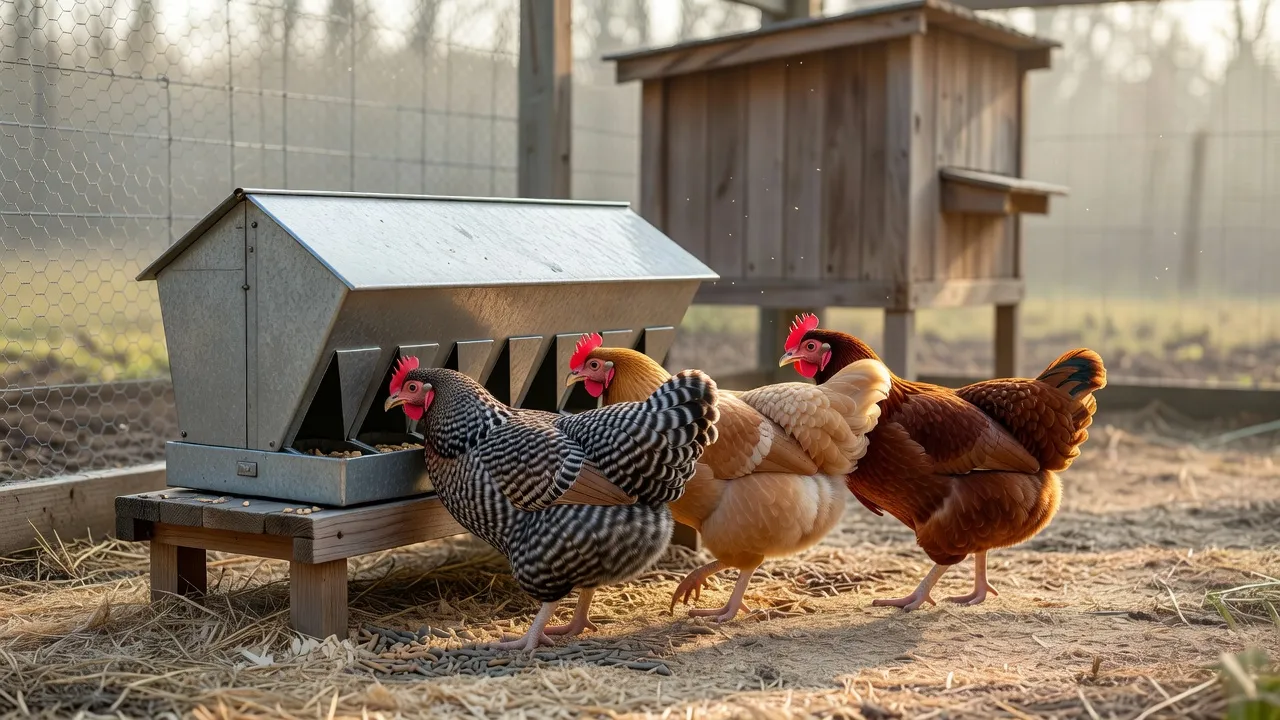
Chicken Feeders
A chicken feeder should waste less feed and not feed the rats. Kyle covers the best chicken feeders, rat-proof designs and treadle feeders, with sources.
Open the hub →