On this page
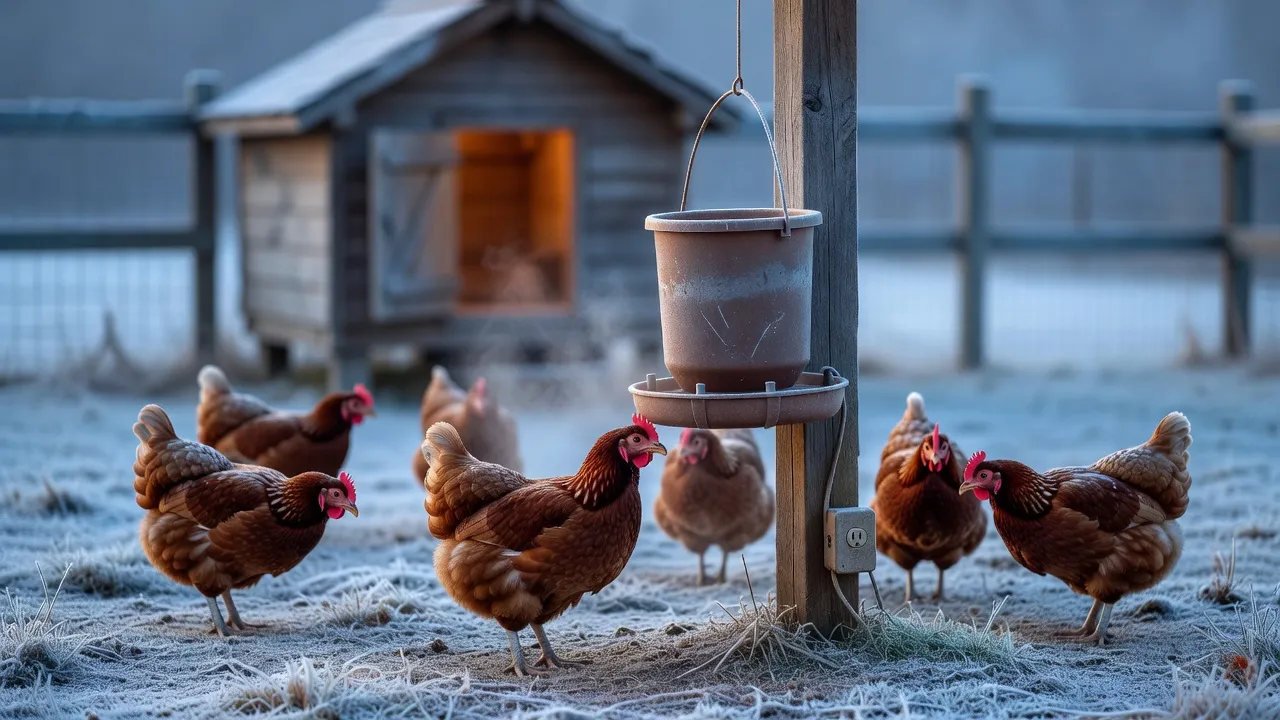
To keep a chicken waterer from freezing, plug in a thermostat heater if the coop has power. If it does not, use a black rubber pan, a sealed salt-water bottle or a two-waterer swap. Heaters are the only method here with a maker’s low-temperature rating, from 10°F down to -20°F. The free methods slow ice and have no published rating, so plan on hand refills when the cold gets serious. Laying hens should never go more than 12 hours without water, or egg production drops or stops, so fix the water before the first hard freeze, not after.
Short answer
A thermostat heaterif the coop has power
A plug-in heater costs about $8 to $16 a month at 18.16 cents per kWh if it never cycled off, and less in practice. With no power, stack two free methods and refill by hand. The waterers guide has the other water pages.
The eight ways, side by side
The lowest temperatures below come from the heater makers’ spec pages. Nobody publishes a rating for the free methods, so the table says so instead of guessing. The cost column assumes the element runs nonstop for 30 days at 18.16 cents per kWh from the EIA’s 2026 average.
| # | Method | Needs power | Cost per 30 days if nonstop | Lowest temperature on record |
|---|---|---|---|---|
| 1 | Heated nipple bucket or fountain | Yes | $7.85 to $13.08 | -20°F, -10°F and 0°F by model |
| 2 | Heated base under a metal fount | Yes | $16.34 | 10°F |
| 3 | Heated pet bowl | Yes | $5.88 at an owner’s 45 W | No rating found |
| 4 | Black rubber pan in the sun | No | $0 | No rating found |
| 5 | Sealed salt-water bottle | No | $0 | One owner reports about 15°F |
| 6 | Two waterers, swapped | No | $0 | Depends on how often you swap |
| 7 | Shelter and insulate | No | $0 | No rating found |
| 8 | Mini greenhouse | No | $0 | No rating found |
Electric options
If you have an outlet within cord reach, pay for a heater. It is the only way to stay open on the coldest nights.
1. Heated nipple bucket or fountain
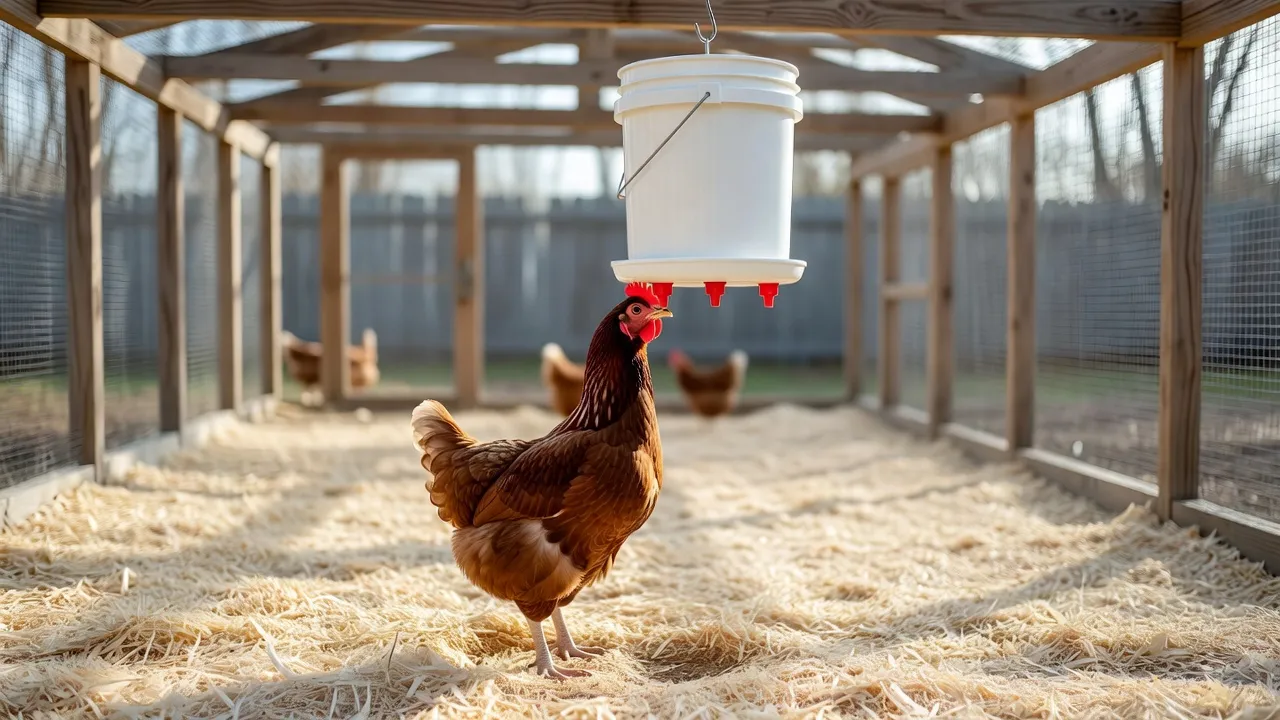
A heated bucket or fountain holds water liquid to the maker’s rating: Premier 1 says -20°F for its 3-gallon nipple bucket, Farm Innovators says -10°F for the 2-gallon HB-60P and 0°F for the 3-gallon HPF-100 fountain. Premier 1’s thermostat turns the element on at 40°F and off at 60°F, so it sits idle on mild days. The 60 W HB-60P costs about $7.85 a month if it never shut off, and the 100 W units about $13.08. See the best heated chicken waterers for capacity, cords and owner complaints, and the current Premier 1 bucket price.
2. Heated base under a metal fount
A heated base keeps a galvanized fount you already own from freezing. The Farm Innovators HP-125 draws 125 W, is rated to 10°F and is designed for double-wall metal founts. It costs about $16.34 a month if it never cycled off. Its 10°F rating is the weakest of the electric options, so it suits milder winters.
3. Heated pet bowl
Some owners run a heated dog dish. One YouTube commenter says theirs cost about $15, draws 45 W and shuts off in warm weather, in a comment on a heated waterer review. At 45 W it would cost about $5.88 a month if it never shut off. A Minnesota owner in a Backyard Chickens winter waterer thread says they have not found a heated dog bowl that lasts back-to-back winters. Check the bowl’s safety listing, and keep the cord out of beak reach.
Keep cords and bedding apart
Use a GFCI outlet, avoid extension cords where you can and keep bedding off the cord and element. The NFPA lists extension cords, dust and bedding near heat sources as the usual coop fire hazards. The heated waterer roundup has the full cord and outlet checklist.
Off-grid options
With no power, use free methods that delay ice, and accept that a hard freeze beats all of them. Each one below works best stacked with another and a hand refill.
4. Black rubber pan in the sun
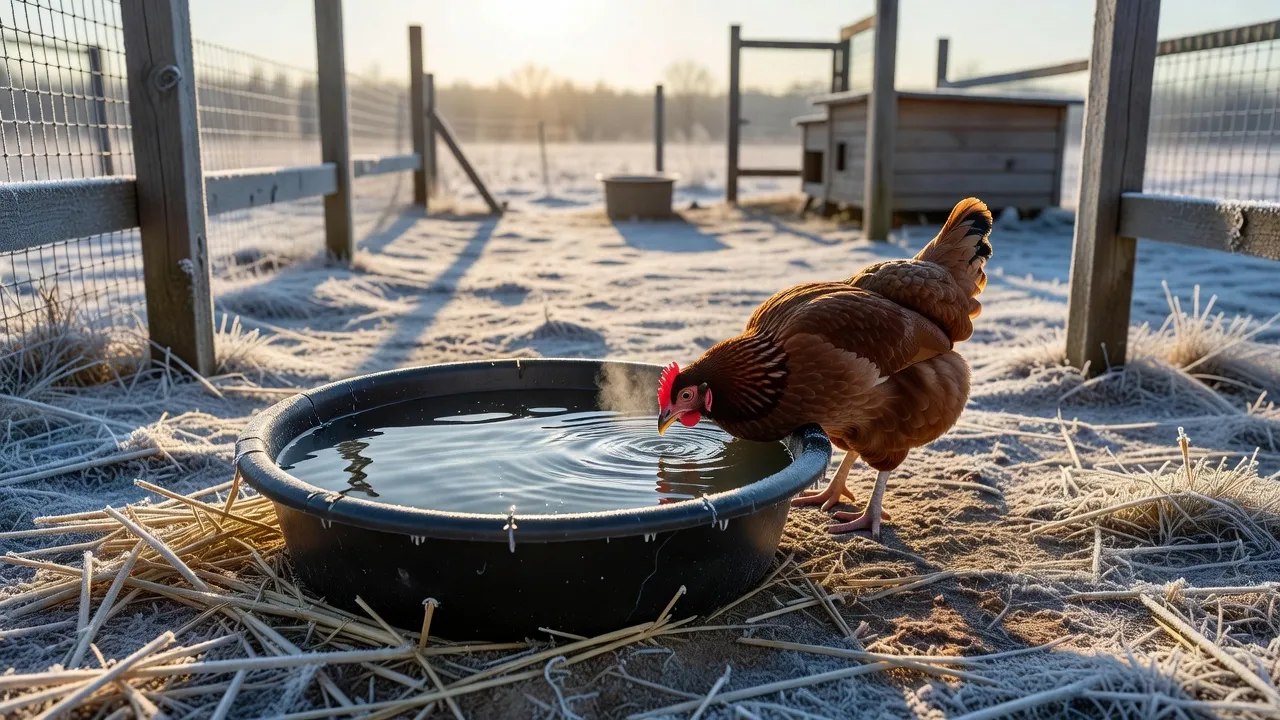
Grubbly Farms lists black containers among its freeze fixes. A dark pan soaks up sunlight, so it should melt or delay ice during the day, and it does nothing at night. Put it where the winter sun lands and the wind does not. One owner in the Backyard Chickens thread above notes that frozen water can break a container unless it is a round-bottom bowl, so choose a flexible pan over a hard bucket that can crack.
5. Sealed salt-water bottle
Salt water freezes at a lower temperature than fresh water, so a sealed bottle of brine floated in the waterer stays liquid after the water around it starts to ice. One Facebook owner’s recipe is half a cup of plain salt in a 20 oz pop bottle, topped with water and set in a 5-quart bucket. A YouTube commenter used two soda bottles of salt water and says it worked down to about 15°F, one owner’s number and not a rating.
The risk is the salt itself. A leak puts brine in the drinking water, and another commenter on that video advises adding dye to the water so you can spot a leak.
Not vet advice
The Merck Veterinary Manual says chickens tolerate up to 0.25% salt in their drinking water but are susceptible to salt toxicosis when water intake is restricted. Use screw-cap bottles, check them daily and swap any bottle that cracks. If a bird looks limp, wheezes or stops drinking, call your vet.
6. Two waterers, swapped
Keep two waterers, bring the frozen one inside, and put a thawed one out. This is the cheapest method that works at any temperature, because you control the schedule. Two owners in the Backyard Chickens thread above work this way: one cracks the ice out of a stainless dog bowl each morning and refills it inside, and the other dumps the ice from stainless bowls and refills with warm water when it is too cold for the hose. The cost is your time, twice a day on hard-freeze days. Ten hens drink about 0.6 gallons a day at 68°F, so the swap is small, but the 12-hour limit still applies.
7. Shelter and insulate
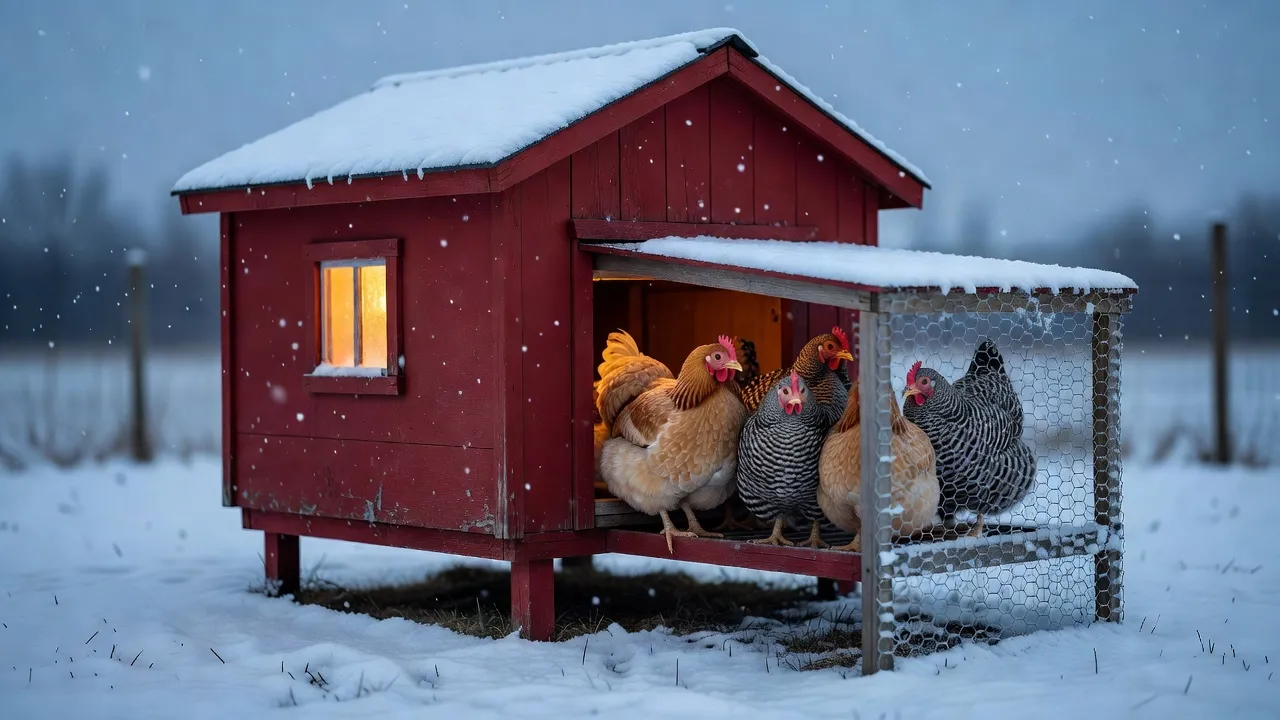
Put the waterer out of the wind, inside the coop or under a covered run, and off frozen ground. An insulated waterer or cover slows heat loss and adds none, so it buys hours, not a night. One owner on r/BackYardChickens says an insulated Omlet nipple waterer stopped working below freezing because its nipples froze. Treat insulation as a helper for methods 4, 5 and 6, and read the insulated waterer section in the roundup.
8. Mini greenhouse
A small clear box or cold frame over the waterer traps daytime sun, like the black pan with a roof. Grubbly Farms lists it among its six freeze fixes. It needs sun and does little after dark, so pair it with a black pan or a swap.
Nipple waterers in winter
Unheated nipple waterers freeze, and the nipples go first. Heated nipple buckets work, within their ratings. Owners disagree because they live in different climates. One owner quoted in the Backyard Chickens thread says that once freezing starts, nipples and cups stop working even with heated stands. Another says a nipple bucket worked for them down to 12°F, though they watch the nipples for outside ice. The Backyard Poultry author says a 250-watt pail de-icer in a nipple bucket kept water moving all winter in New England.
Pick a heated nipple bucket if your lows stay above the maker’s rating, and keep an open waterer as backup in a deep freeze. The nipple waterer guide covers training and setup.
Mistakes that cost a night of water
Train hens on nipple waterers in mild weather, before you need the heater. Keep an open waterer beside the nipple bucket until every hen is drinking from it.
Use a thermostat heater designed for poultry water instead of pointing a heat lamp at the bucket. Hay, bedding and other combustibles near heat sources are a fire hazard, and the NFPA says to avoid non-listed and makeshift equipment in coops. One owner in the Backyard Chickens thread threw out older hot plates because they kept running on warm days and heated the water.
Keep a second waterer ready in case the heater fails or the nipples ice over. One heated waterer and one backup let the flock drink while you fix the problem. The University of Kentucky table puts layers at about 5.55 gallons per 100 birds a day at 68°F, so a small flock can manage with a modest backup.
Before the first freeze: a checklist
- Plug in the heater and look at it on a cold evening, before it matters.
- Hang or stand the waterer where the cord reaches a GFCI outlet without an extension cord.
- Set up a second waterer and a black pan as backups.
- Fill and seal any salt-water bottles, and check the caps.
- Train the flock on any nipple waterer while the weather is mild.
- Add water checks to your morning and evening chores, so no bird goes 12 hours dry.
Pick a method for your situation
With an outlet in the coop, choose a heated bucket, fountain or base from the heated waterer roundup. For short freezes without power, try a black pan, a sealed bottle and a second waterer. In a hard freeze without power, swap waterers twice a day and check between swaps for ice. The coop heater guide covers heating options if you decide to add electricity.
Questions people ask
How do I keep chicken water from freezing without electricity?
Use a black rubber pan in a sunny, sheltered spot, float a sealed bottle of salt water in the waterer, or keep two waterers and swap the frozen one for a thawed one. None of these has a published low-temperature rating, and one owner reports a salt bottle giving out near 15°F, so plan to refill by hand in a hard freeze. Heaters are the better answer once lows drop well below freezing.
Do nipple waterers freeze?
Unheated nipple waterers freeze, and owners say the nipples are the first part to go. Heated nipple buckets are rated by their makers down to -10°F or -20°F, and owners still report nipples icing on the outside in very hard cold. Read the nipple waterer guide before you commit to nipples in a cold climate.
Is salt water in a bottle safe for chickens?
Only if the bottle is sealed and never leaks. The Merck Veterinary Manual says chickens tolerate up to 0.25% salt in their drinking water but are susceptible to salt toxicosis when water intake is restricted. Check the bottle every day, and call your vet if a bird seems limp or stops drinking.
How much does it cost to heat chicken water?
A 100 W heater that never cycled off would cost about $13 a month at 18.16 cents per kWh (EIA). A 60 W bucket costs about $8. Thermostats shut the element off in mild weather, so real bills run lower.
How often should I check chicken water in winter?
Check it morning and evening. Penn State Extension says laying hens should never go more than 12 hours without water, or egg production drops or stops.
Sources
- Penn State Extension: Management Requirements for Laying Flocks
- Merck Veterinary Manual: Salt Toxicosis in Animals
- University of Kentucky: Poultry water, Chapter 12
- EIA Electric Power Monthly, Table 5.3 (18.16 cents per kWh, 2026 YTD US residential)
- Premier 1 Supplies: Heated Poultry Waterer
- Farm Innovators: Heated 2 Gallon Poultry Drinker, HB-60P (instruction sheet)
- Farm Innovators: Heated Poultry Fountain, HPF-100
- Farm Innovators: Poultry Heated Base, HP-125
- Backyard Poultry: Building a DIY Chicken Waterer with Nipples

Written by Kyle
Kyle has kept backyard chickens on his own small farm for five years. He reads the extension research, the spec sheets and the owner complaints, then tells you what he would buy and what he would skip.