On this page
Oyster shell for chickens is a calcium supplement for laying hens, offered free choice in its own dish from about 18 to 20 weeks or the first egg. Hens on a complete layer feed still benefit if their shells come out thin or rough (Oregon State Extension), and it is cheap and harmless even when they do not need it (Alabama Extension). This page covers when to start, how to offer it, how it differs from grit and what to do about weak shells. It is part of Kyle’s chicken feeder guides.
Short answer
Free choice, in a separate dishfor laying hens, per Oregon State and Penn State Extension
Start when hens begin laying. Keep layer feed as the main diet, put oyster shell beside it in its own container and let each hen decide. Do not give it to growing pullets, and do not count it as grit.
The short version
- Layer feed already carries about 3 to 4 percent calcium, per Oregon State Extension.
- Oyster shell goes in a separate feeder, free choice, per Oregon State and Penn State.
- On a good layer feed it is probably unnecessary, but it does no harm (Alabama Extension).
- Thin, easily cracked or sandpaper-rough shells are the sign hens need more calcium.
- Oyster shell is not grit. It is too soft to help the gizzard grind (Oregon State).
Do chickens need oyster shell?
Laying hens need a lot of calcium, but most of it should come from their feed. Layer feeds contain about 16 percent protein and 3 to 4 percent calcium, so hens lay strong shells without draining the calcium in their bones. Some high-producing hens still need the extra calcium in oyster shell on a complete feed (Oregon State’s feeding bulletin, by poultry specialist James Hermes).
Alabama Extension is more relaxed. Oyster shell is about 95 percent calcium carbonate, a flock on a high-quality complete layer diet probably does not need it, and it is cheap and causes no harm. A hen can put only so much calcium into a shell, so calcium beyond her needs does little.
The exception is all-purpose feed. Hens on an all-purpose or all-flock feed do not get enough calcium for proper shells, so they need free-choice oyster shell (Oregon State). Check the feed tag first.
When should hens start getting oyster shell?
At the point of lay. Start layer feed at about 18 to 20 weeks or when the first egg appears, whichever comes first, and offer oyster shell to laying and breeding hens (Oregon State). Give grit and oyster shell free choice, in a separate feeder, to layers over 18 weeks (Penn State Extension).
Add one step if you can. A pre-lay diet with 2 percent calcium for the two weeks before laying helps young hens build bone reserves, and the flock switches to a layer diet of 3.5 percent calcium or more as soon as the first egg shows (Manitoba Agriculture). Growing pullets on chick or grower feed do not need oyster shell.
How do you feed oyster shell to chickens?
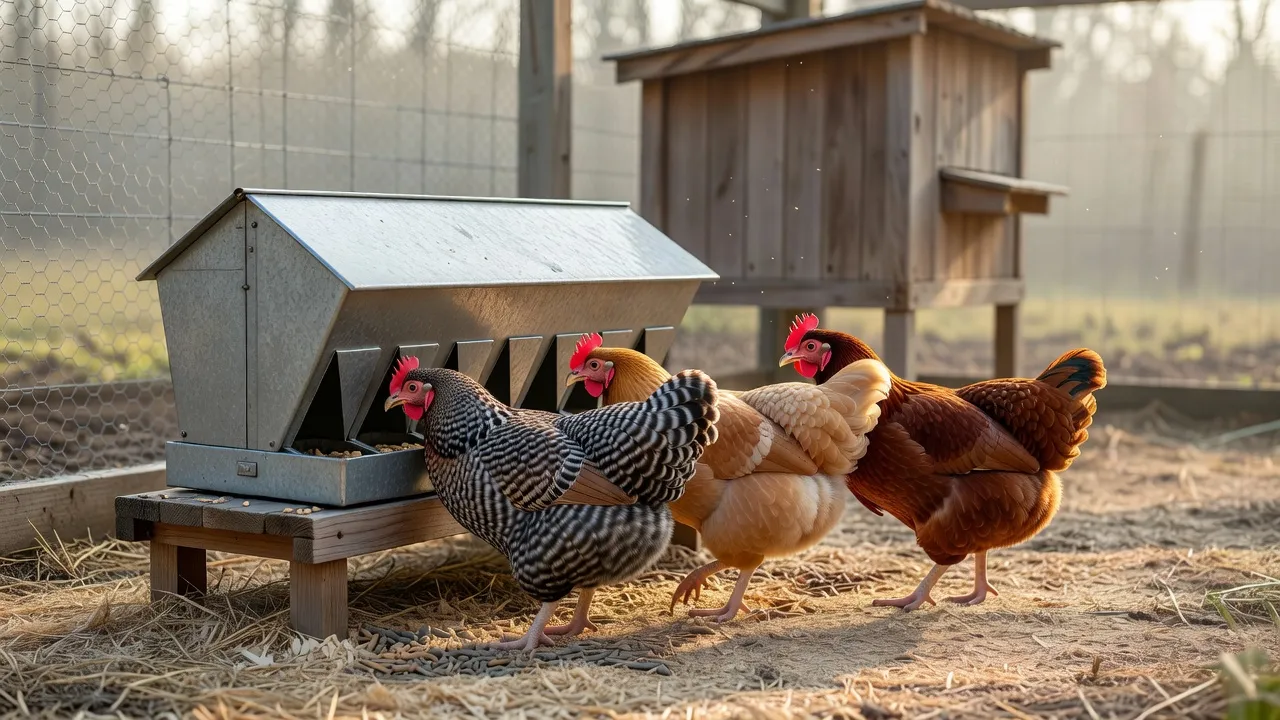
In its own container, free choice, so each hen decides whether she needs calcium (Oregon State). For birds in floor pens, hang a feeder of limestone or oyster shell (Manitoba Agriculture). A small dish or a wall-mounted cup beside the main feeder works, and the best chicken feeder guide covers keeping the main feeder dry and covered.
Particle size matters. Supply a third to half of the calcium as pieces about half a centimeter across, roughly the size of small pebbles. They stay in the gizzard longer and release calcium at night, when the hen forms the shell (Manitoba). Buy coarse, hen-sized oyster shell rather than oyster shell flour.
A two-compartment cup on the wall is the simplest setup if you also offer grit: oyster shell on one side, grit on the other. Hang it at about the height of the hens’ backs, the feeder height Maryland Extension gives, so they do not scratch bedding into it. A bag lasts a long time, so a small flock needs only the smallest bag the store sells.
Don’t mix it into the feed as a routine. The one exception is a flock laying thin shells: add 2 pounds of oyster shell to every 100 pounds of complete layer ration as a quick fix, then drop it once shells recover (Mississippi State Extension). That works out to 2 percent of the ration.
| Source | When | How | Notes |
|---|---|---|---|
| Oregon State, PNW 477 | Laying hens | Separate feeder, free choice | Required with all-purpose feed |
| Penn State | Layers over 18 weeks | Separate feeder, free choice | Grit offered the same way |
| Alabama Extension | Optional on good layer feed | Not specified | Inexpensive, no harm |
| Manitoba Agriculture | Laying hens | Hanging feeder in floor pens | About 10 percent of the diet as limestone or oyster shell; part as pebble-sized pieces |
| Mississippi State | Only when shells are thin | 2 lb per 100 lb of layer ration | Stop once shells recover |
Sources checked October 24, 2026.
A mixed flock is the main reason to keep oyster shell in its own dish. Growing pullets and roosters need far less calcium than a laying hen, and extra calcium does a bird that is not laying no good. A side dish lets each bird take what it needs. Shell stirred into the only feed in the coop does not.
Is oyster shell the same as grit?
No, and the two do different jobs. Oyster shell is too soft to aid grinding, so it cannot stand in for grit (Oregon State). Grit is insoluble stone that lodges in the gizzard and grinds whole grains. Oyster shell dissolves to supply calcium. Insoluble granite grit is a poor calcium source (Manitoba), so neither replaces the other.
Whether hens need grit at all depends on their diet, and the sources split here. Backyard flocks on commercial feed do not need grit, because the feed is already ground (Alabama Extension). Give insoluble grit when you feed scratch grains, unless the birds reach the ground and find small stones, and buy it at a feed store otherwise (Oregon State). Penn State lists grit free choice for layers.
Chicks need their own rule. A chick on nothing but crumbles has little to grind, and grit becomes useful once chicks get treats, grass or weeds. Use chick-size grit for young chicks and move to regular grit as they grow. Do not put grit in front of newly hatched chicks, because some cannot tell grit from food, gorge on it and impact the crop.
My reading: if your hens eat only layer pellets or crumbles, grit is optional. If you feed scratch, whole grains or let them forage on grass, offer grit in its own dish beside the oyster shell. Limit scratch to what the flock eats in about 20 minutes, about 10 to 15 percent of their daily food (Oregon State).
What causes thin or soft eggshells?
Calcium is the first suspect, but not the only one. Thin shells that crack easily, or shells with a rough, sandpaper feel, mean hens could use oyster shell (Oregon State). A diet of whole grains or mineral-poor feeds is a common cause, and a complete layer ration as the only feed fixes it (Mississippi State).
Check the other causes too (Manitoba Agriculture). Temperatures over 32°C, about 90°F, stress hens and weaken shells. Older hens lay weaker shells, and hens that start laying before they get a proper layer diet use up their bone calcium. Too much phosphorus in a homemade feed thins shells. Hens need vitamin D3 in their feed, and a deficiency shows most in winter, when birds get little sunlight. Keep hens calm and give them no more than 16 hours of light, so the coop light guide matters here too.
Treats dilute calcium, and winter is when most keepers add scratch. The winter feeding guide sets the limits. Hens that fill up on scratch, treats or kitchen scraps lay worse, and scratch mixed into complete feed dilutes the nutrients (Alabama Extension). Keep layer feed as the main diet.
When it is not the feed
Some diseases, including infectious bronchitis, cause weak or misshapen shells (Manitoba). If shells stay thin after a week or two on layer feed with oyster shell available, or hens look sick, ask a vet who treats poultry.
Can chickens eat their own eggshells?
The sources disagree. Alabama Extension counts eggshells as a calcium source if you sun-dry them for a day or two or oven-dry them at 350°F for 10 minutes. Manitoba Agriculture rates eggshells poor. Oyster shell or feed-grade limestone is the choice both accept.
If you do feed shells back, dry them at 350°F for 10 minutes, the Alabama Extension method, and crush them until they no longer look like eggshell. A recognizable shell can teach hens to peck eggs, so crush finely.
Questions people ask
When should I start giving my chickens oyster shell?
When they start laying. Switch to layer feed at about 18 to 20 weeks or at the first egg, whichever comes first, and add ground oyster shell for layers (Oregon State Extension). Offer it free choice to layers over 18 weeks (Penn State Extension). Growing pullets do not need it.
Do chickens need oyster shell if they eat layer feed?
Usually not much. Hens on a high-quality complete layer feed probably do not need it, but it is cheap and does no harm (Alabama Extension). Some high-producing hens still need the extra calcium, and thin or rough shells are the sign (Oregon State).
Should I mix oyster shell into the feed?
Offer it in a separate feeder, free choice, so each hen takes what she needs (Oregon State, Penn State). For a short-term fix for thin shells, mix 2 pounds into every 100 pounds of layer ration, then stop once shells recover (Mississippi State Extension).
Is oyster shell the same as grit?
No. Oyster shell is too soft to help with grinding, so it cannot replace grit (Oregon State Extension). Oyster shell supplies calcium, while insoluble grit is small stone that stays in the gizzard. Granite grit is a poor calcium source (Manitoba Agriculture).
Do backyard chickens need grit?
That comes down to diet. Hens on commercial feed, which is already ground, do not need grit (Alabama Extension). Give insoluble grit when you feed scratch grains, unless the birds find small stones on the ground (Oregon State). Penn State lists grit free choice for layers.
Can I feed chickens their own eggshells instead?
The sources disagree. Alabama Extension counts eggshells, sun dried for a day or two or oven dried at 350°F for 10 minutes, as a calcium source. Manitoba Agriculture rates them poor. Oyster shell or limestone is the option both accept.
Sources
- Oregon State University Extension: How to Feed Your Laying Hens (PNW 477, James Hermes, 2016)
- Penn State Extension: Management Requirements for Laying Flocks
- Alabama Cooperative Extension: Feeding the Laying Hen
- Manitoba Agriculture: Weak Shelled Eggs and Your Small Flock of Laying Hens
- Mississippi State University Extension: Feeds and Nutrition

Written by Kyle
Kyle has kept backyard chickens on his own small farm for five years. He reads the extension research, the spec sheets and the owner complaints, then tells you what he would buy and what he would skip.