On this page
Most backyard flocks need a dry, draft-free coop more than they need a chicken coop heater. If you do heat, buy a listed radiant panel, mount it where hens can step toward it or away from it, run it on a thermostat and a GFCI-protected outlet, and leave the heat lamp on the shelf. Below are three panels worth a look, what each costs to run, and how to tell whether your flock needs one at all.
Short answer
Radiant panel, not a heat lampon a thermostat and a GFCI outlet
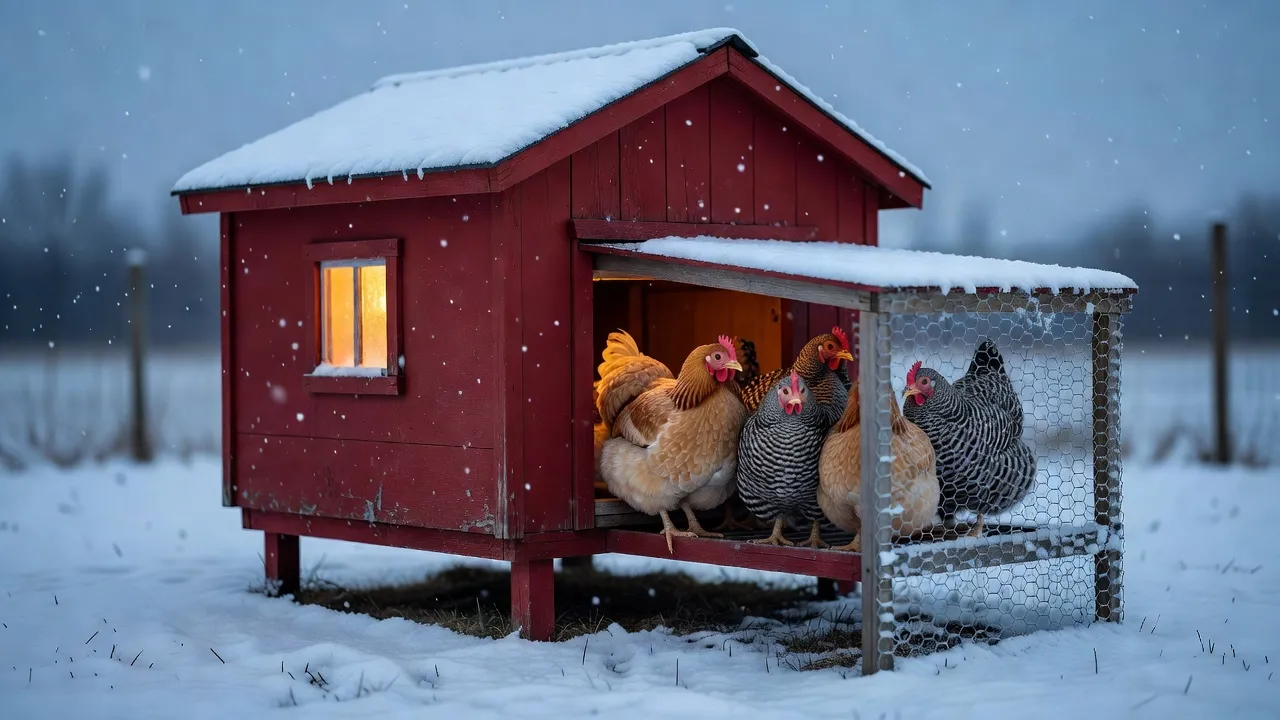
Heat is the last fix, not the first. Two extension services split on whether healthy chickens need it, so settle breed, age and climate before you spend anything. If you heat, a listed radiant panel at roost height is the safe way to do it.
Quick picks
Three radiant panels are worth a look, and the right one depends on whether you want the lowest price, a built-in sensor or the longest warranty. Specs and prices come from each maker’s product page, checked 2026-10-09.
| Heater | Power | Price | Built-in thermostat | Cost per 30 days, nonstop | Best for |
|---|---|---|---|---|---|
| Cozy Chickens Coop Heating Panel | 150 W | $59.99 (showed sold out) | Not listed on the product page | about $20 | Lowest price |
| Sweeter Heater Side Mount SM1140 | 150 W | $161.00 | Overheat cutoff only, no room thermostat listed | about $20 | Longest warranty |
| Chickcozy Smart Coop Heater | 200 W | $79.99 | Yes, temperature sensor | about $26 | Built-in sensor |
Monthly cost assumes full power for 24 hours a day at 18.16 cents per kWh, the EIA’s 2026 year-to-date US residential average. A thermostat that runs the heater half the time halves the bill.
Do chickens need a heater?
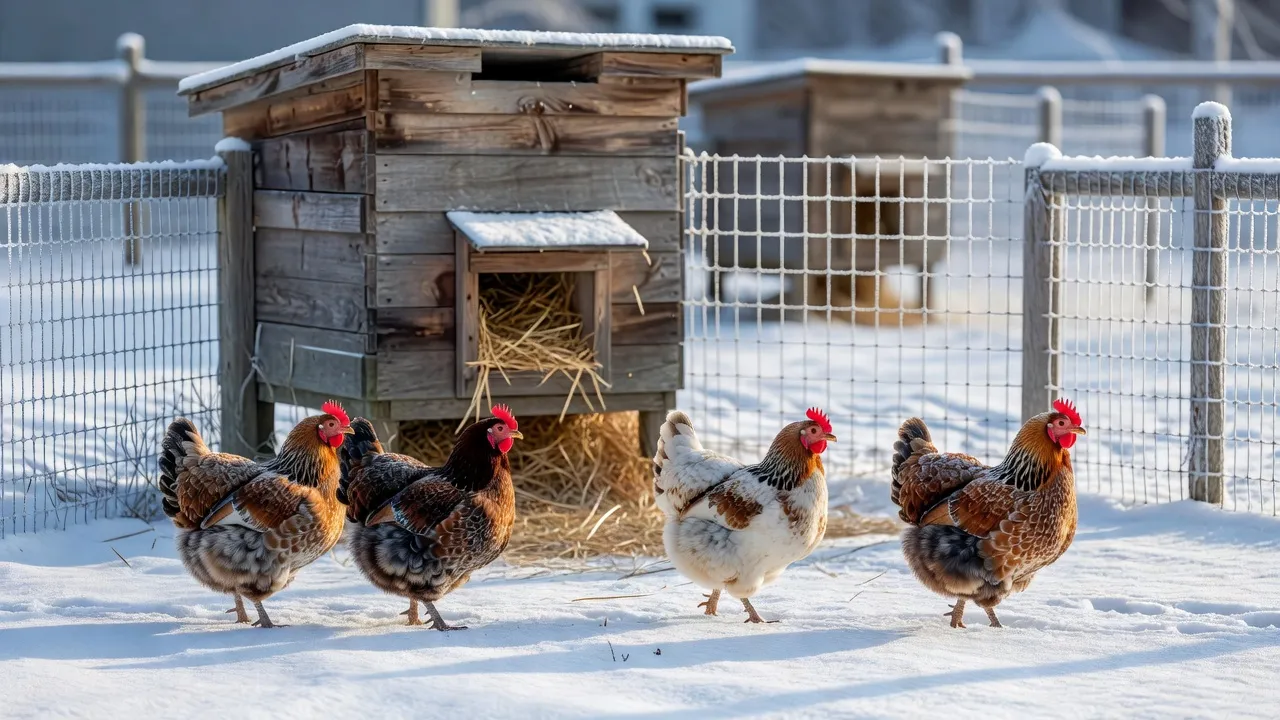
Often no, and the two extension services you see quoted disagree on the details. University of Maine Extension’s Donna Coffin says chickens do not need a heat source when they are acclimated, in a draft-free shelter and on dry bedding. University of Minnesota Extension says to provide supplemental heat when coop temperatures fall below 35°F, at the height of the nest boxes or the lower roost rung.
Both sources start from the same groundwork: dry bedding, no drafts and enough ventilation to clear moisture. UMN adds that moisture plus cold makes condensation, and condensation causes frostbite. They split on what comes next. UMaine describes a healthy, acclimated, hardy flock. UMN’s 35°F line is where you start asking whether yours is that flock.
Heat earns its place in these cases:
- UMN says Plymouth Rock, Wyandotte, Ameraucana and Orpington over-winter well, while smaller breeds, breeds with less feathering and breeds with large combs and wattles need extra care.
- UMN says old age, low body weight or poor health keep a bird from adapting to cold.
- UMN lists huddling, holding a foot up to the breast and puffed feathers as signs.
- In the r/BackYardChickens thread on heat, one keeper reports losing a silkie when the temperature dropped to 15°F, and a reply says silkies are not winter hardy. Another commenter notes that in colder continental climates the need for heat can come up. These are owner reports, not controlled results.
Not vet advice
UMN lists huddling, holding a foot up to the breast and puffed feathers as signs of cold. A bird that is limp, will not stand or has frostbitten comb tips needs a vet, not a hotter coop.
The long version, with a decision table by breed and climate, is in should you heat a chicken coop. Moisture is the usual culprit when hens struggle in cold, so read how much ventilation a coop needs and how to insulate a chicken coop before you buy anything.
The three heaters
All three are flat radiant panels. UMN says radiant heaters, which include brooder plates, panels and hanging heaters, warm the birds but not the surrounding air, and that the product you pick should be approved for use around chickens and livestock. The notes below come from the makers’ product pages and from owner reports linked where I found them.
Cozy panel: the lowest price
Cozy Products lists this panel at 150 W and 120 V, 19 by 8 inches and 1 inch deep for the wall mount, with a 6-foot cord. The product page calls it ETL-listed and zero-clearance, and says it mounts on keyhole slots or stands on the included feet. The price was $59.99 on 2026-10-09 and the page showed the panel as sold out, so check stock before you plan around it.
The page does not list a thermostat. Budget for a separate thermostat controller and read the manual first to confirm the panel is rated for one. UMN says thermostats, built in or bought separately, cut electricity costs.
Cozy Chickens Coop Heating Panel
a small coop where one outlet sits within 6 feet of the roost wall
- Power
- 150 W, 120 V AC
- Wall-mount size
- 19 x 8 x 1 in
- Cord
- 6 ft
- Listing
- ETL-listed, zero-clearance (per maker)
- Mounting
- Wall keyhole slots or included feet
- Lowest price of the three
- ETL listing and zero-clearance rating on the maker page
- One-inch profile on the wall
- Product page lists no thermostat
- Showed sold out on 2026-10-09
- A 6-foot cord means the outlet must sit close, and UMN says extension cords do not belong between the house and the coop
Sweeter Heater: the longest warranty
Sweeter Heater makes overhead and side-mount panels from 32 W to 150 W. The 11 by 40 inch Side Mount SM1140 is the 150 W model: 1.4 amps, 8 pounds, $161.00 on the maker’s shop on 2026-10-09, with brackets included. The maker’s side mount page says the lens surface runs 160 to 180°F, that a snap-action thermal control shuts the unit off if heat cannot escape, and that it mounts about 6 to 20 inches over the animals. The warranty is three years, cord excluded.
The pages I read do not name a UL or ETL listing. NFPA says to use listed equipment according to its listing instructions, so ask the maker for the listing before you wire one in. A 100 W SM1130 at $147.00 covers a smaller roost.
Sweeter Heater Side Mount SM1140
a keeper who wants a long warranty and a low-temperature surface and will pay for it
- Power
- 150 W, 1.4 A
- Size
- 11 x 40 in, 8 lb
- Lens surface
- 160 to 180°F (per maker)
- Mounting
- Flush to wall or ceiling, 6 to 20 in above the birds, brackets included
- Warranty
- 3 years, cord excluded
- Three-year warranty, the longest of the three
- Snap-action overheat cutoff per the maker
- Sealed lens the maker says washes clean
- Costs more than twice the Cozy panel
- No room thermostat listed, only an overheat cutoff
- Product pages checked name no UL or ETL listing
Chickcozy: the built-in sensor
Chickcozy’s heater is a 200 W panel, 16 by 11 by 1.2 inches, with a built-in temperature sensor that adjusts power to a preset range. The product page says UL and FCC certified, lists $79.99 (regular $89.99) on 2026-10-09, and notes it works with timers and controllers, which are not included. It mounts on the wall or stands on four legs, and a dust cover comes in the box, which helps with the dust buildup NFPA warns about.
The maker puts the effective radiant range within 40 cm, about 16 inches. That short reach is the point of a radiant panel, and it tells you where to put it: close to the roost, below the birds’ backs. It also ships as a chick brooder plate. For that job, read how brooder heat plates work.
Chickcozy Smart Coop Heater
a keeper who wants the panel to manage itself and may reuse it as a brooder plate
- Power
- 200 W, 110/120 V
- Size
- 16 x 11 x 1.2 in
- Sensor range
- About 70 to 190°F (per maker; the page gives both 190 and 191)
- Listing
- UL and FCC certified (per maker)
- Mounting
- Wall mount or four legs, dust cover included
- Temperature sensor adjusts power on its own
- UL certification on the maker page
- Dust cover included
- Flat mode doubles as a brooder plate
- Highest draw of the three: about $26 a month at full power
- Radiant reach is short, within about 16 inches
- Cord length not stated on the product page
What a coop heater costs to run
A 150 W panel on nonstop costs about $20 a month. The math is watts divided by 1,000, times hours, times your rate. At 18.16 cents per kWh, 150 W for 24 hours is 3.6 kWh, or about $0.65 a day, using the EIA’s 2026 year-to-date US residential average.
| Draw | kWh per day | Per day | Per 30 days | A 90-day cold stretch |
|---|---|---|---|---|
| 50 W | 1.2 | $0.22 | about $6.50 | about $20 |
| 100 W | 2.4 | $0.44 | about $13 | about $39 |
| 150 W | 3.6 | $0.65 | about $20 | about $59 |
| 200 W | 4.8 | $0.87 | about $26 | about $78 |
Those are full-power numbers. A thermostat that runs the heater half the time cuts them in half, which is why UMN points to thermostats as a cost control. Your rate will differ from the national average, so enter your own below.

Heater cost calculator
Watts × hours a day × days × your electricity rate.
Per month
$19.61
Per winter
$78.45
- Energy per month108.0 kWh
- Cost per day$0.65
An estimate from the numbers above, not a bill. Heater labels and your local rate change the result.
Will a panel heat my whole coop?
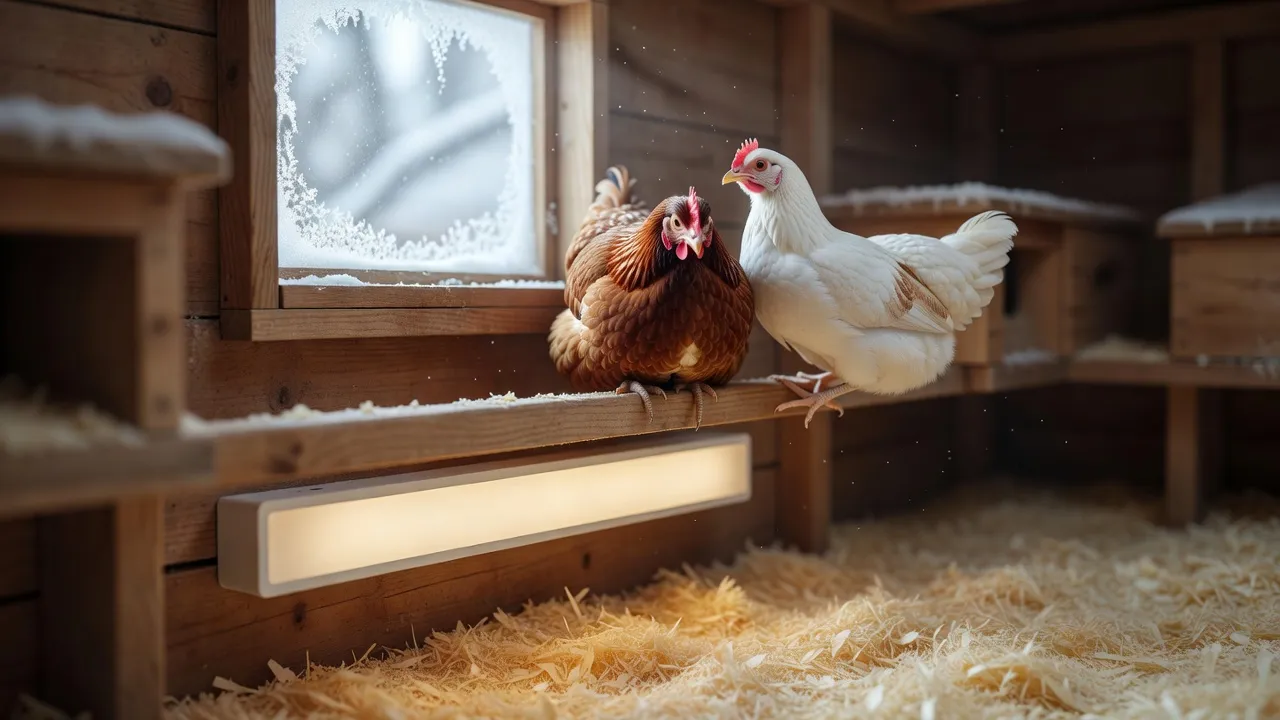
No. A panel warms the birds and surfaces in front of it, not the air in the coop. One viewer of a coop heater review video wrote that a panel will not heat a coop unless the coop is tiny. That reads as a complaint, but it describes the product correctly: you get a warm spot at roost height, and the hens choose whether to use it. Coffin makes the same point about wall-mounted heaters, which sit on the wall so chickens can move toward them if they want.
Do not buy a panel to fix a coop that is drafty or wet. A viewer on a Cozy Coop 200 W review asked how to lower the humidity in the coop after ordering a panel. Humidity is a ventilation problem, and the ventilation guide covers it. Another viewer on that review, who lives where it reaches -25°C (about -13°F) before wind chill, says a chicken cannot survive that without a heat source. UMaine Extension disagrees for acclimated birds, so treat that as one keeper’s view.
Mount height matters more than watts. UMN says to place supplemental heat at nest-box or lower-roost height and to put a thermometer on the wall at each of those heights to track coop temperatures. For sizing and clearance, see radiant flat panel coop heaters compared.
Why heat lamps are the wrong heater
Heat lamps top the list of coop fire causes. Greg Day of the Office of the Maine Fire Marshal names heat lamps, extension cords, bedding and water heaters as the four top things that cause a coop fire, and says of the four, heat lamps can be the most dangerous because chickens can knock them over into the bedding. It can take just minutes for a bulb to ignite straw. A 2020 fire in Clifton, Maine, killed six chickens, and firefighters named a newly installed heat lamp as the most likely cause.
UMN does list an approved heat lamp as an option. It says to never hang a lamp by its cord and notes that a caged lamp helps keep the bulb off the bedding if it falls. That is a lot of conditions for a device that can burn the coop down. UMaine’s Coffin puts a heat lamp bulb at about 500 degrees, says using one in a coop is asking for trouble, and suggests a wall-mounted heater designed for safety if you are set on heating.
Safe install checklist
Wire it like a barn outlet, not a bedroom one. Here is the list, drawn from NFPA, UMN and the Maine Fire Marshal’s office.
- Hire an electrician for the outlet. UMN says to always work with a professional electrician when installing electricity in your coop. Plan the outlet so the heater cord reaches it without an extension.
- Put every receptacle on GFCI protection. NFPA says all coop receptacles should have ground-fault circuit interrupter protection because of the outdoor location and moisture.
- Buy listed equipment and use it to the instructions. NFPA says listed equipment should only be used based on its listing instructions, and that non-listed and makeshift equipment should be avoided.
- Keep dust off the electrics. NFPA calls for dust-resistant boxes and covers, fully enclosed light fixtures and regular cleaning of dust buildup.
- Keep bedding and cords away from the heater. UMN says to keep all wires away from poultry, water and flammable litter. The Maine Fire Marshal’s office calls straw highly combustible.
- Use the thermostat. UMN says thermostats, built in or separate, help manage use and cost.
- Put a thermometer at roost height. UMN suggests one at the nest-box height and one at the lower roost rung, so you see what the birds feel.
No extension cords between the house and the coop
UMN says to use extension cords only short term and never to run power to a coop. The Maine Fire Marshal’s office lists extension cords among the top four coop fire causes.Heat the water, too
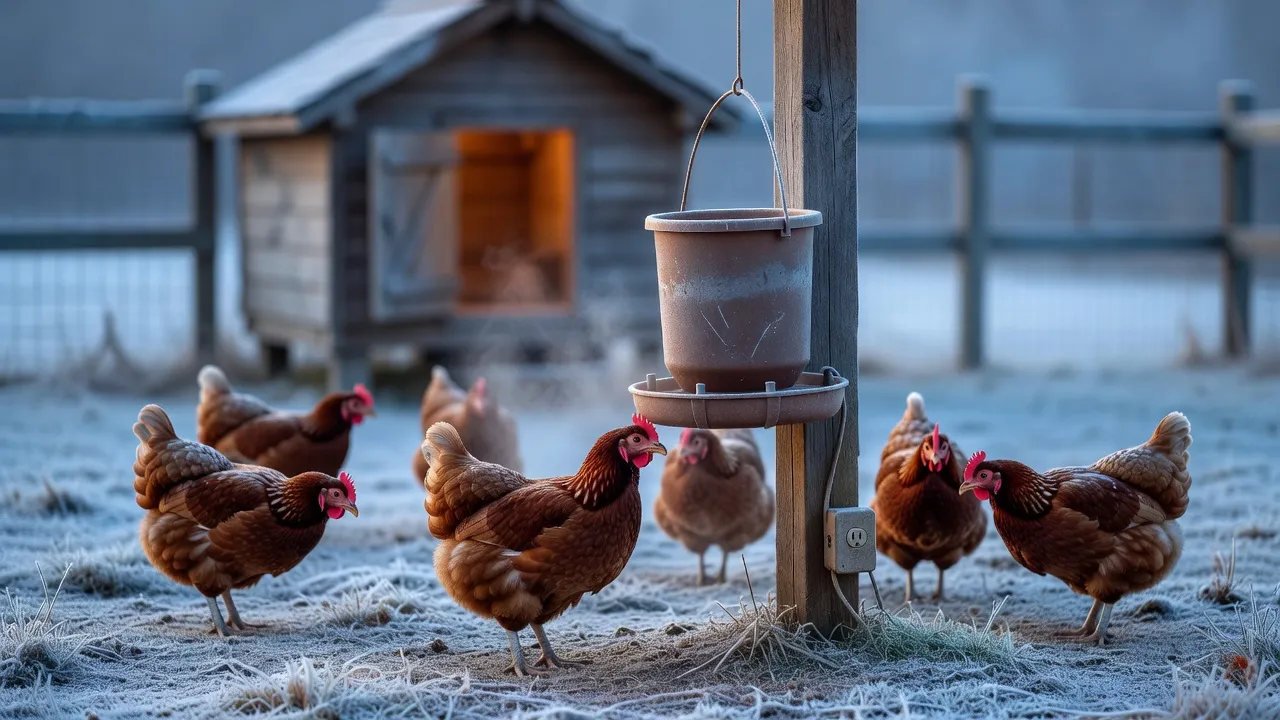
Water freezes before hens do, and UMN says to keep it from freezing with a heated fount, a heated base or a covered heated dog dish. The same fire advice applies: NFPA says electrically heated waterers should be listed. Kyle’s picks are in heated chicken waterers, and how to keep chicken water from freezing covers the no-electric options.
Everything winter-related sits in the winter chicken coop hub, from ventilation and insulation to running costs.
Questions people ask
Do chickens need a heater in winter?
Often no. University of Maine Extension says chickens do not need a heat source when they are acclimated, in a draft-free coop and on dry bedding, while University of Minnesota Extension advises supplemental heat when coop temperatures fall below 35°F. Breed, age and climate decide which advice fits your flock. Kyle sorts it out in should you heat a chicken coop.
At what temperature should I heat my chicken coop?
University of Minnesota Extension sets the line at 35°F in the coop, with heat at nest-box or lower-roost height. University of Maine Extension says healthy, acclimated birds do not need heat at all. Treat 35°F as the point to check light-bodied breeds and to watch for huddling, a lifted foot or puffed feathers, which UMN lists as signs of cold.
Are flat panel heaters safe for chicken coops?
They are safer than a heat lamp, not risk-free. University of Maine Extension points keepers who insist on heat toward wall-mounted radiant heaters built for coops. Buy a listed unit, plug it into a GFCI-protected outlet, follow the clearance in the manual and keep bedding, cords and dust off it. See radiant flat panel coop heaters compared.
How much does it cost to heat a chicken coop?
A 150 W panel running nonstop uses 3.6 kWh a day, about $0.65 a day or $20 a month at 18.16 cents per kWh, the 2026 year-to-date US residential average from the EIA. A thermostat that runs it half the time halves the bill. The calculator on this page takes your own rate.
Is a heat lamp safe in a chicken coop?
Kyle says skip it. The Office of the Maine Fire Marshal lists heat lamps, extension cords, bedding and water heaters as the four top coop fire causes, and a lamp knocked into straw can start a fire within minutes. A radiant panel removes the bulb, the clamp and the drop.
Do silkies need heat?
Silkies are a likelier case than heavy breeds. University of Minnesota Extension says smaller, lightly feathered breeds and breeds with large combs and wattles need extra care, and one r/BackYardChickens owner reports losing a silkie at 15°F. Keep the coop dry and draft-free first, then add a thermostat-controlled radiant panel at roost height if your winters hit the teens.
Sources
- University of Minnesota Extension: Caring for chickens in cold weather
- Bangor Daily News: Don't put heat lamps in your chicken coop (UMaine Extension and the Maine Fire Marshal's office)
- NFPA: DIY chicken coop fire and electrical safety
- EIA Electric Power Monthly: average price of electricity by sector (2026 year to date)
- Cozy Products: Cozy Chickens Chicken Coop Heating Panel (maker page)
- Sweeter Heater: Side Mount 11x40 SM1140 (maker page)
- Sweeter Heater: Side Mount model (maker specs)
- YouTube: Cozy Coop 200W flat panel heater review (viewer comments)
- Chickcozy: Smart Chicken Coop Heater and Chick Brooder (maker page)
- r/BackYardChickens: PSA, chickens don't need heat overwinter (owner thread)
- YouTube: Chicken coop heater review (EconoHome, viewer comments)

Written by Kyle
Kyle has kept backyard chickens on his own small farm for five years. He reads the extension research, the spec sheets and the owner complaints, then tells you what he would buy and what he would skip.