On this page
What to feed chickens in winter comes down to the same complete layer feed they eat all year, offered free choice, plus a small handful of scratch late in the day, free-choice grit and oyster shell, and water that never freezes.
Short answer
Layer feed first, scratch lastfrom Ohioline and University of Minnesota Extension
Keep complete feed in front of the flock all day. Toss a little scratch before roost on cold nights, put grit and oyster shell in their own dishes, and check the water morning and evening.
The short version
- Mature layers need a pellet or crumble with 14 to 17 percent crude protein in winter (Ohioline).
- Plan on about 2 pounds of feed per laying hen per week (Ohioline).
- Feed intake may rise up to 25 percent in cold weather (University of Minnesota Extension).
- Keep scratch to about a handful per 10 birds (UMN) and under 10 percent of total feed (University of Maryland Extension).
- Give free access to grit, because snow cover stops chickens from finding stones (UMN).
- Without water, chickens stop eating (UMN).
What is the best feed for chickens in winter?
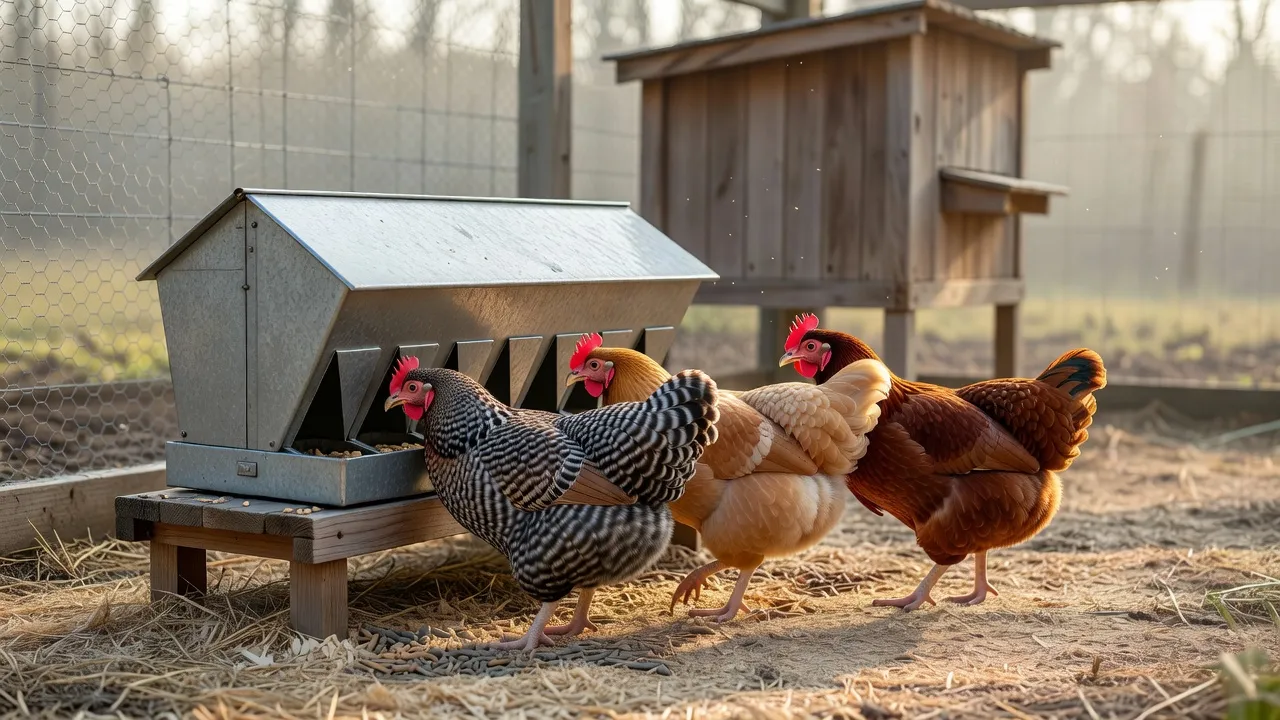
Complete layer feed, the same as summer. Mature laying chickens need a pellet or crumble containing 14 to 17 percent crude protein during the winter (Ohioline), and the normal balanced diet keeps working in the cold, because it drives both feather and egg production (University of Minnesota Extension). Offer it free choice. Birds need extra energy in cold months, so feed needs to be available at all times (University of Maryland Extension).
Do not trade the bag down for winter. Layers should not eat starter or grower feed, because the nutrient levels are wrong for laying hens and medications in starter diets may leave residues in eggs (Oregon State Extension). Molting hens are the exception on protein. A 20 percent protein diet is usually adequate while they regrow feathers (Texas A&M College of Veterinary Medicine), and the chicken molting in winter guide covers how to handle a mixed flock.
Do chickens eat more in winter?
The sources split, so watch your own feeder. Feed intake may increase up to 25 percent during cold weather, so keep extra feed on hand and top off feeders routinely (University of Minnesota Extension). Ohioline says the opposite: chickens will eat less in the winter than the summer, with each laying hen needing about 2 pounds of feed a week, dual-purpose breeds more and bantams less.
My reading is that both happen, in different weeks. A flock that slows its laying in short days needs less feed for eggs, and the same flock in a hard freeze needs more for heat. Free-choice feed covers both cases. Weigh what goes into the feeder for a week in December and again in a cold week in January, and you will know which way your flock leans.
Should you feed chickens scratch or corn in winter?
Yes, a little, late in the day. Scratch is a mix of seeds and grains such as corn, oats, wheat and barley, and digestion of scratch grains also produces heat, so scratch before roost helps chickens stay warm on cold nights (University of Minnesota Extension). Ohioline gives the same timing: a small amount of scratch late in the day, because laying hens need more carbohydrates for warmth and egg production.
Keep it small, because scratch dilutes the feed. Scratch, table scraps and garden waste unbalance the diet, so supplement only what hens clean up in 15 minutes, or none at all (Oregon State Extension). Here is how the limits line up:
| Winter extra | How much | When | Source |
|---|---|---|---|
| Scratch grains or cracked corn | No more than a handful per 10 birds | Before roosting | UMN |
| Scratch | A small amount | Late in the day | Ohioline |
| High-energy treats, suet cakes with birdseed | Sparingly, under 10 percent of total feed intake | Evening | UMD |
| Any supplement | What hens clean up in 15 minutes | Any time | Oregon State |
| Poultry grit | Free choice | All winter | UMN |
| Oyster shell | Free choice, separate feeder | All year for layers | Oregon State |
Sources checked November 3, 2026. Ohioline’s ANR-66 is dated December 2018, UMD’s FS-1133 was updated January 2023 and UMN’s page was reviewed in 2026.
Scratch can also get a flock moving. It encourages activity and cuts boredom when birds stay inside over winter (UMN), so scattering it in the bedding gives hens a reason to scratch and turn the litter.
Do chickens need grit in winter?
Yes, if they eat anything besides complete feed. Give free access to poultry grit throughout the winter months, because snow cover and less time outdoors keep chickens from scavenging the small stones that help them digest (University of Minnesota Extension). Give insoluble grit whenever you feed scratch grains, unless the birds find small stones on the ground (Oregon State Extension).
Grit and oyster shell do different jobs. Grit is stone for the gizzard. Oyster shell is calcium for eggshells and goes free choice in a separate feeder (Oregon State). The oyster shell for chickens guide explains the difference and shows a two-dish setup.
What winter treats are safe for chickens?
Root vegetables, squash and pumpkins are good winter treats, and seeds and seed blocks give birds energy and something to do (University of Minnesota Extension). Not all produce is safe. Potatoes are on UMN’s list of foods to skip, so check a treat before you feed it.
Use treats to get birds outside, not to fill them up. Chickens tend to avoid going out in the snow, and a little hay laid in the run encourages them to come out, scratch around and forage (UMN). Treats should never replace a balanced ration, and the 10 percent ceiling from UMD covers all of them together.
Why does water matter more than feed in winter?
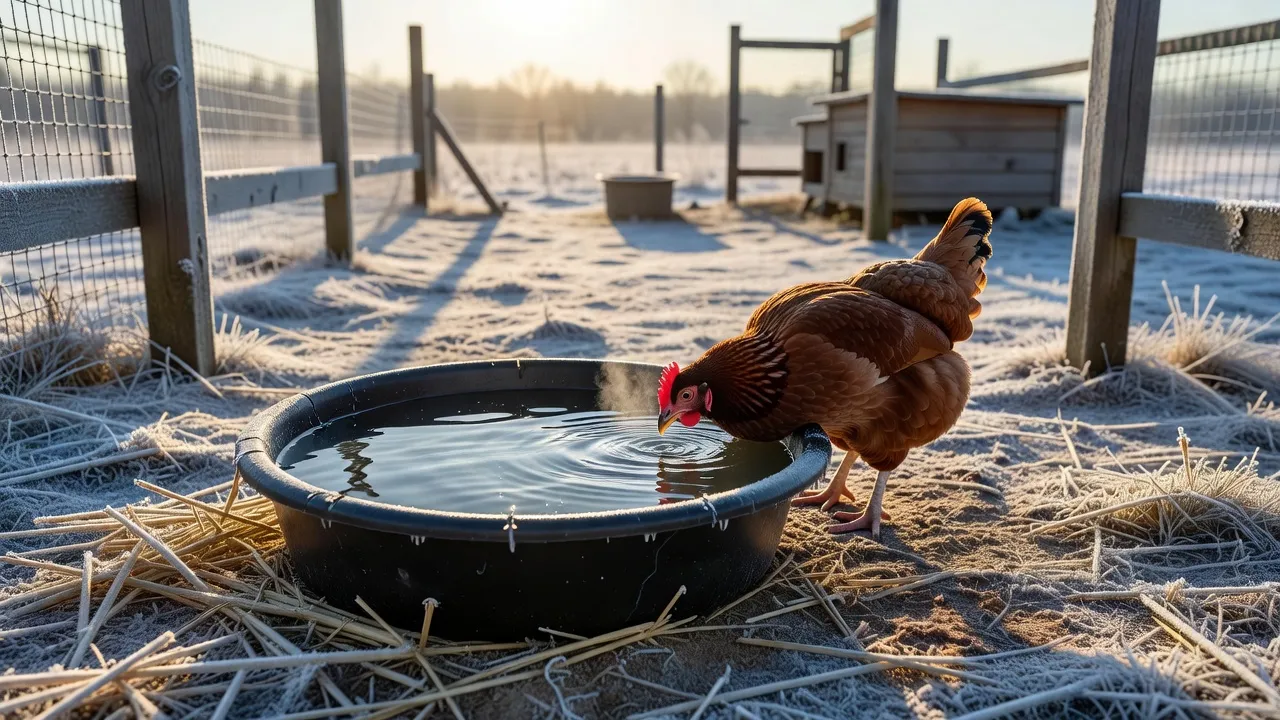
Chickens that cannot drink stop eating. Water is part of the diet and necessary for digestion, and without water, chickens will stop eating (University of Minnesota Extension). Water that is frozen over is not available to the birds, and they cannot break through the ice, so check and replace it several times a day (University of Maryland Extension).
Plan the water before the first hard freeze. Change it twice a day and more often on colder days, and check it in the evening so birds have water for the full 24 hours (Ohioline). The heated chicken waterer guide ranks the electric options, and how to keep chicken water from freezing covers the ways that need no power.
How should you store chicken feed in winter?
Keep it dry and sealed. Store feed in an animal and moisture-proof container, such as a metal garbage can, to prevent contamination or spoilage (University of Minnesota Extension). Sealing holes and cracks keeps rodents out of the coop over winter (UMN), and a sealed bin keeps them out of the feed. The rats in the chicken coop guide covers cleanup, and the rat-proof chicken feeder guide covers feeders that close.
When it is not the feed
A hen that stops eating, drops weight or sits puffed up all day may be sick, not hungry. A drop in laying is often the first sign of disease, with lethargy, lameness, coughing or a dull look to follow (Oregon State Extension). Call a veterinarian if several birds show the same signs.
The winter chicken care guide covers the rest of the cold season, from coop prep to light.
Questions people ask
What is the best thing to feed chickens in winter?
A complete layer pellet or crumble, offered free choice all day. Mature layers need a feed with 14 to 17 percent crude protein in winter (Ohioline), and the normal balanced diet still works in the cold (University of Minnesota Extension).
Do chickens eat more in winter?
Usually, but the sources disagree. Feed intake may rise up to 25 percent in cold weather (University of Minnesota Extension), while Ohioline says chickens eat less in winter than in summer. Keep feed out all day and watch how fast the feeder empties.
Should I give my chickens corn or scratch at night in winter?
A little. Digesting scratch grains produces heat, so a small amount before roost helps chickens stay warm on cold nights (University of Minnesota Extension). Keep it to about a handful per 10 birds (UMN) and under 10 percent of total feed (University of Maryland Extension).
Do chickens need grit in winter?
Yes, if they eat scratch or anything besides complete feed. Snow cover keeps chickens from finding small stones, so give free access to poultry grit through the winter (University of Minnesota Extension).
How much feed does a chicken need per week in winter?
About 2 pounds per laying hen per week, with dual-purpose breeds eating more and bantams less (Ohioline). Keep extra feed on hand in case storms keep you from the store (UMN).
What winter treats are safe for chickens?
Root vegetables, squash and pumpkins are good winter treats, and seeds and seed blocks add energy. Potatoes are not safe (University of Minnesota Extension). Treats should never replace a balanced ration.
Sources
- Ohioline (Ohio State University Extension): Winter and Your Backyard Chickens, ANR-66, 2018
- University of Minnesota Extension: Caring for chickens in cold weather (reviewed 2026)
- University of Maryland Extension: Winter Weather and Small Flocks (FS-1133, updated 2023)
- Oregon State University Extension: Why did my chickens stop laying? (PNW 565, reviewed 2023)
- Oregon State University Extension: How to Feed Your Laying Hens (PNW 477, 2016)
- Texas A&M College of Veterinary Medicine: Hen molting, what to egg-spect (2021)

Written by Kyle
Kyle has kept backyard chickens on his own small farm for five years. He reads the extension research, the spec sheets and the owner complaints, then tells you what he would buy and what he would skip.