On this page
A chicken dust bath is a shallow area of dry, fine material, usually sand, where hens roll and flick dust through their feathers to clear out oil and parasites. If your hens have no dusting spot, a big pan of sand in the pen will do (Oregon State Extension). This page covers what to put in the bath, where to put it, how to use diatomaceous earth safely and how often to refresh it. It is part of Kyle’s chicken run guide.
Short answer
Dry, fine sand under coverper Oregon State Extension and UC ANR
Fill a box or pan with washed play sand and keep it under a roof so it stays dry. Food-grade diatomaceous earth or plain wood ash can be mixed in, but only food-grade DE, mixed away from the birds while you wear a mask.
The short version
- Dust bathing removes excess oil and skin parasites, per the Merck Veterinary Manual and University of Georgia.
- Research shows hens prefer fine material such as sand or peat to straw or shavings.
- Sand boxes with an inert dust are very effective for mite self-treatment (Oregon State).
- Use only food-grade diatomaceous earth, never pool or filter grade (UC ANR).
- UC ANR’s dust box mix was a 50 pound bag of play sand with 6 cups of food-grade DE, refreshed every 4 to 6 weeks.
Why do chickens take dust baths?
Dust bathing is grooming. It absorbs excess oils from the feathers, chicks start at 1 to 2 weeks old, and it is social: hens often dust bathe together, touching (Merck Veterinary Manual). It maintains feather condition and removes skin parasites, and free-range hens dig dusting hollows in their favorite spots (University of Georgia poultry scientists).
A lack of dusting material leads to feather pecking and to sham or vacuum bathing, where hens go through the motions on a bare floor, so give the birds something to dust in (Georgia). That is also the practical fix for craters in the yard. Filling the holes does not work, because hens dig them right back. A dedicated bath gives them a proper place to go and cuts down on the digging, though it will not stop it. Hens with access to a dusting area bathe about every other day (Olsson and Keeling, Applied Animal Behaviour Science).
What do you put in a chicken dust bath?
Fine, dry material. Hens prefer fine substrates such as sand and peat over coarser straw and wood shavings (Olsson and Keeling review). The options compare like this.
| Material | What the source says | Source |
|---|---|---|
| Sand | A big pan of sand in the pen if hens have no dusting area | Oregon State Extension |
| Washed play sand | Smoother than concrete sand, pre-rinsed, and adds less dust | UC ANR (listed in sources below) |
| Food-grade diatomaceous earth | Mixed into sand for dust boxes, 6 cups per 50 lb bag | UC ANR |
| Inert dusts or sulfur dust | Mixed with sand, very effective for mite self-treatment | Oregon State Extension |
| Wood ash | Kept in a covered area for the author’s own hens | Oregon State Extension |
| Sand or peat versus straw or shavings | Fine substrates preferred | Olsson and Keeling review |
Sources checked October 24, 2026.
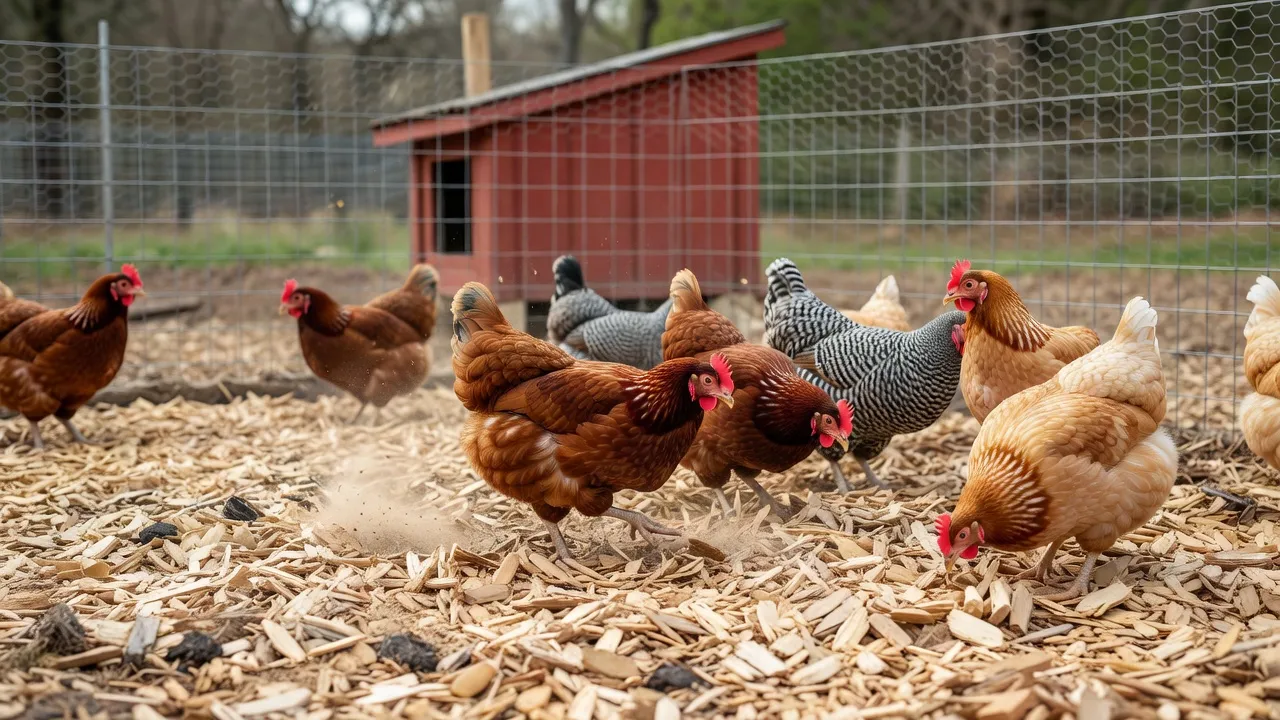
Garden soil works too, if it is loose and dry. Hens that free-range will dig their own bath in a bare patch. The problem is wet weather: a run floor that turns to mud is no use for dusting. The wood chips guide covers keeping the run floor drier.
Is diatomaceous earth safe in a chicken dust bath?
Food-grade DE is what researchers used, and grade matters. Use only food-grade diatomaceous earth around animals and people. Food-grade DE has less than 1 percent crystalline silica, while pool or filter grade can contain high amounts, and crystalline silica is classed as a human lung carcinogen (UC ANR chicken pest Q&A, entomologist Dr. Amy Murillo’s team).
Handle it carefully. Apply DE only in well-ventilated areas and wear a dust mask. Mix it into the sand away from the birds, then bring the box to them. UC ANR’s team did exactly that and saw no signs of harm, but still advises checking with your veterinarian, because the effect may depend on exposure.
UC ANR also answers the practical questions. DE does not go bad, but hens kick it over the sides, and once it is spread into the litter it is diluted and less useful. It still works when damp, because the particles keep their sharp texture, but it is less useful in rain or if the area floods. Its team refreshed the boxes every 4 to 6 weeks on average.
Skip straight DE. Mix a small amount of food-grade DE into a bag of sand, so the birds bathe mostly in sand (UC ANR). Given the lung warning above, keep DE a minor part of the mix, never the whole bath. Plain wood ash from the fireplace is the other common add-in.
A dust bath is not a mite treatment plan
Northern fowl mites complete their life cycle in 5 to 12 days and live up to 4 weeks off the bird. Once an infestation sets in, take the birds out, remove the bedding and clean the whole coop (Pat Patterson, Oregon State). If you find mites or lice, ask a vet who treats poultry about an approved product and any egg withdrawal period. Feather loss in fall is not proof of mites, and the molting or mites checks show how to tell them apart.
Where should a chicken dust bath go?
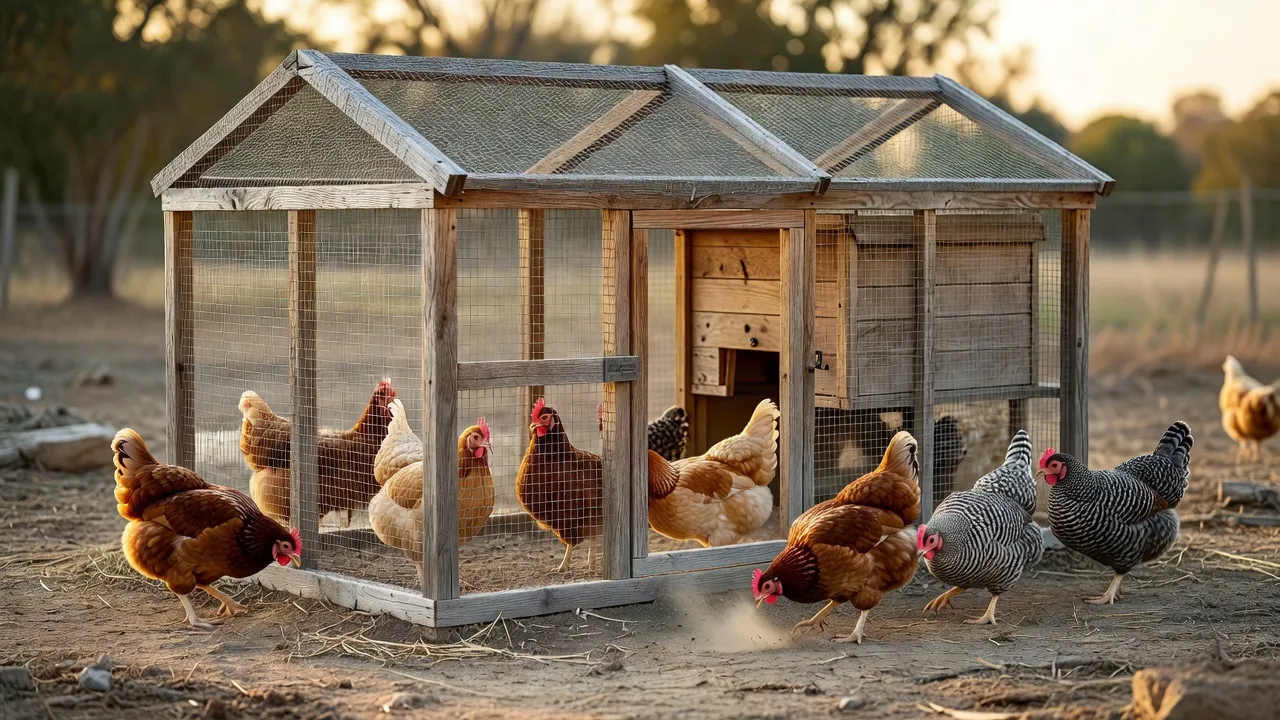
Somewhere dry and sheltered. Keep the bath under cover; DE loses its effect in rain or flooding (UC ANR). Under the run roof, under a raised coop or in a corner of a covered run all work. The run roofing section of the build guide covers roofs that shed water.
Inside the coop is possible if the coop is big enough, but expect dust. Dust bathing kicks fine material into the air, and the ventilation guide explains why coop air quality matters. Keep a dust bath well away from waterers and feeders so the sand does not end up in the feed.
In winter, a covered dust bath stays usable when the rest of the run is frozen or under snow. The how cold is too cold for chickens guide covers the rest of winter care.
How big should a chicken dust bath be?
No extension source in this research gives a size. A hen needs room to lie on her side and flick material over her back, and hens often dust bathe together (Merck). A wide, shallow box that fits two or three hens at once suits a small flock better than a deep, narrow one.
Use a low wooden frame from 2 by 6 boards, a plastic tub, a kiddie pool or an old tractor tire. A kiddie pool needs drain holes if it sits uncovered. Whatever you use, it has to drain or stay covered so it does not hold water.
How often should you change a chicken dust bath?
Top it up when the level drops and replace it when it turns wet, packed or dirty. Expect to refresh a DE dust box every 4 to 6 weeks, depending on flock size and how hard the birds kick the material out (UC ANR). If you clean the box out completely, wash it with soap and water to kill any mites left in it.
Droppings in the dust bath are normal. Scoop them out when you see them, the same way you would spot-clean the coop floor. The chicken coop bedding guide covers how to keep litter dry.
Questions people ask
What do you put in a chicken dust bath?
Fine, dry sand. UC ANR's poultry pest team used washed play sand, and if hens have no dusting spot, a big pan of sand will do (Oregon State Extension). Some keepers add wood ash or food-grade diatomaceous earth. Hens prefer fine material like sand or peat over straw or wood shavings (research review in Applied Animal Behaviour Science).
Why do chickens take dust baths?
To keep their feathers in shape. Dust bathing absorbs excess oils (Merck Veterinary Manual), removes skin parasites (University of Georgia poultry scientists) and gets dirt and oils off the birds (Oregon State Extension).
Is diatomaceous earth safe in a chicken dust bath?
Only food-grade diatomaceous earth, and only with care. Food-grade DE has under 1 percent crystalline silica, while pool or filter grade can contain much more, and crystalline silica is a known human lung carcinogen (UC ANR). Mix it in a ventilated area, wearing a dust mask, away from the birds, and ask your vet.
How much diatomaceous earth goes in a dust bath?
UC ANR's poultry pest team mixed a 50 pound bag of washed play sand with 6 cups of food-grade diatomaceous earth for its dust boxes, and refreshed the box every 4 to 6 weeks on average.
Can I put wood ash in a chicken dust bath?
Some keepers do. Retired Oregon State poultry specialist Pat Patterson writes that their own hens get a covered area with wood ashes. Use ash from plain firewood only, and keep it covered so it stays dry.
What if my chickens have no dust bath?
A lack of dusting material leads to feather pecking and sham dust bathing, where birds go through the motions with nothing to bathe in (University of Georgia poultry scientists). If hens have no dusting area, put a big pan of sand in the pen (Oregon State).
Sources
- Oregon State University Extension, Ask Extension: How do I get rid of chicken mites? (Pat Patterson, November 2024)
- UC ANR Pests in the Urban Landscape: Pests of chickens, questions and answers (Dr. Amy Murillo, March 2026)
- Merck Veterinary Manual: Behavior of Poultry
- University of Georgia Poultry Science: Behavior of the backyard flock, part 2 (March 2008)
- Olsson and Keeling: Why in earth? Dustbathing behaviour in jungle and domestic fowl (Applied Animal Behaviour Science)

Written by Kyle
Kyle has kept backyard chickens on his own small farm for five years. He reads the extension research, the spec sheets and the owner complaints, then tells you what he would buy and what he would skip.