On this page
A chicken run for your coop needs 8 to 10 square feet of space per hen, welded wire walls, wire buried 12 inches into the ground and a roof. Penn State Extension sets the space and burial numbers, and the rest comes from extension predator guides. This page gives you the size table, a materials formula with a worked example, the build steps in order, and your roofing options. It sits in Kyle’s chicken run guide.
Short answer
8 to 10 sq ft per henof run space, per Penn State Extension
Bury the wire 12 inches deep and turn about 6 inches of it outward. Wire the walls with welded hardware cloth, not chicken wire. Roof the run with wire or netting. Lock the hens in the coop at night.
How big should a chicken run be?
Plan on 8 square feet per laying hen, or 10 for large chickens. Penn State Extension’s space table also sets 1.5 square feet per laying hen inside the coop and 2 for large chickens, so the run is extra room on top of the coop floor. Cornell Cooperative Extension uses lower numbers: 2.5 to 3.5 square feet per bird inside the coop and 4 to 5 more in the fenced outside area.
I’d build to the Penn State number. Cornell’s figure is a floor, and a run costs less to build big the first time than to extend later. Use this table to turn your hen count into a floor area and a footprint:
| Hens | Cornell (4 to 5 sq ft each) | Penn State, laying hens (8 sq ft) | Penn State, large chickens (10 sq ft) | Footprints that fit |
|---|---|---|---|---|
| 4 | 16 to 20 sq ft | 32 sq ft | 40 sq ft | 4 x 8 ft or 5 x 8 ft |
| 6 | 24 to 30 sq ft | 48 sq ft | 60 sq ft | 6 x 8 ft or 6 x 10 ft |
| 8 | 32 to 40 sq ft | 64 sq ft | 80 sq ft | 8 x 8 ft or 8 x 10 ft |
| 10 | 40 to 50 sq ft | 80 sq ft | 100 sq ft | 8 x 10 ft or 10 x 10 ft |
| 12 | 48 to 60 sq ft | 96 sq ft | 120 sq ft | 8 x 12 ft or 10 x 12 ft |
Each row lists two footprints: the first fits laying hens at 8 square feet each, and the second fits large chickens at 10. Penn State does not define “large chickens,” so if you keep heavier breeds, use the second one. If you may add hens later, size for the bigger flock now.
Materials list and cost
Work out the wire first, then the lumber, because the wire is the part you can miscount. Order wire by square feet, and count three surfaces: the walls, the roof and the buried skirt.
| Part | How much you need | Notes |
|---|---|---|
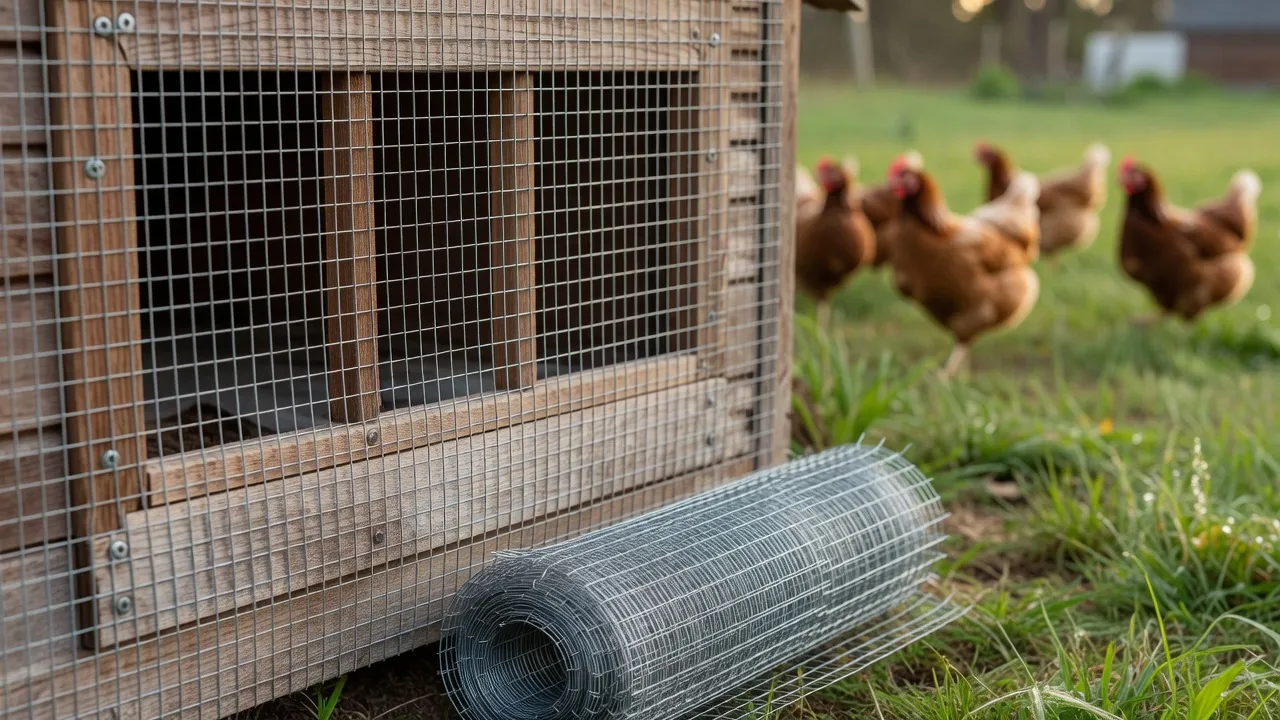
| Wall wire | Perimeter x wall height | Welded hardware cloth. See the hardware cloth guide for mesh and gauge. |
| Roof wire | The floor area of the run | Same wire, or netting if only hawks are a worry. |
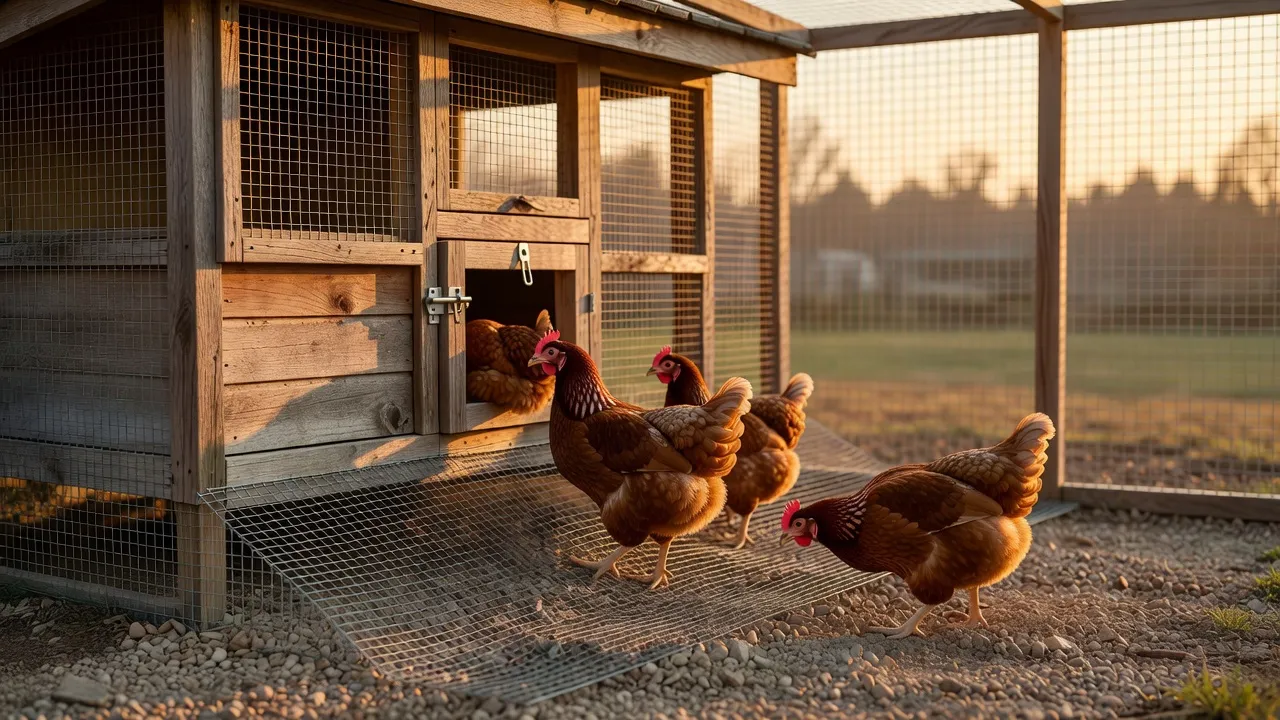
| Buried skirt | Perimeter x 1.5 ft | A 12 inch trench plus 6 inches turned outward needs a strip 18 inches wide (Penn State). |
| Posts and frame | Corners, gate posts and enough posts between them to keep the wire tight | Rot-resistant or treated lumber. |
| Fasteners | Screws and washers | Washers spread the load so the wire does not pull through. |
| Gate and latch | One of each | The University of Maryland calls raccoons notorious for their hand skills, so pick a latch they cannot work. See the predator-proofing guide. |
| Ground cover | Floor area x depth | See the wood chips guide. |
A worked example
Say you keep 6 large hens and want 10 square feet each. That is a 60 square foot run, built 6 feet by 10 feet and 6 feet tall:
- Perimeter: 2 x (6 + 10) = 32 feet.
- Walls: 32 ft x 6 ft = 192 square feet.
- Roof: 6 ft x 10 ft = 60 square feet.
- Skirt: 32 ft x 1.5 ft = 48 square feet.
- Total wire: 192 + 60 + 48 = 300 square feet.
A roll 36 inches wide and 50 feet long covers 150 square feet, so this run needs two rolls with nothing to spare. Buy a little over, since cuts and overlaps eat wire. Roll widths and lengths vary by brand, so divide your total by the roll’s width in feet times its length in feet.
I am leaving dollar figures out of this table. Lumber and wire prices move month to month and vary by store, so price your own list at the store where you will buy. Keepers swap build totals in threads such as Chicken run pricing on r/BackYardChickens.
Step-by-step build
Build in this order: site, frame, skirt, walls, roof, gate, floor. Doing the skirt before the walls saves you from digging next to finished wire.
- Pick the site. Penn State says to build on high, well-drained ground and face the coop and run south, so the sun warms and dries the soil. Low ground stays damp, and damp ground is a mold problem, as the wood chips guide explains.
- Mark the footprint. Use the table above to pick a floor area, then stake the corners so the run meets the coop’s pop door with no gap.
- Set the posts and frame. Make the frame square so your wire fits tight. Slack wire gives predators a gap to work at.
- Dig the skirt trench. Dig 12 inches deep around the whole perimeter. Penn State says to bury the wire at least 12 inches deep and toe it outward about 6 inches, and the University of Maryland suggests a trench 12 inches to 1.5 feet deep. Cornell sets a floor of at least 6 inches. I’d dig the 12.
- Wire the walls. Fasten welded hardware cloth to the frame with screws and washers, overlapping seams. Run the wire down into the trench and turn it outward along the bottom.
- Backfill the trench. Penn State also says burying wire with gravel makes animals less likely to dig at the fence base, so gravel is a smart top layer.
- Roof the run. See the next section.
- Hang the gate. Close the gap along the hinge side and fit a latch a raccoon cannot work.
- Seal the coop joint. Close any gap where the coop meets the run or the ground.
- Spread the floor. Pick a cover that stays dry. The Small and Backyard Poultry site also says to have the flock roost in a secured location at night and lock every door, so shut the pop door each evening.
A YouTube commenter on a popular predator-proof run build says most predators dig under the soil to reach the coop and asks for wire below the run. The extension numbers above are the same idea, done as a skirt.
The predator-proofing guide covers latches, vents and the night routine that go with this build.
Roofing options
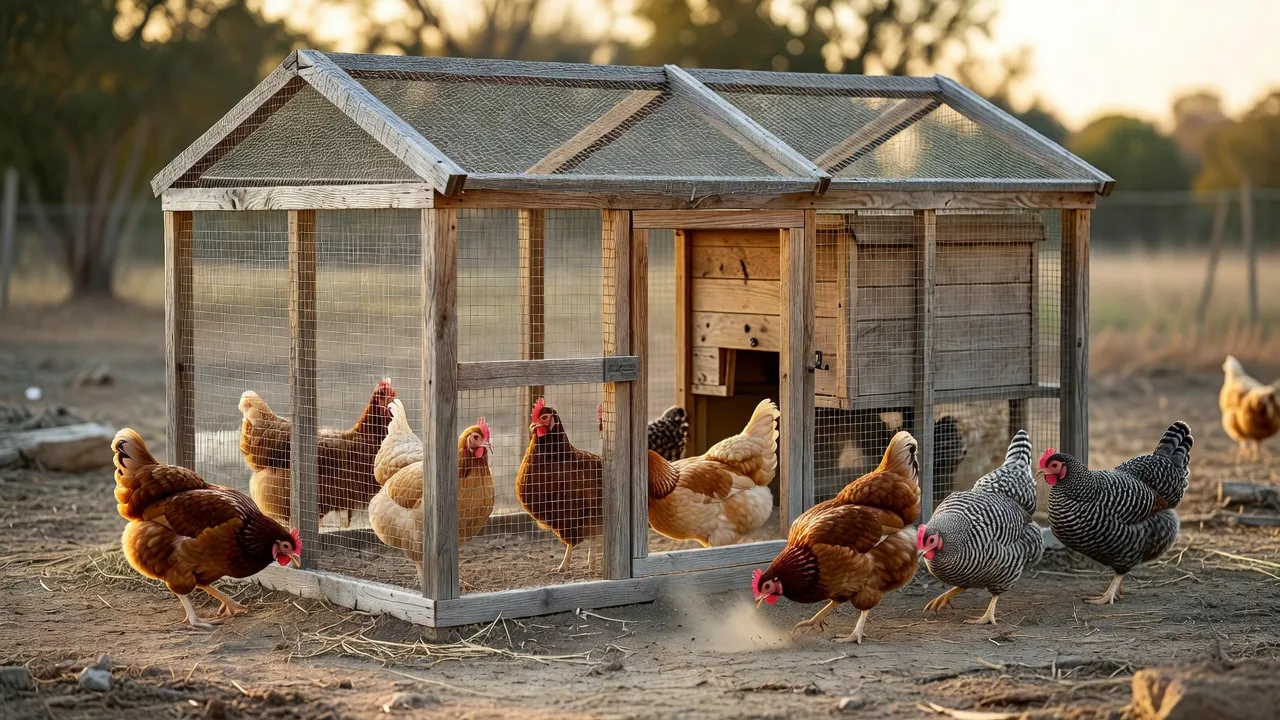
Yes, roof the run. The Small and Backyard Poultry extension site says that if a persistent hawk or owl is around, the easiest protection is a covered run, and that hawks can get through loose or weak spots in the covering. Penn State says to cover outside runs with mesh wire or netting, and describes a woven grid of wire or twine at 3 to 4 foot spacing as strong protection from flying predators.
The comment section on one popular build video asks the obvious question, “Why no roof?” The answer is that a roofless run is open to anything that flies or climbs. A fabric top on the same video drew the complaint that canvas does not stop raccoons or opossums from climbing in. I’d treat a fabric or tarp top as shade and rain cover only, not as a predator barrier.
| Roof type | Stops | Watch for |
|---|---|---|
| Welded wire or hardware cloth | Hawks and owls, plus anything that reaches or climbs in. The Small and Backyard Poultry site points to a welded wire covered run for persistent predators. | Needs a frame strong enough to carry it without sagging. |
| Hawk netting | Flying predators. The University of Maryland suggests hawk netting for hawk and owl problems. | Netting is made for birds, not for raccoons, so I would pair it with wire walls and a skirt. |
| Wire or twine grid, 3 to 4 ft spacing | Flying predators (Penn State). | Cheapest overhead cover, but it does nothing against ground animals that climb. |
| Solid panel over part of the run | Rain and sun. | Not a predator barrier by itself. Combine with a wire top. |
| Tarp or canvas alone | Shade and some rain. | Not a predator barrier. |
Penn State also says tall leafy plants and low shrubs can give hens hiding places and shade. If your summers run hot, plan shade into the design from the start, whether that is a solid panel over one end or plantings along the south side.
Buy a chicken run or build one?
Build if you want to control the wire spec, and buy if you want it done this weekend. Whichever way you go, check a chicken run for sale against the same five items before you pay:
- Divide the floor area by your hen count. Anything under 8 square feet per laying hen is under the Penn State number.
- Welded hardware cloth on the walls, not chicken wire. The University of Maryland describes raccoons reaching through mesh, and the Small and Backyard Poultry site says weasels can get through chicken wire.
- Wire or netting overhead, not a bare top.
- Check what the run sits on. If it has no buried skirt, budget to add one, since extension guides treat digging as a real threat.
- Look for a latch a raccoon cannot lift.
In a Facebook poultry group thread on pre-made runs, the answers lean toward building a custom run for better quality and predator protection, with hardware cloth the top mesh choice. If you would rather buy, the best chicken coop kits page covers coop and run combinations, the walk-in coop guide covers coops you can stand up in, and the portable chicken coop guide covers tractors you move around the yard.
Questions people ask
How big should a chicken run be?
Penn State Extension sets 8 square feet per laying hen in the outside run and 10 for large chickens. Cornell Cooperative Extension gives a lower 4 to 5 square feet per bird. I'd plan for the Penn State numbers, because a run is easier to build big than to add onto later.
Does a chicken run need a roof?
Yes. The Small and Backyard Poultry extension site says a covered run is the easiest protection from a persistent hawk or owl, and that hawks exploit loose or weak spots in the covering. Penn State says to cover outside runs with mesh wire or netting.
How deep should I bury the wire around a chicken run?
Penn State says to bury the wire at least 12 inches deep and toe it outward about 6 inches. Cornell sets a lower floor of at least 6 inches, and the University of Maryland suggests a trench 12 inches to 1.5 feet deep. I'd dig 12 inches and turn the wire out.
Can I use chicken wire for a chicken run?
I would not. The University of Maryland says raccoons reach through openings and rip at birds through mesh and wire caging, and the Small and Backyard Poultry site says weasels can get through chicken wire. Use welded hardware cloth instead. The hardware cloth guide covers mesh and gauge.
What should I put on the ground of a chicken run?
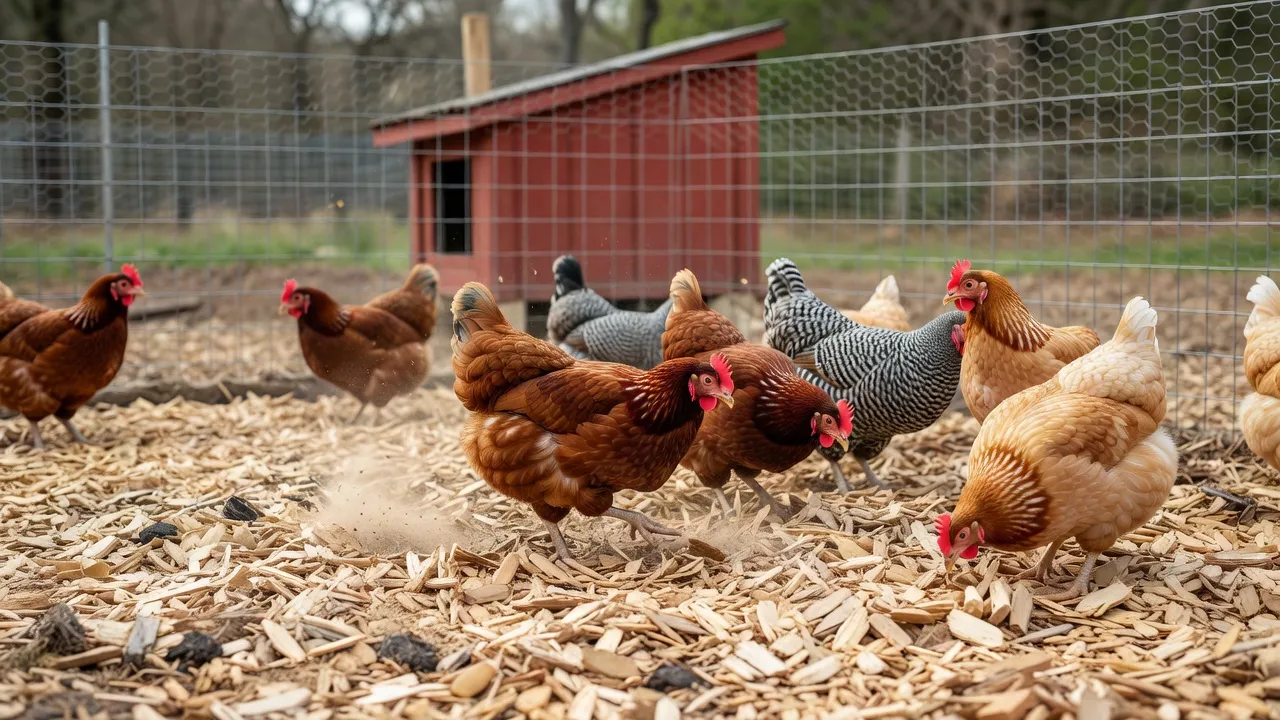
Pick a cover that stays dry. Cornell calls dry sand an ideal ground cover, and an Ask Extension reply recommends a gravel base to cut mud. Wood chips work if they stay clean and mold-free, which the wood chips guide covers.
Sources
- Penn State Extension: Small-scale poultry housing
- Cornell Cooperative Extension Warren County: Backyard chickens
- Small and Backyard Poultry (Cooperative Extension): Predator management for small and backyard poultry flocks
- University of Maryland Extension: Prevention of Predation
- Ask Extension: Wood chips and bedding for poultry

Written by Kyle
Kyle has kept backyard chickens on his own small farm for five years. He reads the extension research, the spec sheets and the owner complaints, then tells you what he would buy and what he would skip.