On this page
To predator proof a chicken coop, stack six layers: hardware cloth on every opening, a dig barrier at the base, a roof on the run, two-step latches, a door that shuts at dusk and a headcount every evening. Skip one and the next predator finds it. Predation is the most common cause of death in small flocks, so this is the work that pays back first.
This page is the plan for the whole coop and run, in the order I would do it. It fits a kit, a shed conversion or a scratch build. The mesh details live on the hardware cloth page, and the wider picture is in the predators hub.
Short answer
6 layerswire, dig barrier, roof, latches, door, dusk check
Cover every opening with hardware cloth (openings under 1 inch; I’d buy ½-inch), bury it at least 12 inches or lay it flat as an apron, roof the run, use latches that take two moves, close the door before dark and count birds nightly. Every layer below comes with the spec an extension service gives.
Which predator is it?
Name the visitor first, because each predator beats a different layer. Here is how the common ones get in and which layer stops them, drawn from Oklahoma State, Colorado State and Maryland extension.
| Predator | How it gets in | Layer that stops it |
|---|---|---|
| Raccoon | Grabs birds through fence holes and eats what fits through, usually the head; also works doors and latches | Small mesh, two-step latches, secured doors |
| Fox and coyote | Raid near dawn and dusk and carry birds off; coyotes dig under surface fencing | Buried wire or an apron; fencing over 4 feet or a cover net for coyotes |
| Hawk and owl | Strike from above; a great horned owl can carry off an adult bird, and owls may hit just before dark | A roof or netting over the run; close the coop before dusk |
| Weasel and mink | Kill several birds in one visit, leaving small bite marks on the head and neck | Small mesh and every gap patched |
| Opossum | Takes one bird at a time, plus chicks and eggs | Lock birds in at night; guard the nests |
| Rat and mouse | Burrow in and gnaw structure, take eggs and open the way for bigger predators | Tight floor, patched holes, coop raised about a foot, closed feed |
| Snake | Slips through small gaps for eggs | Gaps of ¼ inch or less where hens roost |
| Dog | Chases and mauls birds, usually by day | Closed fencing and a locked run in daylight too |
| Skunk | Takes eggs and chicks if it gets in, and shelters under a low coop | Raise the coop about a foot |
The damage tells you who came. Oklahoma State’s clue list: a raccoon that returns every five to seven days and eats the head, crop and breast; an opossum that takes one bird and eats the abdomen; a weasel or mink that leaves tiny bite marks and several birds piled neatly; a fox or coyote that leaves almost nothing, so a headcount is the only evidence; a dog that mauls birds in daylight. Match the clue before you spend money.
Hardware cloth vs chicken wire
Use hardware cloth. Chicken wire keeps hens in, but a raccoon can reach through its openings, and reaching through is how it kills. Oklahoma State describes raccoons grabbing birds through the holes in a fence and eating only what fits through, which is usually the head.
The extension numbers are ceilings, not targets:
- Colorado State says you lose fewer birds with 1-by-2-inch or smaller welded wire than with the cheaper 2-by-3-inch mesh, and it treats small mesh as the key where raccoons live.
- Oklahoma State wants windows and doors screened with poultry netting or hardware cloth with holes smaller than 1 inch.
- Maryland adds a floor for snakes: keep gaps to ¼ inch or less where chickens roost.
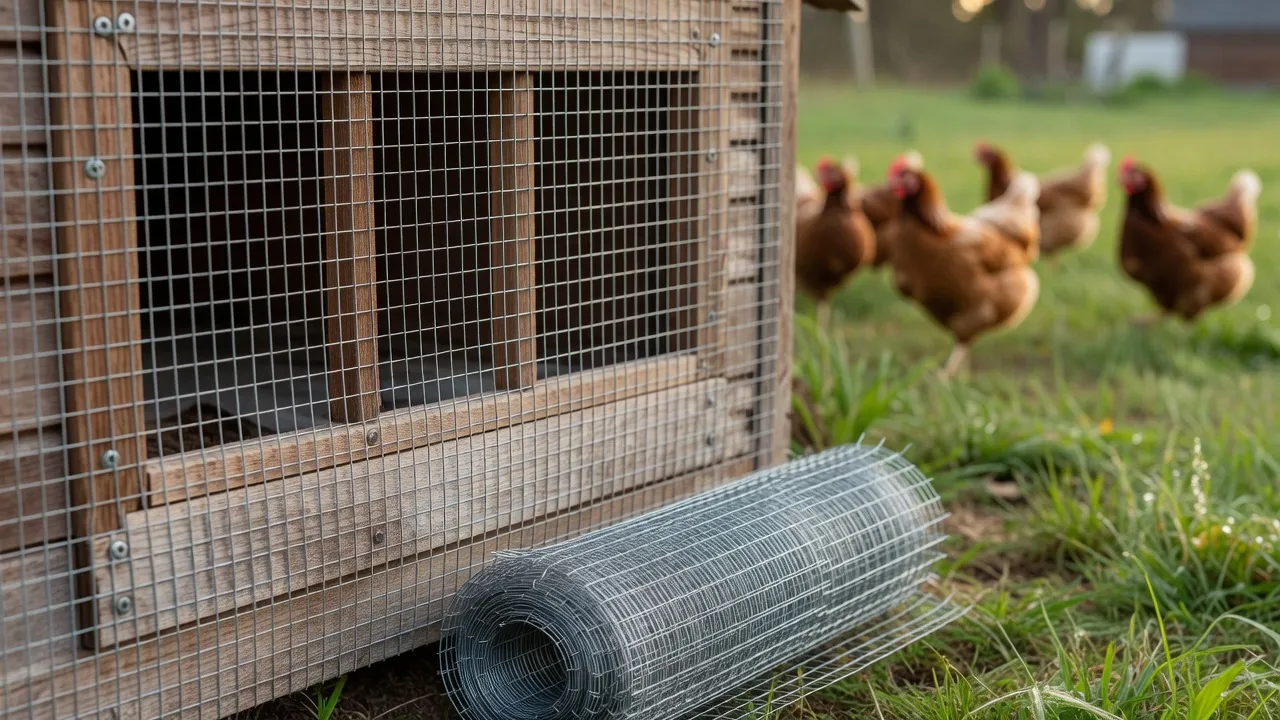
I’d buy to the small end of that range: ½-inch, 19-gauge, galvanized, welded hardware cloth on windows, vents, the apron and the lower walls of the run. 1-by-2-inch welded wire is the budget step down for upper walls if the run has a real roof. The gauge, the galvanizing and how many rolls to buy are all on the hardware cloth page.
Stop diggers: buried wire vs apron
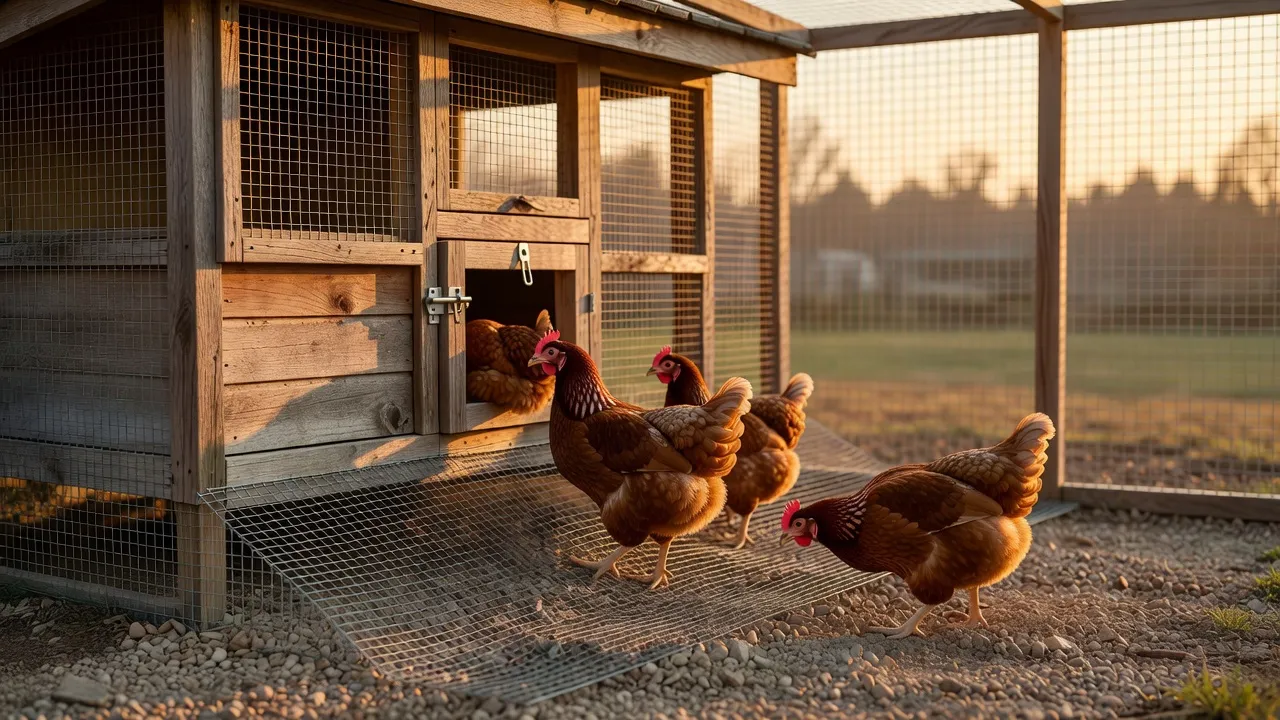
Wire has to extend out from the base, because digging predators start at the fence line and work down. You can bury it in a trench or lay it flat on the ground as an apron; both work if they are wide or deep enough.
Extension services give a range, not one number:
| Source | Spec |
|---|---|
| Cornell Cooperative Extension | Bury fencing at least 6 inches |
| Penn State Extension | Bury wire at least 12 inches deep and turn it about 6 inches outward; optional coarse gravel over it |
| Oklahoma State Extension | Set the lower 12 inches of fence straight down |
| Maryland Extension | Trench 12 inches to 1.5 feet deep, hardware cloth in the trench |
| Keeper guide | Surface apron 12 to 24 inches out from the wall |
The extension sheets give burial depths and no surface-apron width, so the 12 to 24 inch apron figure comes from keeper guides. Cornell’s 6 inches is the floor. I’d follow Penn State: 12 inches down and an outward toe, which makes a digger meet more wire.
For a new run, bury it:
- Dig a trench along the fence line, 12 inches deep.
- Fasten hardware cloth to the bottom of the wall and run it down the trench.
- Turn the bottom about 6 inches outward, away from the run.
- Backfill. Penn State suggests coarse gravel over the buried wire, which discourages digging at the base.
For a run that is already standing, lay an apron:
- Cut hardware cloth to the run perimeter, 12 to 24 inches wide.
- Fasten one edge to the base of the wall, with no gap between apron and wall.
- Lay it flat and pin it down, then cover it with soil or gravel.
Latches raccoons cannot open
Use a latch that takes two separate moves, because raccoons work with their hands. The top answer in a 314-upvote r/BackYardChickens thread on what could take a full-size hen names raccoons, with their talent for opening latches singled out. I take that as the design brief: any latch you can flip with one thumb is a puzzle with an easy solution.
What I would put on every door, lid and hatch:
- A slide bolt plus a spring snap or carabiner clip, so one move is a slide and the other is a squeeze.
- A padlock or a pin through a hasp on the people door, if the bolt is within reach of the mesh.
- A second latch on nest-box lids and egg doors that open from outside. These count as doors.
- Hardware cloth screwed over every window and vent. Penn State says to use heavy-gauge mesh wire or screening on windows and doors when they are open.
I would skip hook-and-eye latches, turn buttons and anything that closes by gravity. A predator that has to solve two things at once has a harder night.
Check it from the raccoon's side
Stand outside, reach through the mesh with one hand and try every latch, lid and hatch. If one hand opens it, so does a raccoon.
Roof the run
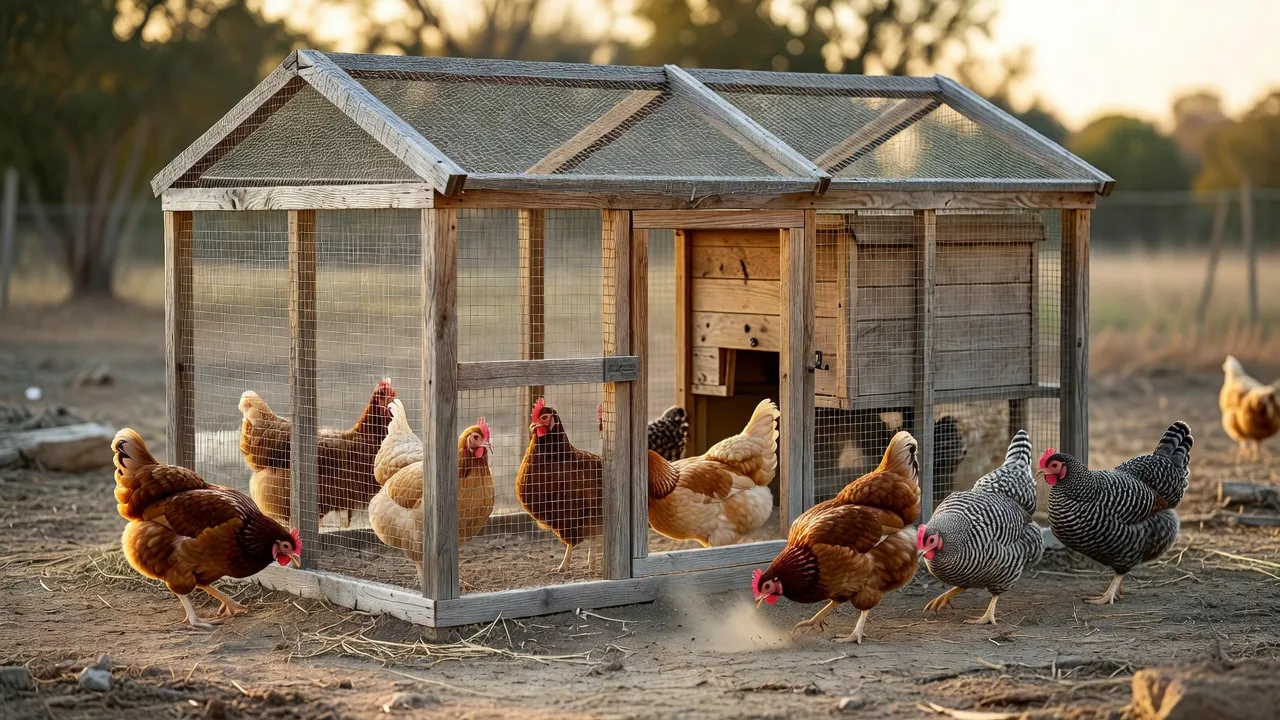
Yes, roof the run. Oklahoma State says a cover keeps birds of prey out and prevents snakes, raccoons and feral cats from climbing in, and it suggests building one that also gives shade in summer.
The sheets give several ways to do it:
- Welded wire, chicken wire or game-bird netting over the whole run (Colorado State).
- A grid of wire or twine every 3 to 4 feet over the pen, which Penn State says gives excellent protection from flying predators.
- Fencing taller than 4 feet or a cover net against coyotes and bobcats (Colorado State).
Netting stops hawks. It will not stop a raccoon that climbs the fence and walks across it. If raccoons are on your list, and on most lists they are, I would build the roof from welded wire or hardware cloth on a frame and fasten it to the walls so no gap opens at the top. Treat loose netting as the budget version for runs that only face hawks.
Vents, gaps and the floor
Every opening bigger than ¼ inch where hens roost is a way in for something. Cover vents and windows with hardware cloth screwed to the frame, and close gaps around doors, eaves and wall joints.
The floor is the layer people forget:
- Raise the coop. Colorado State says to raise the coop about a foot, keep the floor tight and patch holes. That keeps skunks from living underneath and takes away cover for rats and snakes.
- Build the base solid. Penn State suggests a concrete floor and one or two concrete blocks to start the walls of new buildings so rodents, snakes and predators cannot dig under.
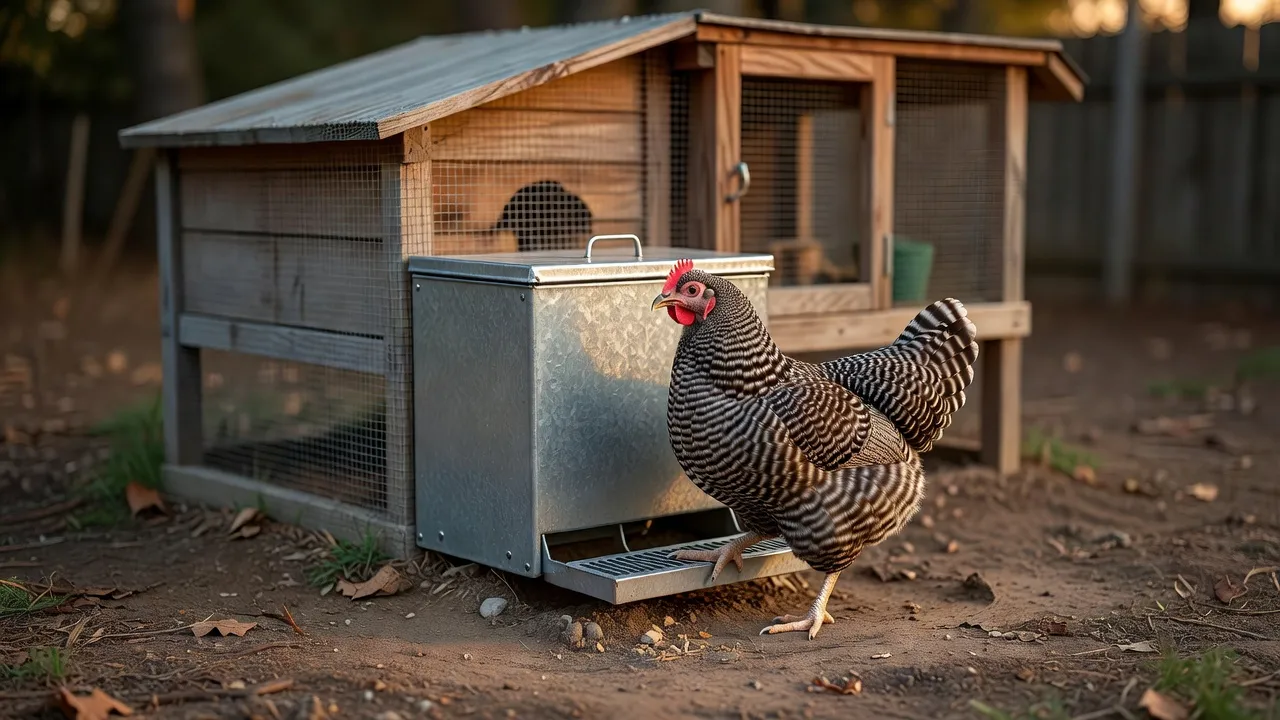
- Starve the rats. Oklahoma State notes that rats and mice damage structures and burrow, which invites other predators in, and tells you to keep trash receptacles away and minimize open feed bins near the coop. A rat-proof chicken feeder handles the feeding station.
If the coop already sits on the ground, get hardware cloth under it or an apron around it before winter. A coop with a gap at the bottom is an open door.
Automatic doors and the dusk check
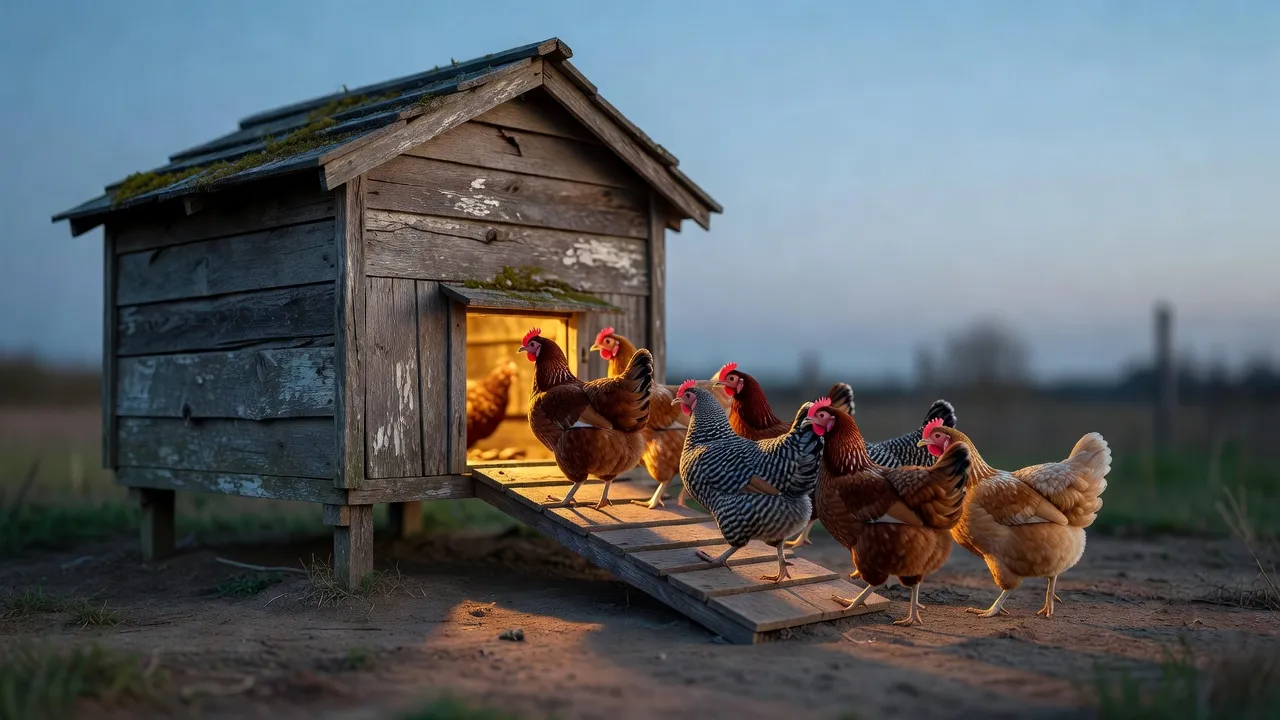
A door that closes at dusk fixes forgetfulness, not weak latches, so pair it with a nightly headcount. Oklahoma State says a locked enclosure at night matters most, when predation risk is highest, and that most poultry learn to go in if you feed and water at dusk. Colorado State adds that owls may strike just before dark, so close the coop before dusk.
An automatic door buys you the schedule. See the best automatic chicken coop doors for picks, and read why auto doors fail before you trust one with the whole flock. Whatever closes the door, do the same check:
- Count the birds, every night.
- Confirm the pop door is shut and both latch steps are engaged.
- Lock the run gate and nest-box lids.
- Bring in or close up feed.
- Remove dead birds and trash promptly, which Oklahoma State lists as a way to avoid attracting scavenging predators.
Lights are optional. Colorado State suggests a motion-sensor light over the run, while Oklahoma State says scare devices, including lights, are not effective long term. I would spend on wire first and add a light only as a bonus.
What predator-proofing costs
Plan for mesh to be the biggest line item, and price it by the square foot covered, not by the roll. I am not quoting a per-foot price here because mesh prices move; check the roll label and your store’s shelf. The materials list is stable:
| Item | Where it goes | How to size it |
|---|---|---|
| ½-inch hardware cloth | Vents, windows, lower walls, apron, roof | Perimeter × wall height, plus perimeter × apron width, plus roof area |
| Galvanized screws and washers | Every edge and seam of the mesh | Enough to hold the cloth tight to the frame |
| Two latches per door | Pop door, people door, nest-box lids | Two separate moves each |
| Roof frame and wire or netting | Over the run | Run footprint |
| Soil or gravel | Over the buried wire or apron | Trench or apron length |
| Automatic door (optional) | Pop door | One |
One keeper in an r/BackYardChickens thread put the cost of doing it all properly at about $1,000 for a rural spot with plenty of predators. That is one owner’s number, not a benchmark; a small suburban coop with a short run will cost less. The chicken run guide helps you size the footprint, and coop kits are worth checking for how much of this they already include.
Questions people ask
What is the best way to predator-proof a chicken coop?
Stack six layers: hardware cloth on every opening, wire buried or laid flat at the base, a roof over the run, two-step latches, a door that shuts at dusk and a nightly headcount. Predation is the most common cause of death in small flocks, and a predator tests every layer you skip.
How deep should I bury hardware cloth?
Extension advice runs from at least 6 inches (Cornell) to at least 12 inches (Penn State) to a 12-inch to 18-inch trench (Maryland). I'd bury 12 inches and turn the bottom about 6 inches outward, the Penn State method. If the run is already built, lay a flat apron instead.
Will raccoons get through chicken wire?
They can reach through it. Oklahoma State describes raccoons grabbing birds through fence holes, and Colorado State says you lose fewer birds with 1-by-2-inch or smaller welded wire. Use hardware cloth anywhere a raccoon can touch.
Do I need a roof on my chicken run?
Yes. Oklahoma State says a cover keeps birds of prey out and stops snakes, raccoons and feral cats from climbing in. Wire on a frame beats loose netting for climbers.
How do I keep rats out of the coop?
Raise the coop about a foot, keep the floor tight, patch every hole and clear debris from the yard, as Colorado State advises. Keep feed in closed containers overnight; a rat-proof feeder does the same job at the feeding station.
Sources
- Cornell Cooperative Extension, Warren County: Backyard chickens
- Penn State Extension: Small-scale poultry housing
- Colorado State University Extension: Chickens and predators
- Oklahoma State University Extension: Protecting small poultry flocks from predators (AFS-8221)
- University of Maryland Extension: Prevention of predation
- r/BackYardChickens: What predator could snatch a full size chicken
- r/BackYardChickens: Is predator proof even a real thing?
- My Favorite Chicken: Predator apron for a chicken coop and run

Written by Kyle
Kyle has kept backyard chickens on his own small farm for five years. He reads the extension research, the spec sheets and the owner complaints, then tells you what he would buy and what he would skip.