On this page
Chicks can go outside full time when they are fully feathered, which is about 6 to 8 weeks old, and when nighttime temperatures stay above about 50°F. That is the rule from VCA Animal Hospitals and the University of Arizona Cooperative Extension. Before that, short supervised trips outside on warm days are fine, but the brooder stays home base. This page is part of the chick brooder guide.
Short answer
6 to 8 weeksfully feathered, with nights above 50°F
Watch the feathers and the forecast, not the calendar. When the fluff is gone and the night lows hold above 50°F, give the chicks a few days to adjust, then move them to a predator-proof coop.
The short version
- Full time outside at 6 to 8 weeks, once fully feathered (VCA).
- Nights above 50°F. Bring chicks back in if the lows drop below that (VCA).
- Step the brooder down first and give them a few days to adjust (Purina).
- Keep them apart from older hens until they are about the same size (University of Arizona Extension).
When can chicks go outside?
“Outside” means two different things. A supervised field trip to the lawn can start once the chicks handle the room temperature in the brooder and the day is warm. Living outside, in the coop, day and night, waits until they are fully feathered.
VCA says most chickens are fully feathered at 6 to 8 weeks of age, and that once they are, they can handle normal daytime temperatures. The University of Arizona Extension gives the same window: after about 6 to 8 weeks, once fully feathered, chicks can move to the coop as long as nights are moderate, above about 50°F. Purina says a 6-week-old chick is ready for the coop when the outdoor temperature is at least 50°F (Purina).
Fully feathered means the chick down has been replaced by real feathers. Breeds and batches feather at different speeds, so check the birds rather than counting days.
What temperature is safe for chicks outside?
Use 50°F at night as the line. VCA says to bring chicks back inside if nighttime temperatures go below 50°F. Purina says birds at 6 to 8 weeks handle temperatures in the 50s, and cold-tolerant breeds handle the 40s (Purina).
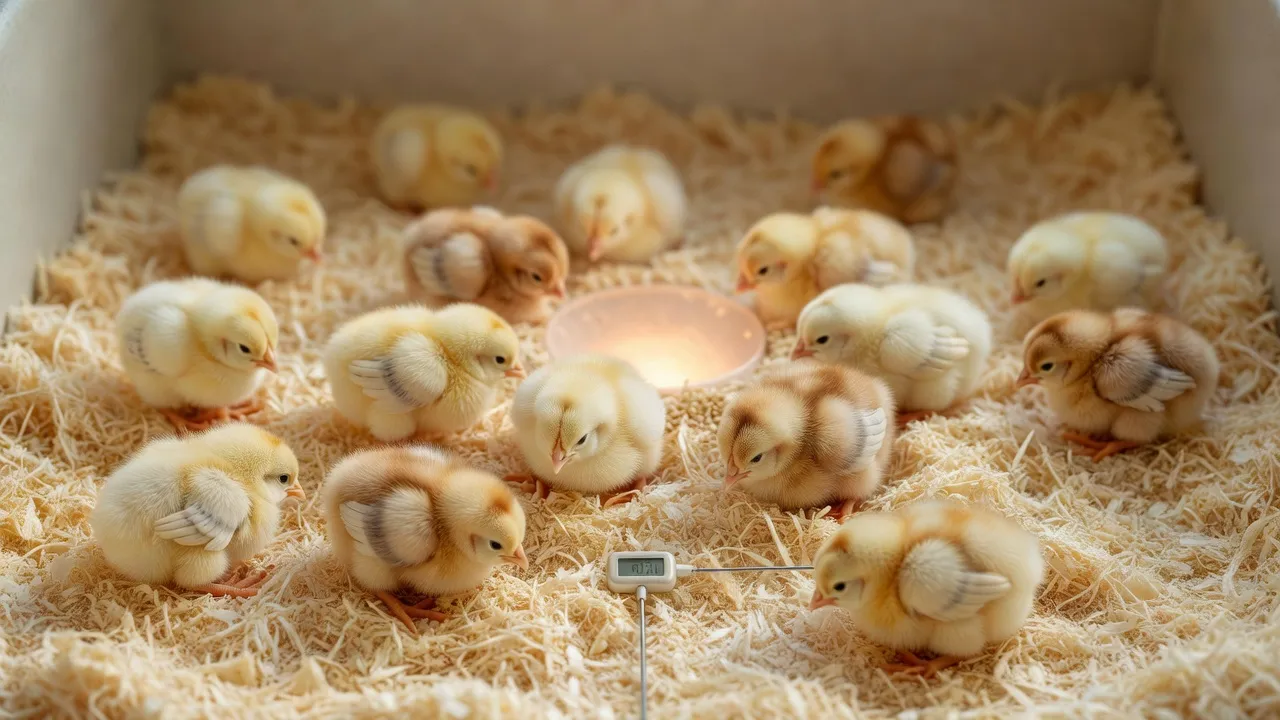
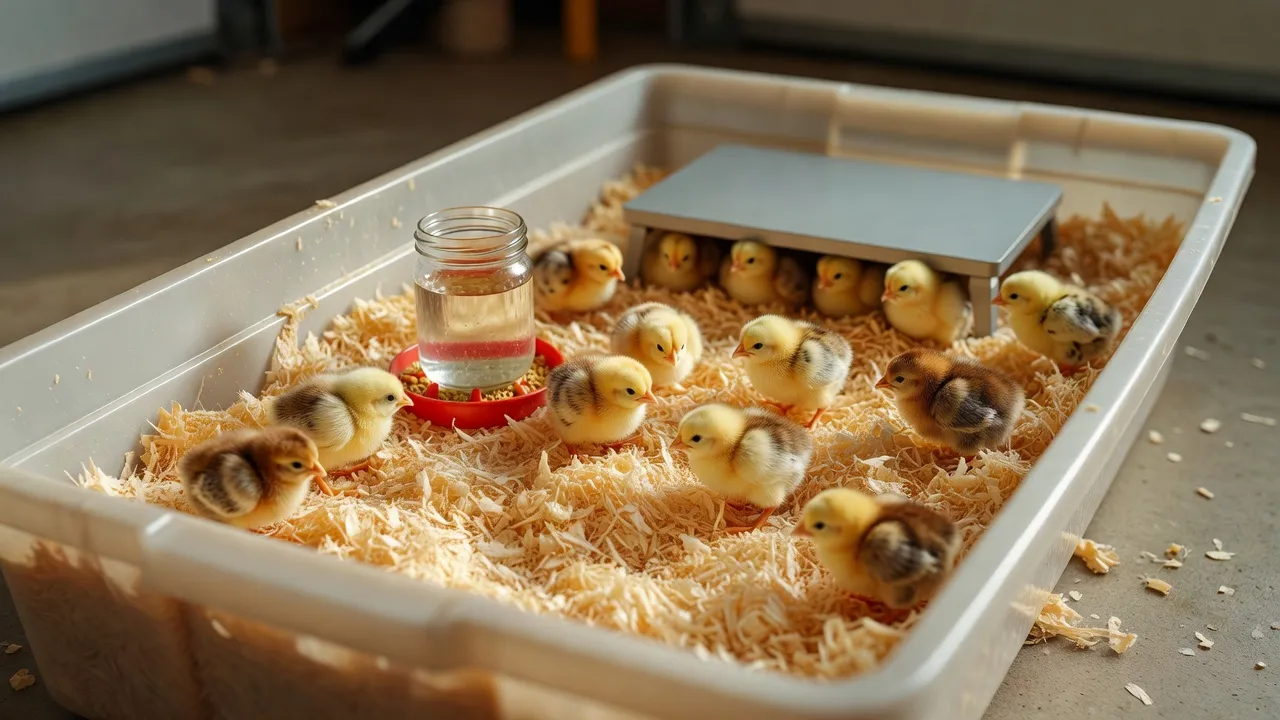
The brooder schedule gets you there. VCA starts at 93 to 95°F in week one and drops 5°F a week until the brooder sits at 65 to 70°F. Our brooder temperature chart has the week-by-week numbers from extension sources. When your chicks are comfortable at room temperature with the heat off, they are close to ready.
How do you move chicks from the brooder to the coop?
Do it in steps over a few days. Purina says to give birds a few days to adjust to colder temperatures if they have been in a warm space (Purina).
- Turn the brooder heat off for longer stretches during the day, then at night, so the chicks get used to room temperature.
- Take them out to the run or a secure pen on warm afternoons, and stay with them. VCA says not to leave young chickens outside unattended (VCA).
- Move them in during the day, not at dusk, so they learn the coop with daylight left.
- Put their usual feeder and waterer in the coop. Purina says to stay on the same starter-grower feed they started on (Purina).
- Check them at dusk for the first few nights. Chicks that huddle in a corner instead of finding a roost or a warm spot may need a few more days of night heat in the brooder.
Can chicks go in with older hens?
Not at first. The University of Arizona Extension says new birds, chicks included, need about 4 weeks of quarantine, physically separate from the flock and far enough away that they do not share the same air. Then let the two groups live near each other with a physical barrier between them, such as a fence, playpen or kennel.
Once the chicks are around the same size as the hens, they can mix without the barrier. Some pecking and squawking is normal while the new pecking order settles, and the extension says to step in only during a serious fight. Purina gives the same size rule: keep young pullets and cockerels apart from older chickens until they reach the same size (Purina).
Not vet advice
Call a poultry vet if a chick is limp, wheezing, has a bleeding wound from pecking, or stops eating after the move. Keep a sick chick separate from the flock until you know what it is.What does the coop need before chicks move in?
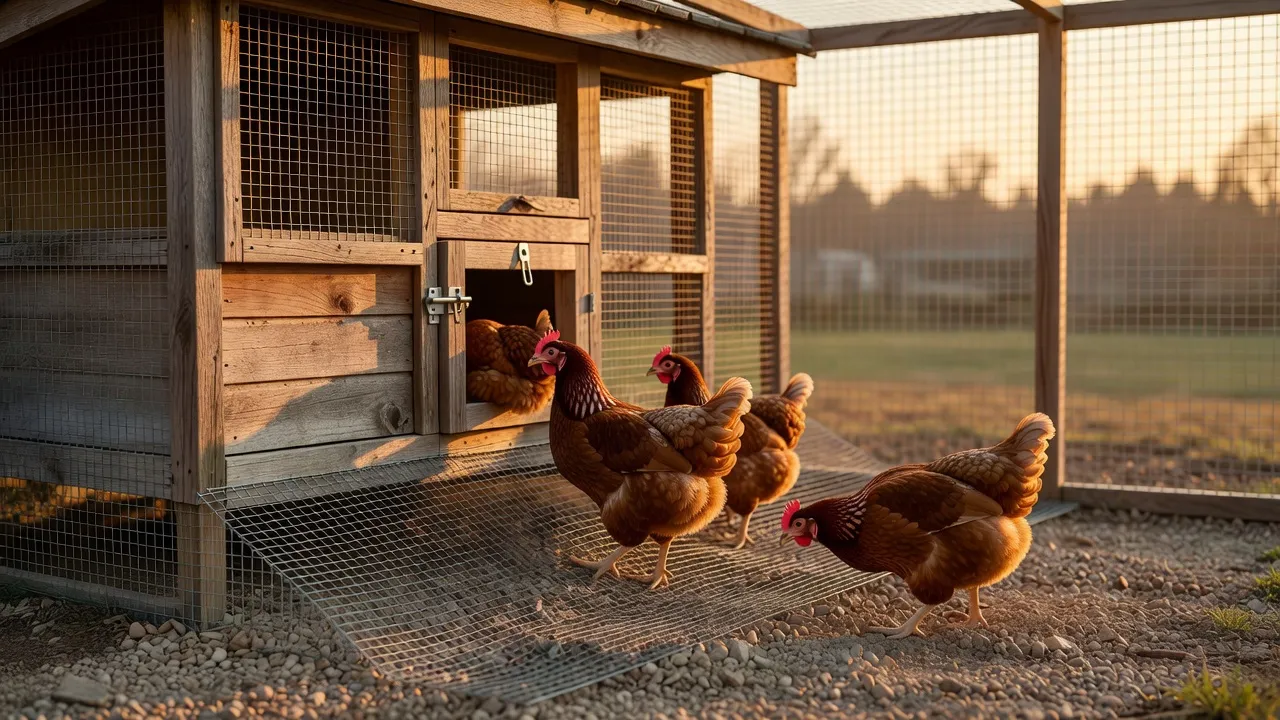
The coop has to be ready for small, light birds that predators target first. VCA names hawks, owls, raccoons, and neighborhood dogs and cats, and says the walls need sturdy wire mesh the chicks cannot push their heads through.
- Predator-proof openings. Chicken wire keeps chickens in but does not keep raccoons out, so use hardware cloth and follow the predator-proof coop checklist.
- Room to grow. Purina says chicks need twice the floor space they started with between weeks 6 and 8 (Purina).
- Dry bedding on the floor. The chicken coop bedding guide compares pine shavings, straw and sand.
- Fresh air without drafts. Put vents up high, above the roost, per the coop ventilation guide.
- Feeder and waterer at chick height, with the same feed they ate in the brooder.
If you are still choosing a coop, size it for the flock the chicks will grow into, not the chicks you have today.
Can meat chickens go out earlier?
Meat chickens need brooder heat for a shorter time. Dr. Jacquie Jacob of the University of Kentucky starts broilers at 90 to 95°F for the first week, then lowers the temperature five degrees a week until the broilers are three to four weeks old or the pen holds 70°F (poultry.extension.org). After that they no longer need supplemental heat. The predator rules above still apply, and a pen or tractor for meat birds needs the same mesh and the same night check.
Moving day goes smoothly when the brooder phase went well. If your next batch is still on the way, the best chick brooder picks cover floor space by chick count and age.
Questions people ask
What age can chicks go in the coop?
At about 6 to 8 weeks, when they are fully feathered and nighttime temperatures stay above about 50°F (University of Arizona Extension, VCA). Feathers, not the calendar, decide it.
Can 4-week-old chicks go outside?
For short, supervised visits on a warm day, yes. They should not live outside yet. VCA puts full feathering at 6 to 8 weeks and says not to leave young chickens outside unattended because hawks, owls, raccoons, dogs and cats take them easily (VCA).
What temperature is too cold for chicks to go outside?
VCA says to bring chicks back inside when nights drop below 50°F. Purina says 6- to 8-week-olds handle the 50s and cold-tolerant breeds handle the 40s, after a few days of adjustment (VCA, Purina).
When can chicks join the older hens?
When they are about the same size as the hens, after a quarantine and a period of living side by side behind a barrier (University of Arizona Extension, Purina).
Sources
- VCA Animal Hospitals: Caring for Baby Chickens
- Purina Animal Nutrition: 6- to 8-Week-Old Chicks, Moving to the Chicken Coop
- University of Arizona Cooperative Extension: New Chicks and Old Flocks
- Dr. Jacquie Jacob, University of Kentucky (poultry.extension.org): Raising Meat Chickens in Small or Backyard Flocks

Written by Kyle
Kyle has kept backyard chickens on his own small farm for five years. He reads the extension research, the spec sheets and the owner complaints, then tells you what he would buy and what he would skip.