On this page
For 10 laying hens, chicken feeders and waterers need separate capacity checks. A week’s feed takes about 17.5 lb using Alabama Extension’s daily allowance. Water use changes with temperature, as the table below shows. A large feed hopper beside a small drinker still leaves you carrying water every morning.
Start with your flock size, then decide how you will keep feed dry, water clean and every bird able to reach both. The feeder guides explain each feed design, and the waterer guides cover the drinking side.
Short answer
Match capacity and accessA bundle is useful only when both pieces fit
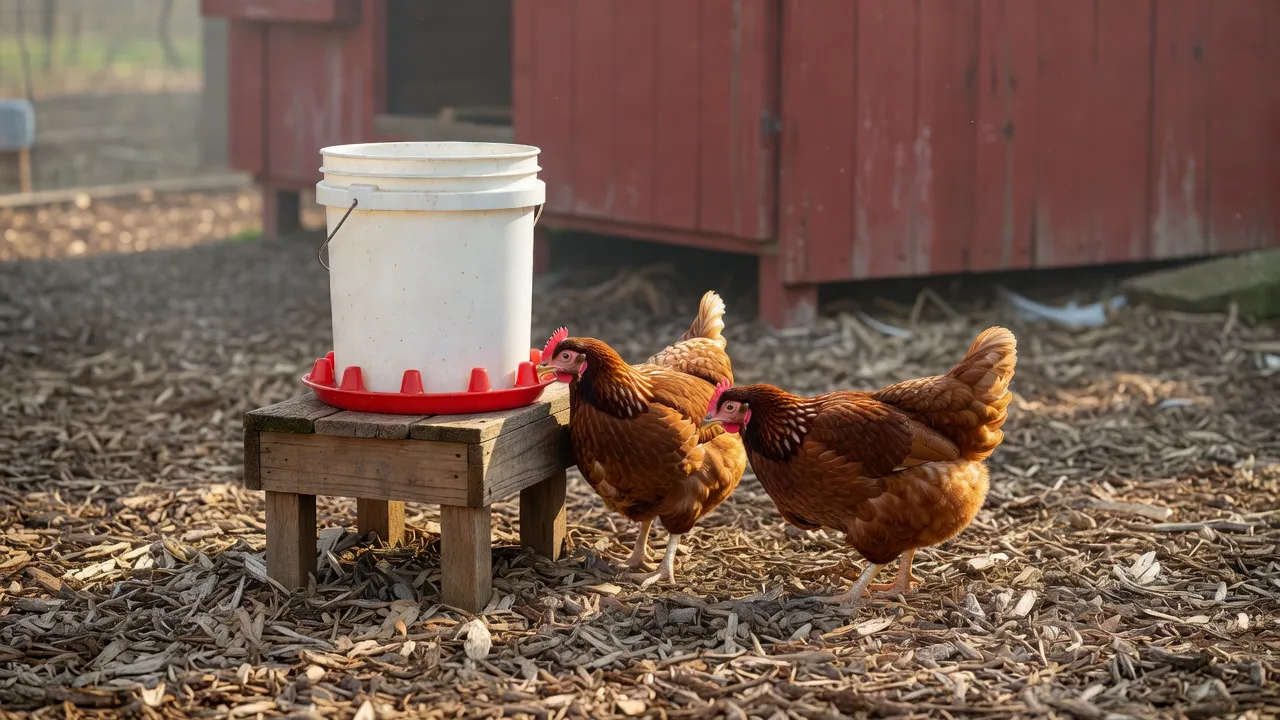
A covered feeder and a raised reservoir waterer are a practical starting point. Change the feed side for rodents, the water side for freezing, and both sides when birds cannot reach the openings.
Pick the setup by the problem
Each row points to a different equipment choice. Follow the linked comparison for model specifications and dated prices.
| Your setup | Feed side | Water side | Main thing to check |
|---|---|---|---|
| A small adult flock under cover | A manageable covered hopper | A reservoir you can lift and scrub | Reach and cleaning access |
| Hens scattering feed | Hooded ports or a covered trough | A closed bucket with suitable cups or nipples | Feed flow and bird training |
| Rats or wild birds at the feeder | A suitable closing feeder | Keep the existing waterer if it works | Activation weight and feed access |
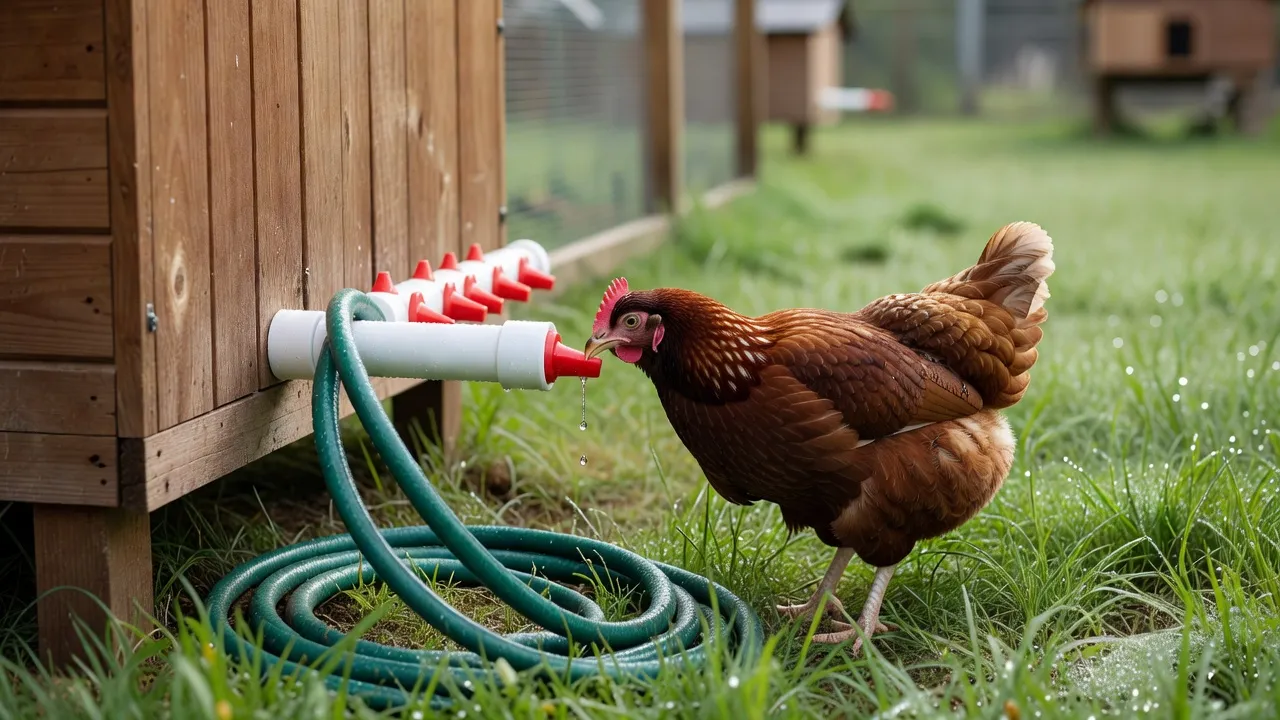
| A larger flock with a water supply nearby | More feed access points and hopper capacity | Hose-fed or float-valve system | Pressure, shut-off access and leaks |
| Freezing nights | A dry, covered feed station | A suitable heated waterer | Product instructions and electrical supply |
| A DIY budget | A bucket or PVC feeder build | A separate waterer with serviceable fittings | Build cost, mounting and cleaning |
The best chicken feeders and best chicken waterers cover named products. Use this page to decide which pair of designs belongs in your run.
Work out the refill chores before buying
Makers list feed capacity by weight and water capacity by volume. Convert both to days for your own flock, then plan around the one that needs attention sooner.
Alabama Extension gives a rough feed allowance of 0.25 lb per laying hen daily. Multiply that allowance by hens and days to estimate hopper capacity. Consumption varies, so leave room for your actual flock’s intake.
For water, Kentucky’s layer table gives 5.55 gallons per 100 hens daily at 68°F and 10.57 at 89.6°F. The table below uses those rates. It assumes full containers with no spills or leaks and shows calculated time to empty, not a cleaning schedule.
| Adult hens | Feed for 7 days at 0.25 lb daily | Days to empty 5 gal at 68°F | Days to empty 5 gal at 89.6°F |
|---|---|---|---|
| 4 | 7 lb | about 22 | about 12 |
| 6 | 10.5 lb | about 15 | about 8 |
| 10 | 17.5 lb | about 9 | about 5 |
| 15 | 26.25 lb | about 6 | about 3 |
| 20 | 35 lb | about 4.5 | about 2.4 |
A large reservoir can outlast the freshness of its contents. Alabama Extension advises fresh water daily, more often in summer, and keeping drinkers free of slime and mildew. Clean the equipment according to its condition and the maker’s instructions. Watch the daily rate in hot weather instead of assuming last week’s refill interval still holds.
A covered bucket pair for adult backyard hens
A port feeder paired with a cup or nipple bucket puts both stations under cover without a water line or electrical controller. The useful match is serviceability: can you open the lid, reach the inside and remove the fittings for cleaning?
The RentACoop 25 lb port feeder is one option in the feeder comparison. Pair it with the RentACoop 5 Gallon waterer if the water capacity suits your flock. The maker’s waterer listing describes a stand with cups and horizontal nipples. That gives you different drinking outlets to introduce to the birds.
The pairing is a selection suggestion based on published specifications. It is not a measured comparison of bundles. Read the separate guides for limitations, replacement parts and linked owner reports before choosing it.
Automatic chicken feeders and waterers
On the feed side, automatic can mean gravity delivery, a weight-operated lid or a timed dispenser. On the water side, it can mean a reservoir feeding a cup or a valve connected to a water supply. Those mechanisms do different jobs.
If your goal is fewer trips with a bucket, change the water supply first. If your goal is keeping rats from eating feed, focus on the closing mechanism. Paying for a controller does not solve both problems.
Read the automatic feeder guide alongside the automatic waterer guide. Check how each system fails and how you will spot that failure. A full hopper with blocked feed and a full bucket with a stuck nipple can both look reassuring from the gate.
Placement and access matter as much as capacity
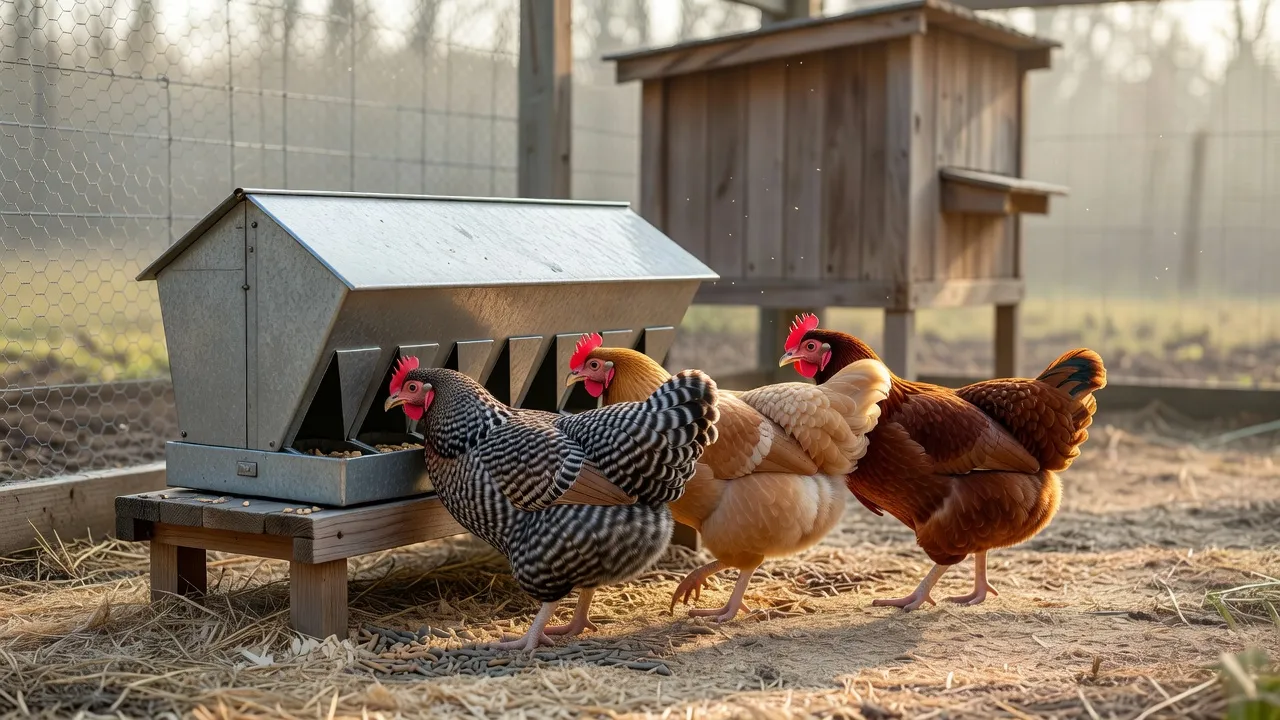
Leave enough room around both stations for birds to approach without being trapped against a wall. Avoid putting water fittings where a leak would soak feed or bedding. Use stable mounts and protect the stations from weather without making them hard to inspect.
Watch the quiet birds as well as the first hen at the feeder. Alabama Extension says inadequate feeding space causes competition and advises adding equipment when access is limited. A larger hopper does not create more room at a narrow opening.
Winter, DIY and mixed flocks
Keep feed dry through winter and choose the water heating method separately. The heated waterer comparison covers compatible designs. A label saying outdoor or automatic does not establish that a drinker will stay open in a freeze.
For homemade chicken feeders and waterers, plan each container and its outlets separately. The DIY feeder guide compares feed designs and the PVC feeder tutorial goes through the pipe assembly. Count tools, fittings and mounting hardware in the decision alongside the container.
Chicks and small birds need their own access check. Before moving a young bird onto adult equipment, confirm that the product is suitable and observe it eating and drinking. The brooder guide is the starting point for chick equipment.
Before you order a set
- Measure the space for each station, including the lid opening and room to refill.
- Check the exact feeder and waterer models included in the bundle.
- Compare capacity with the calculations above and your actual refill records.
- Confirm that every bird can use the ports, treadle, cups or nipples.
- Find the cleaning instructions and replacement fittings before purchasing.
- Decide who will check food and water when you are away.
Questions people ask
Should I buy chicken feeders and waterers as a set?
Only if both pieces fit your birds and your space. A matched appearance does not establish capacity, rodent protection or winter suitability. Compare each part with the separate feeder and waterer guides before buying.
Does an automatic feeder and waterer remove daily care?
No. A hopper can bridge above the outlet and a drinking valve can stop flowing while its bucket is full. Check the actual feed opening and water outlet each day. The automatic guides explain the different designs and failure points.
What should I buy if rats reach the feed?
Start with the rat-proof feeder guide, then fix spilled feed and access to stored feed. A closed water reservoir and a feed lid solve different problems. Neither replaces a secure coop.
Can chicks use the adult feeder and waterer?
Use equipment rated for their age and size. Adult feeder ports, moving treadle lids and raised drinkers can be unsuitable. The brooder guide covers the separate chick setup.
Sources

Written by Kyle
Kyle has kept backyard chickens on his own small farm for five years. He reads the extension research, the spec sheets and the owner complaints, then tells you what he would buy and what he would skip.