On this page
The best automatic chicken waterer depends on which chore you want gone. A hose-fed nozzle system ends refilling, a float-valve kit cuts it to almost nothing, and a big bucket stretches it to a week or more. Below are three options with prices checked 2026-10-09, plus refill intervals worked out from the University of Kentucky’s intake figures. My pick for most keepers is a large bucket, and I move to hose-fed once the flock passes about 15 hens. The wider chicken waterer guides cover the rest.
Quick picks
Choose hose-fed to stop refilling, a float-valve kit to refill less, or a 5-gallon bucket if you have no water line near the coop.
| Pick | How it refills | Refill chore | Price (checked 2026-10-09) | Winter plan |
|---|---|---|---|---|
| The Chicken Fountain Gen 2 | Garden hose or water line to nozzles | None while the hose is on | $99.99 (listed sold out) | Maker suggests a stock tank heater |
| RentACoop S.N.A.P. Starter Kit | Float valve on a 1-gallon reservoir | Almost none with a water supply | $59.95 | None stated on the page |
| RentACoop 5 Gallon | Gravity bucket with cups and nipples | Every few days to every few weeks | $63.72 | Heater belt, sold separately |
What automatic means for a chicken waterer
An automatic chicken waterer refills itself from a hose, a water line or a large reservoir, so you stop carrying buckets. There are three designs.
- Line pressure feeds drinking nozzles directly. There is no reservoir to run dry.
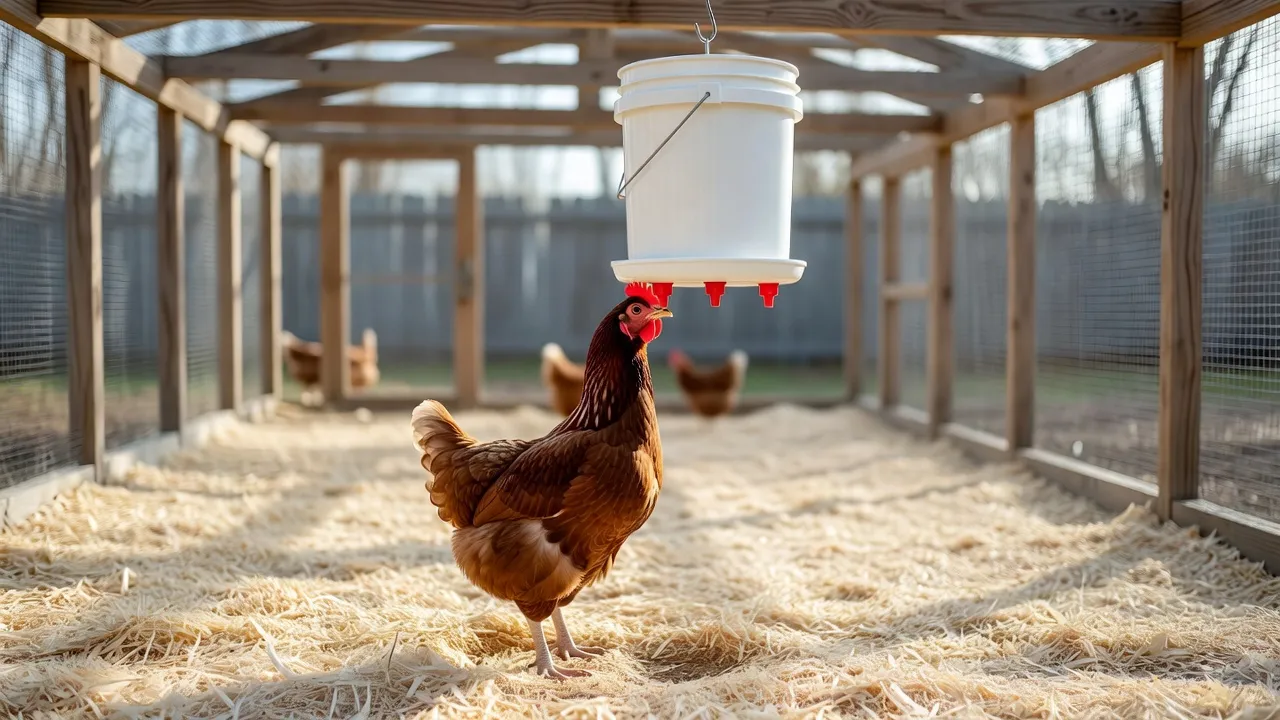
- A float valve works like a toilet tank. When the level drops the valve opens, and when the level rises it shuts. One keeper posted a waterer built from toilet parts and PVC pipe.
- Gravity feeds cups or nipples from a large bucket. It is not truly automatic, but it can run for days.
How I picked these systems
Four questions ranked them: how much refilling is left, whether you need a water line, what happens at freezing, and what owners complain about. I list only systems whose maker pages give specs I can cite, and I link every owner complaint. For the nipple basics, see the nipple waterer guide.
Hose-fed systems
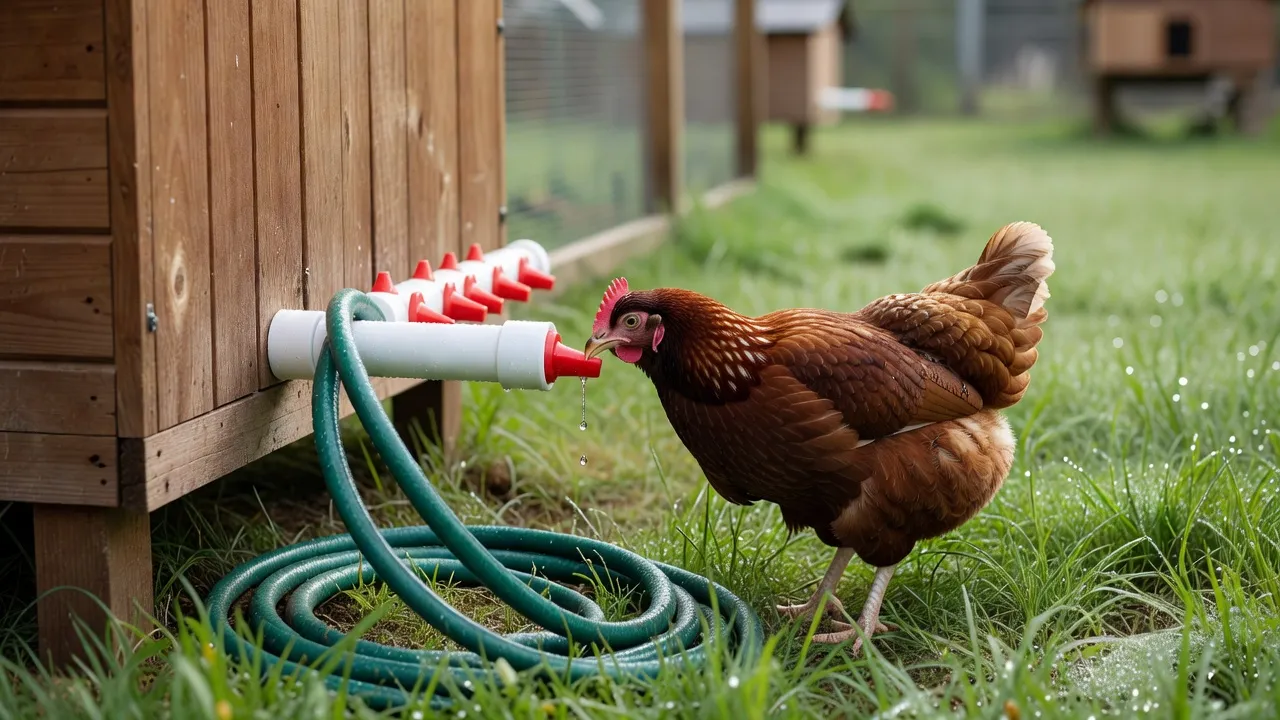
A hose-fed system is the only design that removes refilling completely, and it ties the waterer to your water supply. The Chicken Fountain connects to a standard garden hose or water line and uses nozzles that release water only when birds drink. The page lists it at $99.99, built from food-grade HDPE with a brass hose connection and a 3-year guarantee, and it showed the Gen 2 as sold out on 2026-10-09.
The page does not state a capacity or flock size. The maker is the only source I have for this model, so read its claims as claims. In freezing weather a hose is plumbing, and plumbing freezes. The maker’s own advice is to pair it with a stock tank heater.
The Chicken Fountain Gen 2
keepers who want zero refilling and have a hose or water line near the run
- Type
- Hose-fed drinking nozzles
- Connection
- Standard garden hose or water line, brass hose connector
- Material
- Food-grade, all-weather HDPE
- Guarantee
- 3-Year No-Problem Guarantee (maker)
- Capacity
- Not stated
- Stock
- Listed as sold out on 2026-10-09
- No refilling while the hose is on
- Nozzles release water only when hens drink
- 3-year guarantee from the maker
- Highest price of the three picks
- Hose and nozzles freeze without heat
- Listed as sold out when I checked
- Maker states no capacity or flock size
Float-valve systems
A float-valve kit keeps a small reservoir full from a water line, so you refill almost never. The RentACoop S.N.A.P. starter kit is a glueless PVC build around a 1-gallon container with a float valve. It comes with a shut-off valve, four auto-fill cups, four horizontal nipples, hubs, clips, an elbow, an end cap, a brass connector and two pipe-fitting tools. Add-on parts are sold separately.
The page does not spell out the hose hookup or say how many hens it serves. A reviewer ran a water line to it, so plan on a supply at the coop.
RentACoop S.N.A.P. Watering System Starter Kit
keepers who want a custom line of cups and nipples fed from a water supply
- Reservoir
- 1 gal container with float valve
- Drinkers
- 4 auto-fill cups, 4 horizontal nipples
- Assembly
- Glueless PVC, no adhesive
- Also included
- Shut-off valve, hubs, clips, elbow, end cap, brass connector, fitting tools
- Expandable
- Yes, add-on parts sold separately
- Capacity
- Page does not state how many hens
- Float valve tops up the reservoir for you
- Glueless parts, so you can rearrange the line
- Expandable with add-on parts
- Page does not spell out the hose hookup
- No winter guidance on the page
- Starter kit has only 8 drinking points
What owners report
Reviewers on the RentACoop product page mention flocks of five and larger. Some report leaks at the cups and a float valve that did not shut off, and one needed extra elbows and ordered them separately.
Big-reservoir systems
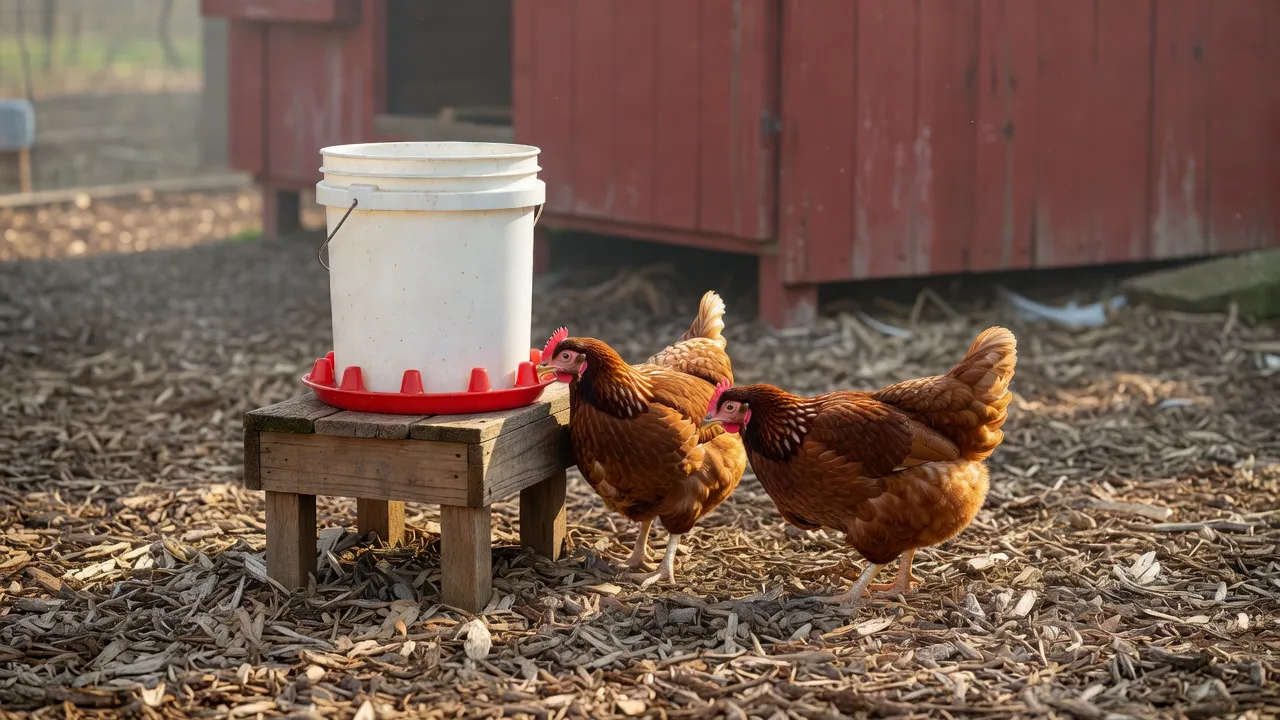
A big bucket is the middle path: no water line, and a refill every few days to every few weeks. The RentACoop 5 Gallon waterer costs $63.72 and carries four cups and four nipples on an adjustable stand. The best chicken waterers page covers it in full, along with the 2-gallon version and the winter heaters.
The next section shows how long a fill lasts. A bucket sized for too few hens sits for weeks, and standing water needs a scrub before the bucket runs dry.
RentACoop 5 Gallon Chicken Waterer (4 Cups, 4 Nipples)
about 6 to 15 hens with no water line at the coop
- Reservoir
- 5 gal, BPA-free, food-grade
- Drinkers
- 4 auto-fill cups, 4 horizontal nipples
- Refill interval
- About 9 days for 10 hens at 68°F (Kentucky figures)
- Winter
- Maker pairs it with its Thermo Bucket Belt
- Needs no water line
- Closed bucket keeps droppings out
- Refill about once a week for 10 hens
- Not heated
- Maker does not say how many hens it serves
What owners report
A reviewer on the RentACoop product page reports a bucket cracked after it froze when more than half full.
Cups or nipples on an automatic line?
Order a mix if the kit offers one, because hens differ. Both RentACoop kits above ship four cups and four horizontal nipples, and a cup shows the water, so a hen does not need to learn a trigger. The cost is mess and leaks. Reviewers on the RentACoop 2-gallon page say cups that were not positioned exactly failed to fill or leaked, and one says adult hens ignored the nipples until they swapped in cups. The nipple waterer guide covers training hens that ignore them.
Hose-fed vs float valve vs big bucket
Hose-fed and float-valve systems end the refilling but need a water line, and a bucket needs neither the line nor the plumbing skills. Here is how the three compare.
| Hose-fed nozzles | Float-valve kit | Big bucket | |
|---|---|---|---|
| Needs a water line | Yes | Yes | No |
| Refilling | None | Almost none | Every few days to weeks (see the table below) |
| Price in this guide | $99.99 | $59.95 | $63.72 |
| Where it can fail | A frozen or loose line stops the flow | A stuck float or shut-off valve stops the flow | Cracked bucket, leaking cups or nipples, an empty reservoir |
| Winter fix | Heat the line or drain it | Heat the reservoir or disconnect | Heater belt on the bucket |
| What I could verify | Maker page only | Maker page and reviews | Maker page and reviews |
The failure column matters more than the price. A bucket fails in front of you: you see the empty reservoir or the wet bedding. A valve or a line fails out of sight, which is why the daily look in the setup section is not optional.
How often you will refill
Divide the gallons in the reservoir by the gallons your flock drinks each day. The University of Kentucky lists layers at 5.55 gallons per 100 birds a day at 68°F and 10.57 at 89.6°F. That is 0.0555 gallons per hen in mild weather and 0.1057 in heat. Penn State Extension sets a floor of 5 gallons per 100 birds daily.
| Hens | Gallons per day at 68°F | 2-gal bucket at 68°F | 5-gal bucket at 68°F | 5-gal bucket at 89.6°F |
|---|---|---|---|---|
| 4 | 0.2 | about 9 days | about 22 days | about 12 days |
| 6 | 0.3 | about 6 days | about 15 days | about 8 days |
| 10 | 0.6 | about 3.5 days | about 9 days | about 5 days |
| 15 | 0.8 | about 2.5 days | about 6 days | about 3 days |
| 20 | 1.1 | about 2 days | about 4.5 days | about 2.5 days |
| 30 | 1.7 | about 1 day | about 3 days | about 1.5 days |
These assume a full reservoir drunk to empty, so round down. Past about 15 hens, a bucket in a heat wave runs out in three days, and that is where I would switch to hose-fed. With four hens a 5-gallon bucket lasts three weeks, which is too long for water to sit, so use the 2-gallon.
Which one to buy
Match the system to your flock size and your water supply:
- For more than 15 hens or frequent travel, use a hose-fed or float-valve system with a water line to the coop.
- For six to 15 hens without a water line, choose a 5-gallon bucket. It refills every 3 to 15 days depending on flock size and heat.
- For four hens or fewer, a reservoir waterer is usually enough. The 2-gallon bucket in the best waterers guide lasts about nine days at 68°F.
- A long run or several rows of drinkers. The float-valve kit, because its add-on parts let you extend the line.
- In hard winters, include a suitable heater in the budget for any of these systems.
Winter options
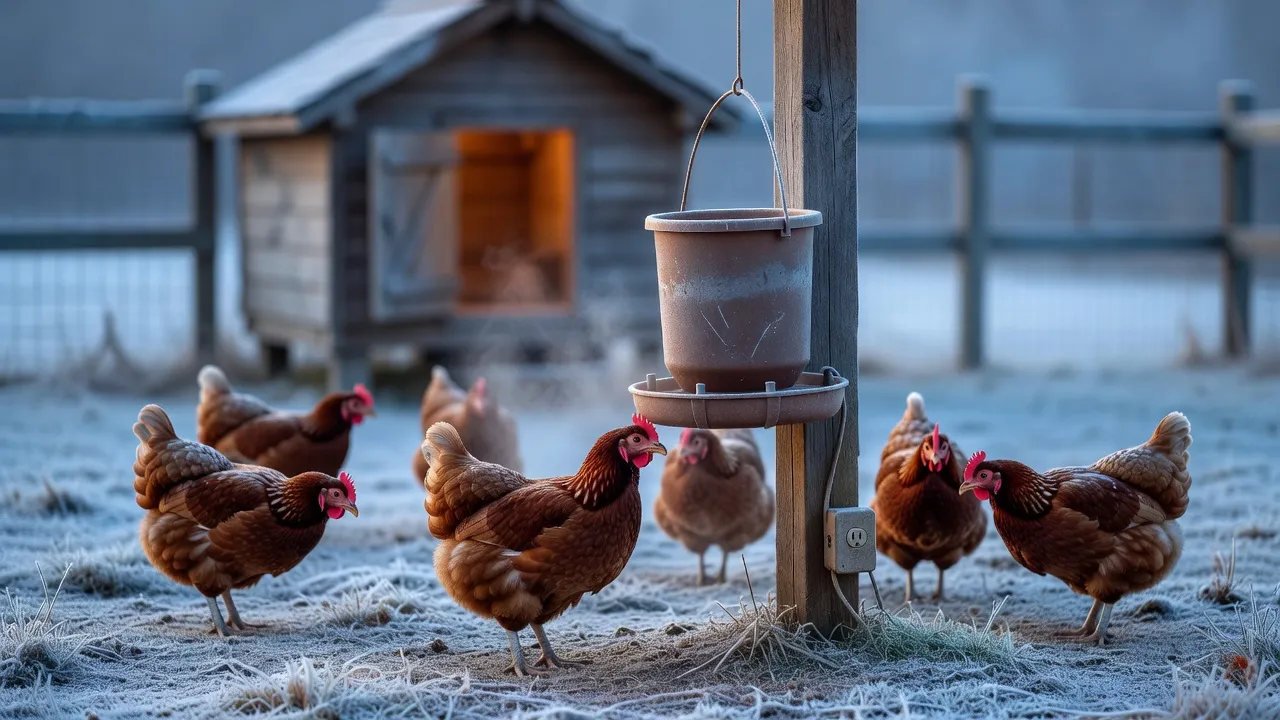
Nothing automatic survives a hard freeze unheated, because hoses, float valves, cups and nipples all freeze. Pick one of these fixes:
- Heat the bucket. A 40 W belt on a nipple bucket, such as the RentACoop Thermo Bucket Belt covered in the best waterers guide, switches on below 38°F. A commenter on a nipple-kit video adds that the water on a nipple’s outer lip freezes first and that turning each nipple an eighth of a turn stops it pooling.
- Switch to a heated fount. The heated chicken waterer picks compare watts, capacity and running cost.
- Drain the hose. I would disconnect and drain a hose-fed line before the first hard freeze, unless you can heat it.
- Never leave a full unheated bucket out. A reviewer reports a bucket cracked after freezing when more than half full.
Keepers also ask whether open heated water causes comb frostbite, as in this r/chickens thread. I do not have a sourced answer, so I will not guess. For the full list of fixes by cost, see keeping chicken water from freezing.
Going away for a few days
An automatic waterer lets you leave for a weekend. It does not let you leave for weeks. Penn State Extension says laying hens should never go more than 12 hours without water, and a stuck valve or a kinked hose can cut the supply the day after you leave. Fill any bucket to the top before you go, and ask a neighbor to check the line and the bucket every day or two.
Setup tips
Mount the drinkers where hens can reach them without roosting on them, and follow the maker’s height guidance. For open waterers, Penn State Extension says to set the lip at the birds’ back height. A few more rules:
- Add a shut-off valve so you can service the line. The S.N.A.P. kit includes one.
- Check for leaks before you leave the flock for a day. A hose-fed leak is a flood, not a drip.
- Count drinking points. Hy-Line asks for one nipple or cup per 10 hens. Eight points covers 80 hens by that rule, so the water supply, not the nozzles, limits you.
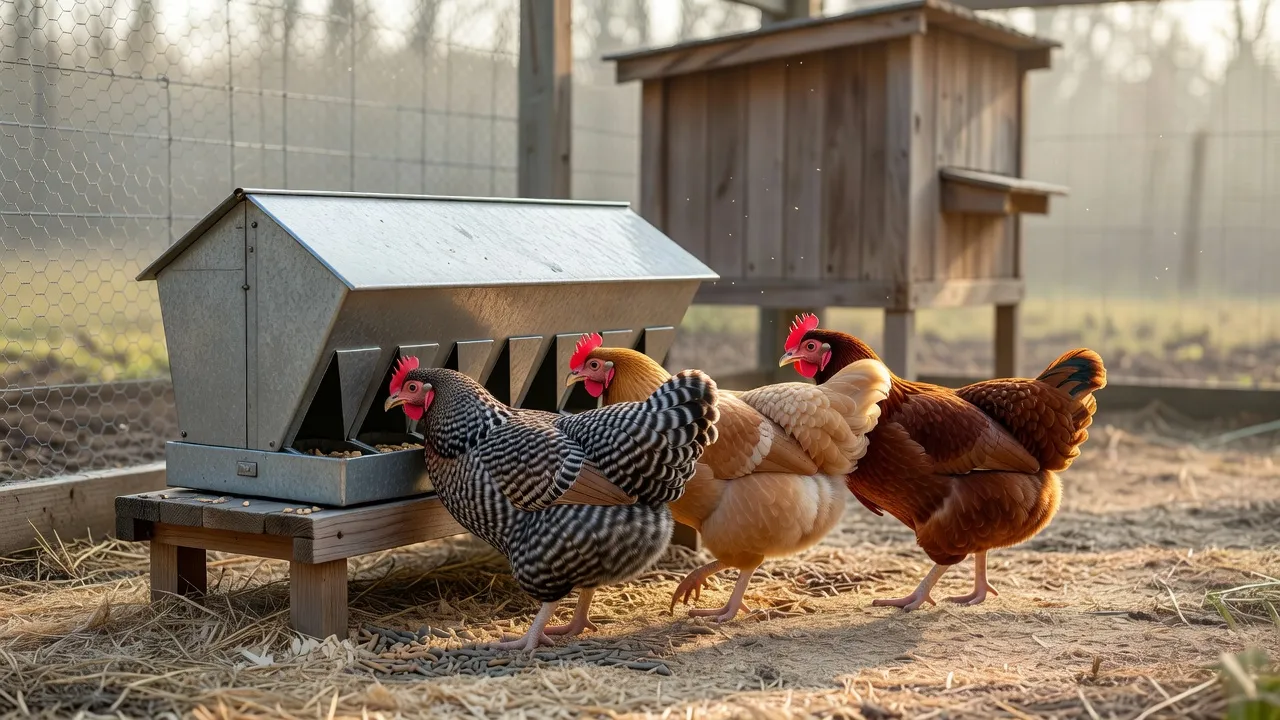
- Keep feed nearby but dry. Hens drink about twice their feed weight, and the feeder guide covers the other half of the chore.
Questions people ask
How do automatic chicken waterers work?
They refill themselves from a hose, a water line or a large reservoir. A float valve works like a toilet tank: when hens drink the level down, the float drops and the valve opens, then it shuts when the level is back up. Hose-fed nozzle systems, like The Chicken Fountain, skip the reservoir and release water when a bird pecks the nozzle.
Do automatic waterers freeze?
Yes. Hoses, float valves and nipples all freeze without heat. One commenter on a nipple-kit video says the water on the outside lip of a nipple freezes first. Heat the bucket with a belt or switch to a heated fount, and see the freeze-proofing guide and the heated waterer picks.
How often do I refill a 5-gallon waterer?
Ten hens drink a full 5-gallon bucket in about 9 days at 68°F and about 5 days at 89.6°F, using the University of Kentucky's layer figures of 5.55 and 10.57 gallons per 100 birds a day. The refill table above works out other flock sizes.
Is an automatic chicken waterer worth it?
It is worth it past about 15 hens or whenever you travel, because a 5-gallon bucket then empties in under a week. It costs you a daily look instead: Penn State Extension says laying hens should never go more than 12 hours without water, and a stuck valve fails silently.
Sources
- University of Kentucky, Poultry Chapter 12: Water
- Penn State Extension: Management Requirements for Laying Flocks
- Hy-Line Brown Commercial Layers, Alternative Systems Performance Standards Guide (May 2026)
- The Chicken Fountain (maker page, checked 2026-10-09)
- RentACoop S.N.A.P. Watering System Starter Kit (product page and reviews, checked 2026-10-09)
- RentACoop 5 Gallon Chicken Waterer (product page and reviews, checked 2026-10-09)
- Facebook group post: automatic waterer built from toilet parts and PVC pipe

Written by Kyle
Kyle has kept backyard chickens on his own small farm for five years. He reads the extension research, the spec sheets and the owner complaints, then tells you what he would buy and what he would skip.