On this page
A nipple for a chicken waterer is a small spring valve: a hen pecks the pin, water runs, and the valve seals when she lets go. It works for most flocks if the nipple hangs at the right height, the bucket has a vent hole and hens learn it before the first freeze. Owners praise the clean water and dry litter, and they complain about training, leaks and frozen nipples. This guide covers setup, training, the failures owners report most and winter. More waterers are in the waterers hub.
Short answer
Yes, with trainingand a plan for freezing
Hang the nipple so hens stretch slightly to reach it, give each 8 to 10 adult hens a nipple, and vent the bucket. Hens learn in hours to a few days. Below freezing, use a heated bucket or an open backup.
How a chicken waterer nipple works
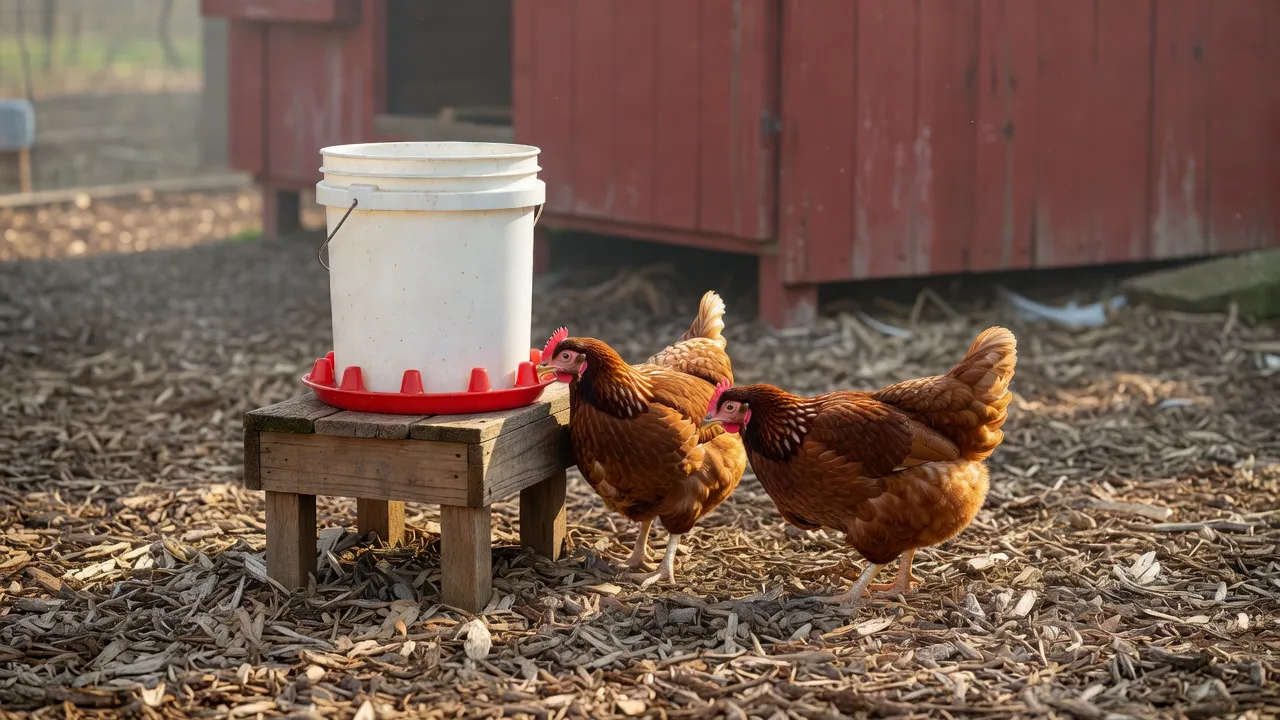
A waterer nipple is a valve with a pin. A hen pushes the pin with her beak, water runs, and the valve closes when she lets go. Because she drinks from the valve, feed, bedding and manure have less chance to get into the reservoir, which is the point owners praise.
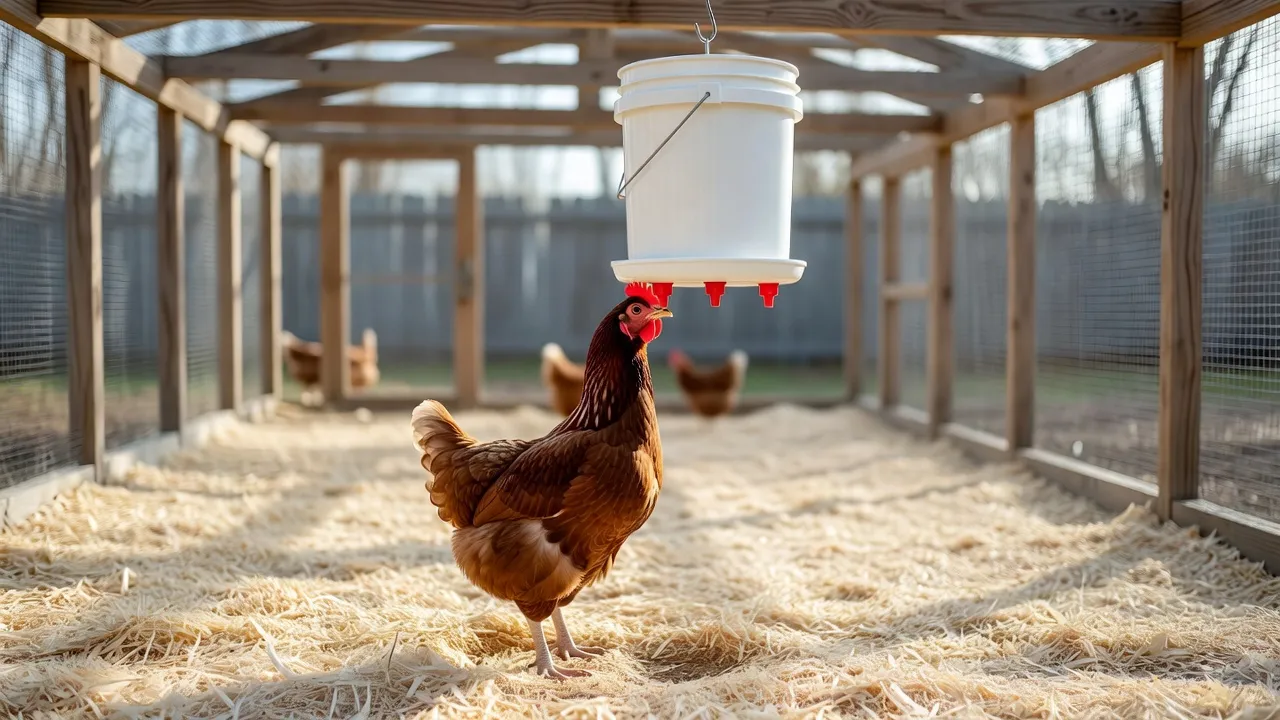
Two details trip people up. The bucket needs venting, because drinking creates a vacuum and water stops flowing; the Backyard Poultry builder uses a 3/32 inch hole just under the first ridge near the top. And hanging height matters: hang the valve so hens stretch slightly to reach it, because too low and they tap it from the side and drip onto the bedding.
Vertical vs horizontal nipples
Vertical nipples point down from the bottom of a bucket and horizontal ones point out of its side. Owners like both and disagree on freezing, so the right choice is the one that suits your bucket and your climate.
| Vertical (bottom mount) | Horizontal (side mount) | |
|---|---|---|
| Where it sits | Bottom of the bucket, pin points down | Side of the bucket, pin points out |
| Owner praise | Hens cannot tip it or kick debris in, so water stays clean and litter stays dry; chicks learn it easily | Clean water, and one owner says ducks cannot turn it into a shower |
| Owner complaints | Valves seize or leak if the water is dirty; one owner’s vertical waterer froze over | One owner says birds could not get enough water from plain horizontal nipples and did better with a cup attachment |
| Freezing | One owner says its seal sits outside the water supply so it freezes faster | One owner says its small mass freezes first; another says its seal sits inside the water and freezes later |
Those freezing reports come from a Backyard Chickens thread, “Are nipple waterers worth it?”, with posts from 2013 to 2017. They contradict each other, which tells you the real fix is heat, not orientation. Carolina Coops sells horizontal side-mount nipples made of BPA-free food-grade HDPE with stainless steel parts, per the seller.
Nipples vs waterer cups
Chicken waterer cups hold a small pool of water that a valve or float refills, and they suit hens that refuse a pin. The Merck Veterinary Manual lists 12 adult birds per cup against 8 per nipple for White Leghorn layers, so a cup serves a few more hens. Cups freeze too: one owner quoted in a Backyard Chickens winter waterer thread says that once freezing starts, cups and nipples stop working even on heated stands. The best chicken waterer guide compares cups, nipples and founts side by side.
How many chickens per nipple
Give each 8 to 10 adult hens a nipple and always fit at least two per bucket. Sources differ, and the numbers below show the range.
| Source | Birds per nipple |
|---|---|
| Merck Veterinary Manual, White Leghorn layers | 15 at 0-6 weeks, 10 at 7-17 weeks, 8 at 18 weeks and older |
| Backyard Poultry DIY guide | 10 to 12 chickens |
| Premier 1 Heated Poultry Waterer | 3 nipples for up to 35 adult birds, about 12 each |
| Farm Innovators HB-60P | Side nipples for up to 15 chickens |
The Merck figures describe commercial layers. Use the lower number if your flock has a bossy hen, because one guard can keep the others off a single nipple. Daily water is the other check: the University of Kentucky table puts laying hens at 5.55 gallons per 100 birds a day at 68°F, so a 5-gallon bucket holds well over a week for 10 hens.
How to train chickens to use nipples
Most hens learn in hours to a few days once the nipple is their only water. One owner in the Backyard Chickens thread says it never took longer than 2 hours for their birds, while other owners report still struggling. Use this order.
- Hang the nipple so hens stretch slightly to reach the pin, with the valves pointing the right way and the bucket vented.
- Tap the pin so a drop forms. Owners in a Facebook group say showing the water flow helps hens learn.
- Try a treat near the nipple if the flock ignores it. Owners in a Facebook group report success with treats or a dripping nipple. One commenter on a RentACoop training video says hens notice red and blue nipples.
- Keep an open waterer available until every hen drinks from the nipples. Some owners remove it to encourage training, but only do this while you are home to watch. Put it back long before the 12-hour limit that Penn State Extension sets for laying hens.
- Watch the shy hens as well as the first birds to try it, and check every day that the valves still release water.
Not vet advice
If a hen looks listless, sits fluffed up or has not been seen drinking after a few days of training, put an open waterer back and call your vet. Penn State Extension says laying hens should never go longer than 12 hours without water.
Training failures owners report
The problems owners report fall into five groups, and most are installation errors, not dumb chickens.
Check the valve orientation first. One commenter on the RentACoop video installed theirs upside down because the box had no instructions. Then check the height: low nipples let hens tap from the side and spill water, as the DIY guide explains.
A sealed bucket can stop releasing water as drinking creates a vacuum, per the Backyard Poultry guide. Keep the water clean too; one owner reports that dirt fouls the seals and causes leaks, while excess head pressure can overwhelm the valve.
Some flocks take longer to learn even with the setup right. Owners describe this on r/BackYardChickens and r/chickens. One X poster was still teaching a flock in December, so allow time before winter.
Keep the valves working
Check that water flows every day, and keep the water clean. A Backyard Chickens owner in the thread above says the water has to be clean or the seals foul and leak, and that you should check daily that the system still delivers water. The DIY builder’s cheap valves seized and the hens stopped laying, which is the cost of not checking. Look at each nipple when you fill the bucket, press the pin to confirm it releases a drop, and replace any valve that sticks.
DIY nipple bucket build
A DIY nipple bucket needs a food-grade bucket, nipples, a vent hole and a lid you can live with. The Backyard Poultry builder’s lessons are the useful part of that guide.
- Use food-grade plastic. The builder says a 90 MIL bucket is thick-walled, a 70 MIL home-center bucket is thinner, and thicker walls survive a freeze better and buckle less when you add the valves.
- Push-in valves rely on a rubber grommet, and threaded valves rely on a gasket. The builder prefers push-in because threads strip easily.
- Add legs if you set the bucket on the ground, or you will rest it on the valves.
- Drill a 3/32 inch hole just under the first ridge near the top.
- Cover the fill and cord holes so the coop does not get in.
- The builder’s cheap valves seized in spring and the hens stopped laying, so buy decent valves and check them.
The same builder adds a 250 W pail de-icer for winter. At 250 W, a de-icer that never cycled off would cost about $32.69 a month at 18.16 cents per kWh, the same watts-times-hours math used in the heated waterer roundup.
Nipple waterers in winter
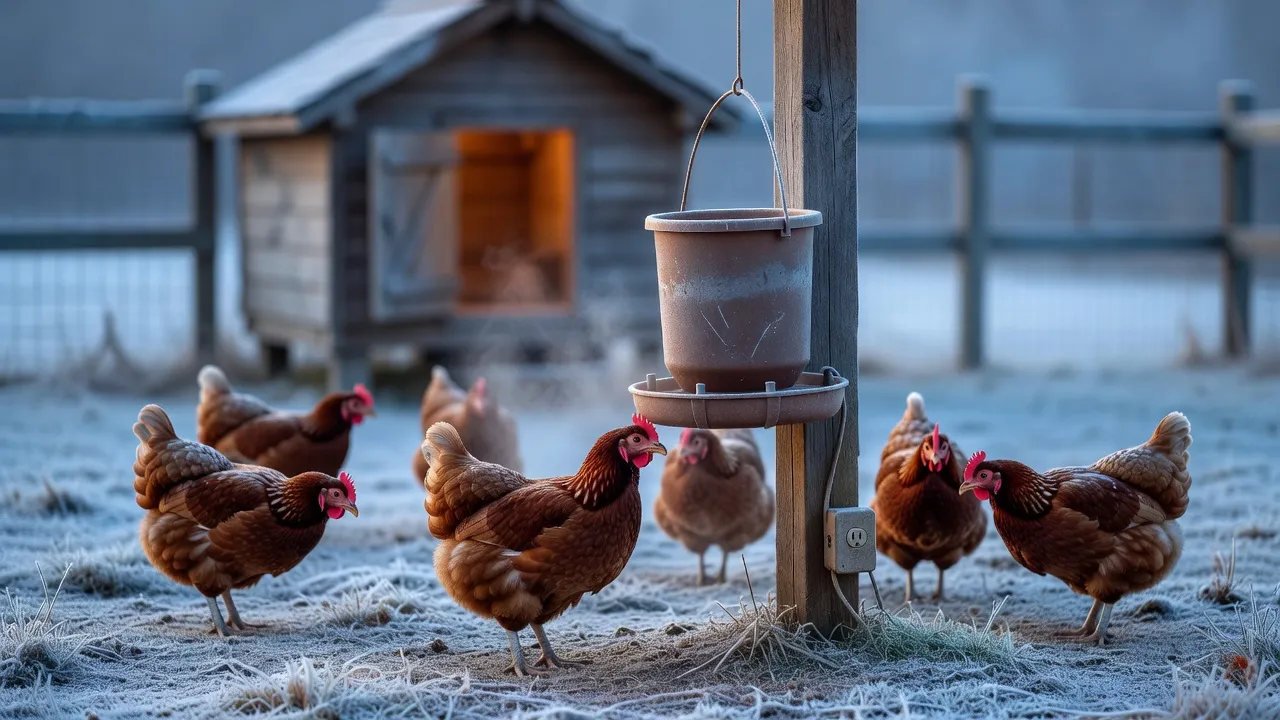
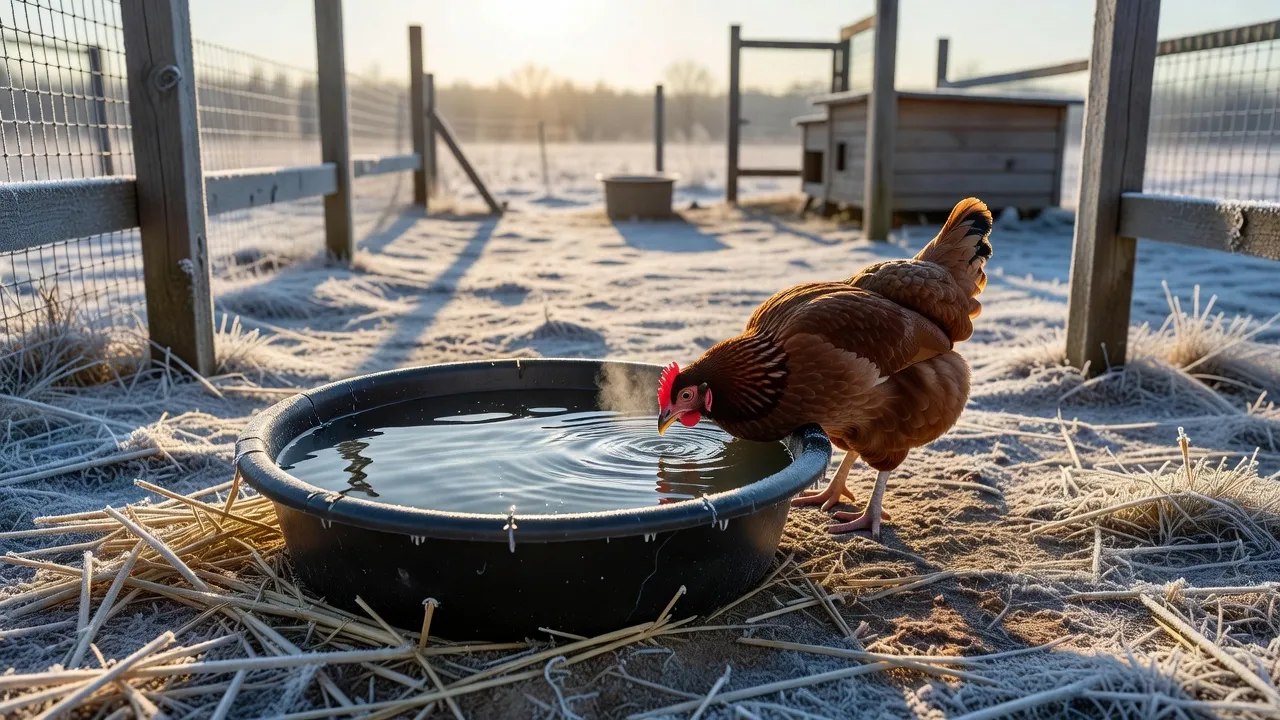
Nipples freeze, so heat the bucket or keep an open backup. The nipple tip is the coldest and smallest part of the system, and owners report it icing even when the reservoir is liquid.
Heated nipple buckets are the easy fix. Premier 1 rates its 3-gallon bucket to -20°F, and Farm Innovators rates its 2-gallon HB-60P to -10°F. Owner builds exist too: one owner in the thread above ran horizontal nipples on a 10-gallon plastic tote with a stock tank de-icer made for plastic, refilled it weekly for 15 chickens and reports no freezing down to -22°F. Another used an aquarium heater, a small pump and a thermostat plug on a 3-gallon bucket and saw no freezing to 15°F. Those are owner reports, not ratings. One owner of a vertical waterer says they thaw a frozen nipple by briefly soaking it in warmer water. The freezing guide covers the no-power options.
Nipple waterers worth buying
Buy a ready-made heated bucket if you want winter water, and add quality nipples if you build your own. The heated waterer roundup has full cards for the Premier 1 bucket and the Farm Innovators HB-60P. For a DIY bucket, these are the nipples I found a clear spec page for.
Columbus Aqua Horizontal Side-Mount Nipples
a DIY bucket where you want side-mount nipples
- Mount
- Horizontal, side-mount
- Material
- BPA-free food-grade HDPE with stainless steel parts
- Pack sizes
- 2, 5, 10, 20 or 50
- Seller
- Carolina Coops
- Birds
- Chickens, ducks, turkeys, quail, guinea fowl
- Sold in packs, so one order covers several buckets
- Stainless parts
- Works for ducks as well as chickens
- Side-mount only, so you need a bucket with a wall you can drill
- Freezes like any unheated nipple
- No heater, so winter needs a de-icer
For unheated ready-made buckets and cups, see the best chicken waterers.
Questions people ask
How many chickens per nipple?
Plan on one nipple for every 8 to 10 adult hens. The Merck Veterinary Manual lists 15, 10 and 8 birds per nipple as White Leghorn layers age from 0-6 weeks, 7-17 weeks and 18 weeks on (Merck), and a Backyard Poultry builder uses 10 to 12 per nipple. Put at least two nipples on any bucket so one stuck valve does not cut off the flock.
How do I train chickens to use nipples?
Hang the nipple so hens stretch slightly to reach it, tap the pin so a drop forms, and keep the old waterer nearby for the first day. Owners say hens learn within hours to a few days once the nipple is their only water, while others report still struggling. Never leave hens without water for more than 12 hours (Penn State Extension).
Do nipple waterers freeze?
Yes. Unheated nipples freeze in hard cold, and owners disagree on whether vertical or horizontal ones freeze first. A heated bucket, rated by its maker down to -10°F or -20°F, is the fix. See the freezing guide and the heated waterer roundup.
Are nipple waterers worth it?
Owners say yes for clean water and dry litter. Hens that drink from a valve contaminate the water less with dirt, feed, bedding and manure than hens at an open dish, owners say. The cost is a training period, venting and a freeze plan. See the best chicken waterers for the full comparison.
Why won't my chickens drink from the nipples?
The usual causes are a nipple hung too high or too low, nipples installed upside down, a bucket with no vent hole so no water flows, or other water sources still available. Fix those first, then retrain.
Sources
- Merck Veterinary Manual: Management of Laying Chickens
- Penn State Extension: Management Requirements for Laying Flocks
- University of Kentucky: Poultry water, Chapter 12
- Backyard Poultry: Building a DIY Chicken Waterer with Nipples
- Premier 1 Supplies: Heated Poultry Waterer
- Farm Innovators: Heated 2 Gallon Poultry Drinker, HB-60P
- Carolina Coops: Horizontal Side Mount Chicken Waterer Nipples

Written by Kyle
Kyle has kept backyard chickens on his own small farm for five years. He reads the extension research, the spec sheets and the owner complaints, then tells you what he would buy and what he would skip.