On this page
Choose a gravity automatic chicken feeder for daily feeding because its hopper supplies the outlet without a motor or treadle. Choose a treadle when a closing lid matters more than easy setup. Consider a timer only when scheduled delivery solves a specific problem and you can check the system’s reliability.
The word automatic covers different jobs. A gravity hopper supplies the opening as birds eat; a treadle opens a lid when a bird steps up; an electric dispenser delivers feed when its controller tells it to. Buying by hopper size alone misses those differences.
Short answer
Gravity for simple feedingchoose a treadle for controlled access
Look for an outlet your smallest bird can use, a hopper you can empty and clean, and a dry mounting place. Extra storage is useful only when the feed keeps reaching the birds.
Compare the automatic feeder types
| Type | What happens automatically | Best fit | Main failure to check |
|---|---|---|---|
| Gravity port or tube | Dry feed drops into the eating area | Everyday backyard feeding with fewer moving parts | Feed hangs above an empty outlet |
| Treadle | A hen’s weight opens the lid | Adult birds where access by pests is a concern | Small or timid birds cannot open it |
| Timed electric dispenser | A motor releases feed on a schedule | A managed setup with a clear delivery plan | Power, motor or schedule fails |
| DIY gravity hopper | A homemade container replenishes its outlet | A keeper willing to adjust the build and inspect it | Outlet leaks, clogs or admits rain |
For example, Dine-A-Chook describes its automatic feeders as gravity-fed. The name does not mean they contain a timer or shut when hens leave. Look at the feeding opening and the mechanism in the manual, rather than assuming automatic means enclosed.
Our chicken feeder guides cover buying choices, treadle training and rodent access in more detail.
Gravity feeders: the simplest place to start
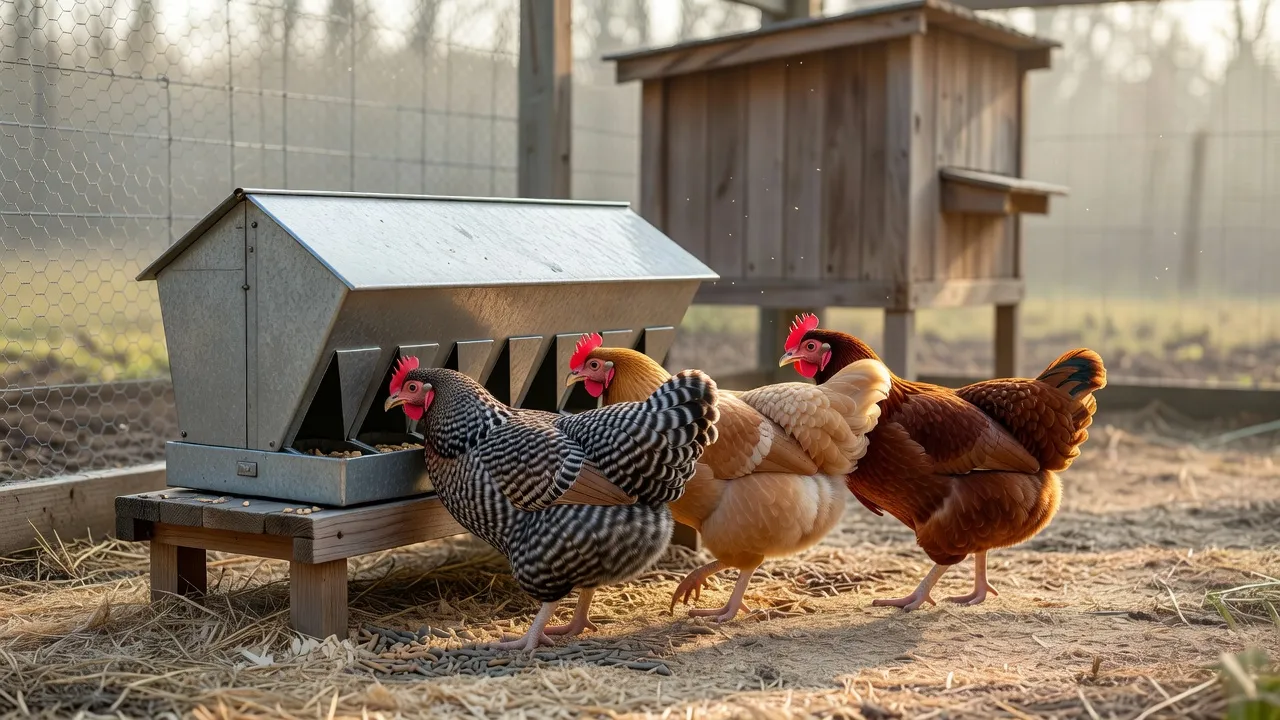
A gravity feeder has a storage chamber above an outlet. Feed falls as birds eat. Tube feeders expose feed around a tray; port designs put the eating area inside a container or behind a hood. The outlet shape matters because the same gravity mechanism can supply a wide open tray or a recessed eating bay.
Choose a design you can inspect without dismantling the whole setup. You should be able to see or feel that feed has reached the eating area, remove stale material at the bottom, and clean the container. A dark hopper that looks full from above can hide an empty outlet below.
Feed texture also matters. University of Minnesota Extension explains that mash can pack in tubular hoppers and interrupt flow. Its alternative is a trough that birds eat from directly. Ask the feeder maker about your actual feed rather than assuming every gravity design accepts every ration.
If your birds use pellets or crumble, check the maker’s instructions for that model. Dine-A-Chook lists those feed forms for its own feeders and excludes wet or sticky feeds in its feeding guide. That guidance applies to its product; it is not proof that every homemade outlet flows equally well.
Treadle feeders: a closing lid with training work
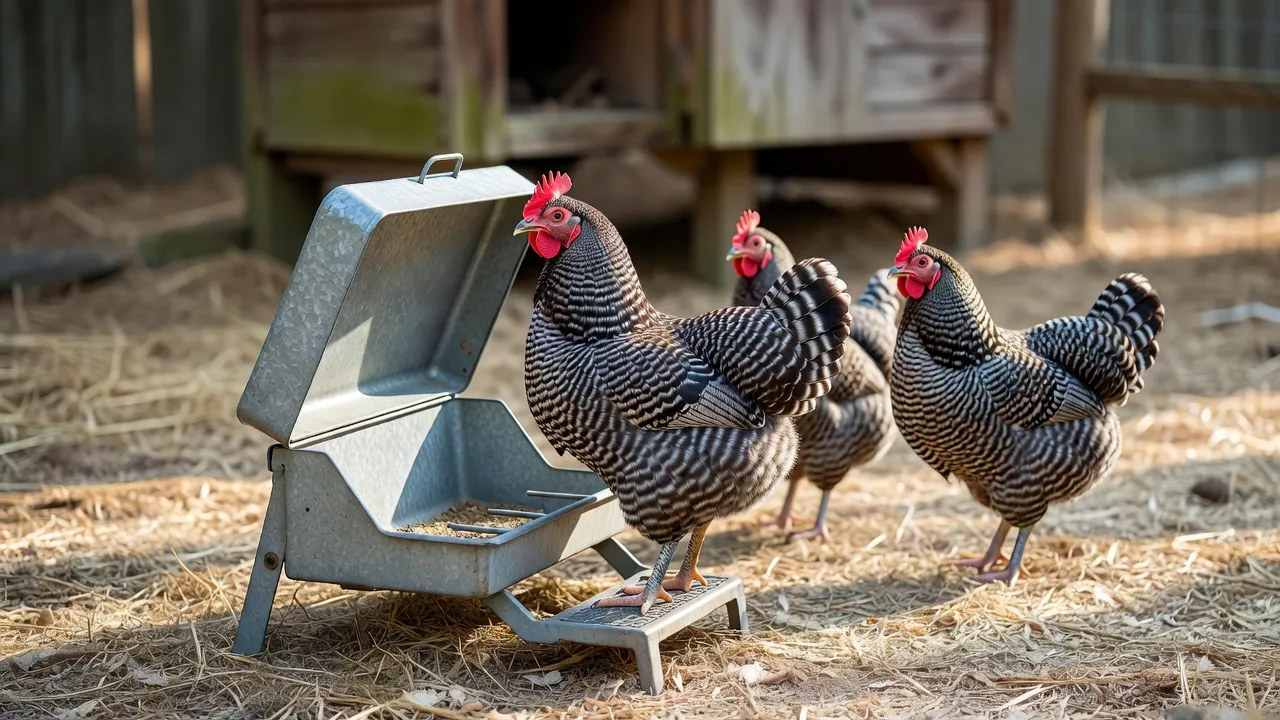
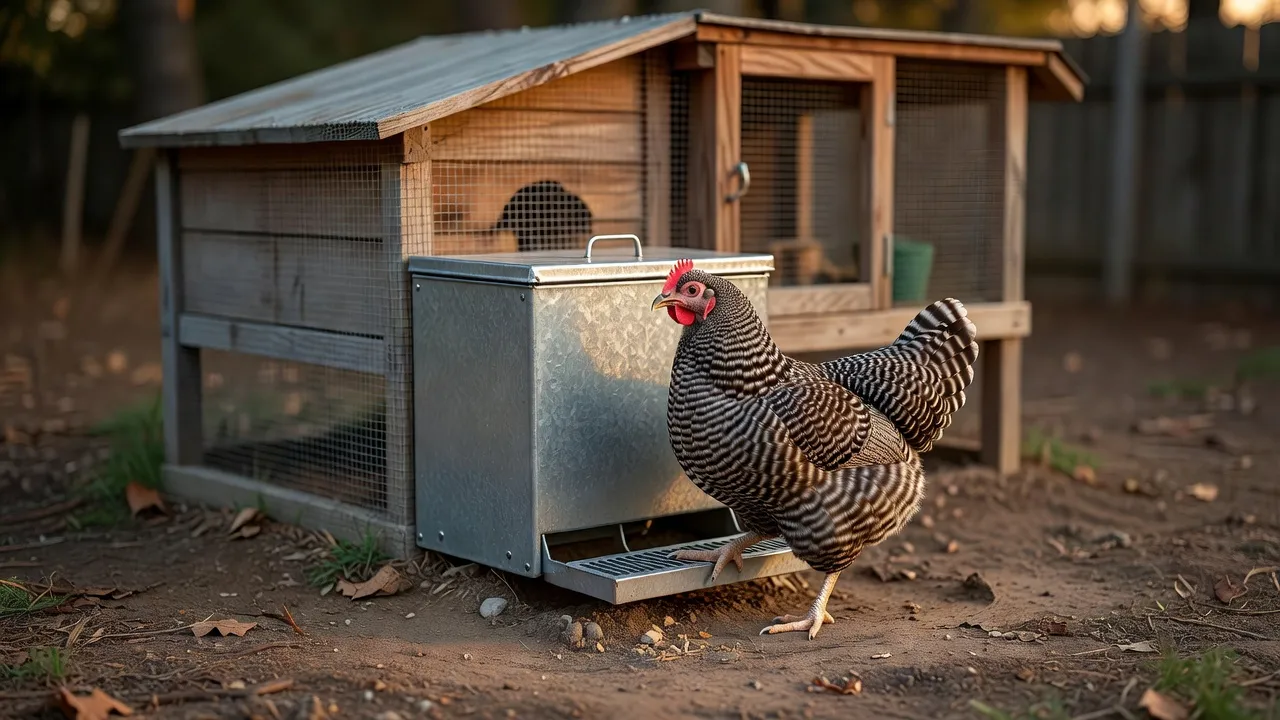
A treadle combines feed storage with a platform linked to a lid. Birds need to stand in the right place and exert enough weight to lift it. This adds an access barrier, plus hinges, linkage and a training process that a plain gravity hopper avoids.
Before choosing one, check your smallest birds, including bantams and birds joining the flock later. Ask the seller for the activation weight and the training instructions. A flock-size claim does not tell you whether a particular hen can operate the lid.
Place it on the surface the maker specifies. Watch for a platform that tilts, rubs against bedding or catches on nearby equipment. Check access while a hen is using it, then watch the lid close after she leaves. Remove spilled feed around the platform so you can inspect its movement.
The treadle chicken feeder guide compares models and training details. For an existing rodent problem, use the rat-proof feeder guide alongside enclosure and feed-storage improvements. A treadle does not remove a food reward left on the floor.
Timed electric feeders: check the whole delivery system
An automatic chicken feeder with a timer can mean a hopper with a motor-driven outlet or a dispenser that throws feed outward. Those designs need different spaces and checks. Confirm where the food lands and whether birds can reach it without crowding or eating off wet bedding.
Before buying, get the manual and ask these questions:
- Is it intended for poultry and the feed you use?
- Does it dispense into a clean eating area or scatter onto the ground?
- What happens when the battery runs down or mains power stops?
- Does restoring power preserve the clock and schedule?
- Can you inspect a delivery and confirm the motor actually moved feed?
- Can you provide feed safely if the controller fails?
Keep a working manual feeder available during setup. Verify a delivery with birds present before relying on the timer. Check the actual output instead of treating a running motor or lit display as proof that feed arrived.
This guide does not rank electric models because no specific unit has been verified here against a poultry manual. Compare the mechanism and failure behavior before treating a timed dispenser as an upgrade.
Capacity and refill intervals
Work from your flock’s observed feed use. Fill with a known amount, record what you add, and note spilled feed separately. Repeat through your normal routine before planning a refill schedule. Stored feed, feed eaten and feed wasted are different quantities.
Estimate time between refills by dividing usable feed in the hopper by daily flock use. Leave a reserve and shorten the interval when weather or feed flow changes. A gallon label describes container volume; it does not establish the weight of every feed blend.
Also check eating access. A large hopper with a single contested opening can leave subordinate birds waiting. Watch your flock during meals and provide another eating location if birds are being pushed away. More storage and more feeding positions solve different problems.
Placement, cleaning and daily checks
Keep the feeder clear of water splashes, roof runoff and roost droppings. Leave space to open the lid and remove it for cleaning. Check that a fully loaded hopper stays stable when a bird bumps it.
Use the supplied mounting instructions. RentACoop’s instruction library separates port, bucket and treadle models, which is a useful reminder that setup is specific to the feeder. For growing birds, Minnesota Extension advises adjusting equipment to bird size and limiting hopper fill to reduce waste.
During your flock check, inspect the eating opening, the birds using it and the feed at the bottom. Clear a blocked outlet immediately. Empty damp or spoiled feed rather than mixing new feed into it, then find the leak or splash source. After washing, let the feeder dry before refilling.
An automatic feeder reduces a chore. It still needs a person checking that food reaches every bird. Pair it with a water setup you can inspect in the same visit; the automatic chicken waterer guide covers that side of the system.
Questions people ask
Does an automatic chicken feeder need electricity?
Gravity and treadle feeders work without electricity. A timed dispenser needs the power source listed in its manual, which might be batteries or a mains supply. Read what the mechanism does before buying something labeled automatic.
Is an automatic chicken feeder rat-proof?
An open gravity outlet remains accessible to pests. A treadle lid limits access, but its trigger, lid fit and spilled feed still matter. Compare those details in the rat-proof feeder guide.
Can I leave chickens alone with an automatic feeder?
Extra feed capacity reduces refills but does not replace a keeper checking feed access, water, birds and the enclosure. Arrange someone to check the flock while you are away. A full hopper can still have a blocked outlet.
Can I make an automatic chicken feeder myself?
Yes. A bucket fitted with feed ports or a vertical PVC hopper can replenish an outlet by gravity. The DIY chicken feeder guide compares those builds with an open trough.
Should I use an automatic chicken feeder with a timer?
Use one only when you have a clear reason to schedule delivery and a poultry-specific manual covering feed type and setup. Check that missed deliveries or power failure cannot leave birds without feed. An ordinary gravity feeder is simpler for a backyard flock that needs access through the day.
Sources

Written by Kyle
Kyle has kept backyard chickens on his own small farm for five years. He reads the extension research, the spec sheets and the owner complaints, then tells you what he would buy and what he would skip.