On this page
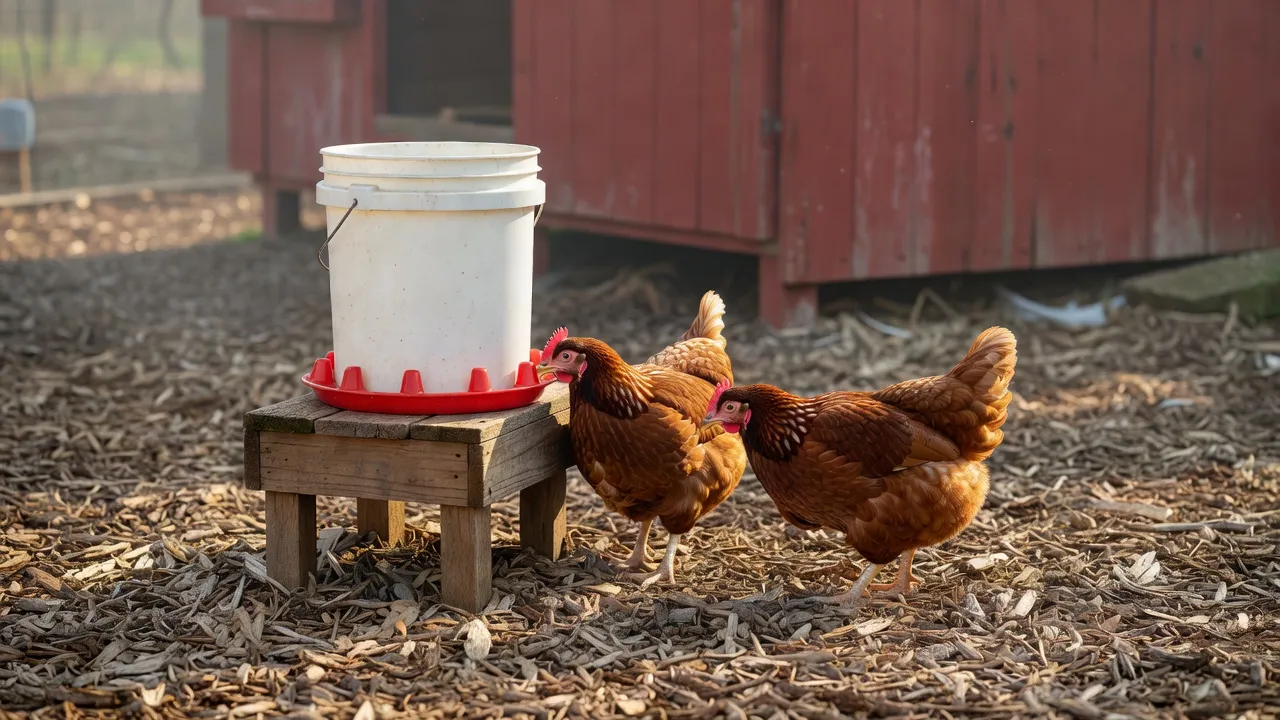
The best chicken waterer for most backyard flocks is a covered 5-gallon bucket with nipples or cups. Droppings stay out of the water, and a full bucket lasts about nine days for 10 hens at 68°F, using the University of Kentucky’s intake figures. My pick is the RentACoop 5 Gallon waterer at $63.72 (checked 2026-10-09). Keep four hens or fewer? The 2-gallon version at $39.95 is enough. If your nights drop below freezing, add a heater belt or buy a heated fount.
Every spec below comes from a maker’s page, an Amazon listing or an extension source, and every complaint links to the owner who posted it.
Quick picks
Buy the 5-gallon bucket unless you keep four hens or fewer, face weeks of hard freezes, want a hose to do the refilling, or prefer a metal fount.
| Pick | Type | Reservoir | Drinking points | Price (checked 2026-10-09 unless noted) | Best for | Buy |
|---|---|---|---|---|---|---|
| RentACoop 5 Gallon | Bucket, cups and nipples | 5 gal | 4 cups, 4 nipples | $63.72 | Most flocks, about 6 to 15 hens | Check price |
| RentACoop 2 Gallon | Bucket, cups and nipples | 2 gal | 4 cups, 4 nipples | $39.95 | Four hens or fewer, tight budgets | Check price |
| Farm Innovators HPF-100 | Heated fount | 3 gal | Open base | See the heated guide | Freezing nights, simplest setup | Check price |
| RentACoop Thermo Bucket Belt | 40 W heater belt | Fits 2 to 5 gal buckets | Not a waterer | $59.95 | Keeping a nipple bucket open in winter | Check price |
| The Chicken Fountain Gen 2 | Hose-fed nozzles | None, hose-fed | Nozzles | $99.99 (listed sold out) | No refilling at all | Check price |
| FARM-TUFF 2 Gallon | Galvanized double-wall fount | 2 gal | Open base, 1.5 in lip | $36.99 (2026-10-20) | Keepers who want metal over plastic | Check price |
| OverEZ 12 Gallon | Large plastic reservoir | 12 gal | 3 drinking stations | $79.99 (2026-10-20) | Bigger flocks with no hose at the run | Check price |
| Omlet Insulated | Insulated, unheated reservoir | 3 gal | Cups and nipples included | $109.99 (2026-10-20) | Sunny runs and mild frosts | Check price |
How I picked these waterers
Five questions ranked these waterers: how clean the water stays, how long a fill lasts, how many hens can drink at once, what happens below freezing, and what owners complain about. A chicken waterer dispenser is a reservoir plus a way for hens to reach it, and those five questions cover every design from a plain fount to a hose-fed line.
- Closed buckets keep droppings out. Clean open founts and refill them with fresh water every day (Penn State Extension).
- I sized reservoirs against Kentucky’s figures: 5.55 gallons per 100 layers a day at 68°F and 10.57 at 89.6°F.
- Hy-Line asks for one nipple or cup per 10 hens.
- Does the maker offer heat, and what do owners say about cold snaps?
- I read the reviews on each maker page and keeper threads, and I link every one I use.
I list only waterers whose maker pages give specs I can cite. Keepers also mention the Rugged Ranch waterer, where one Facebook group member has replaced the valve piece a few times, and Dine-a-Chook and Grandpa’s Feeders, which another group post rates as leak-free, mould-resistant choices. Without spec sheets I left them out of the picks. The three Amazon picks below have listing specs I can cite, and I note which claims come from the listing.
The best chicken waterers
Each pick lists the maker’s specs, the price I checked and the complaints owners post. The ranking comes from those specs, the sizing math below and the owner reports.
Best overall: RentACoop 5 Gallon
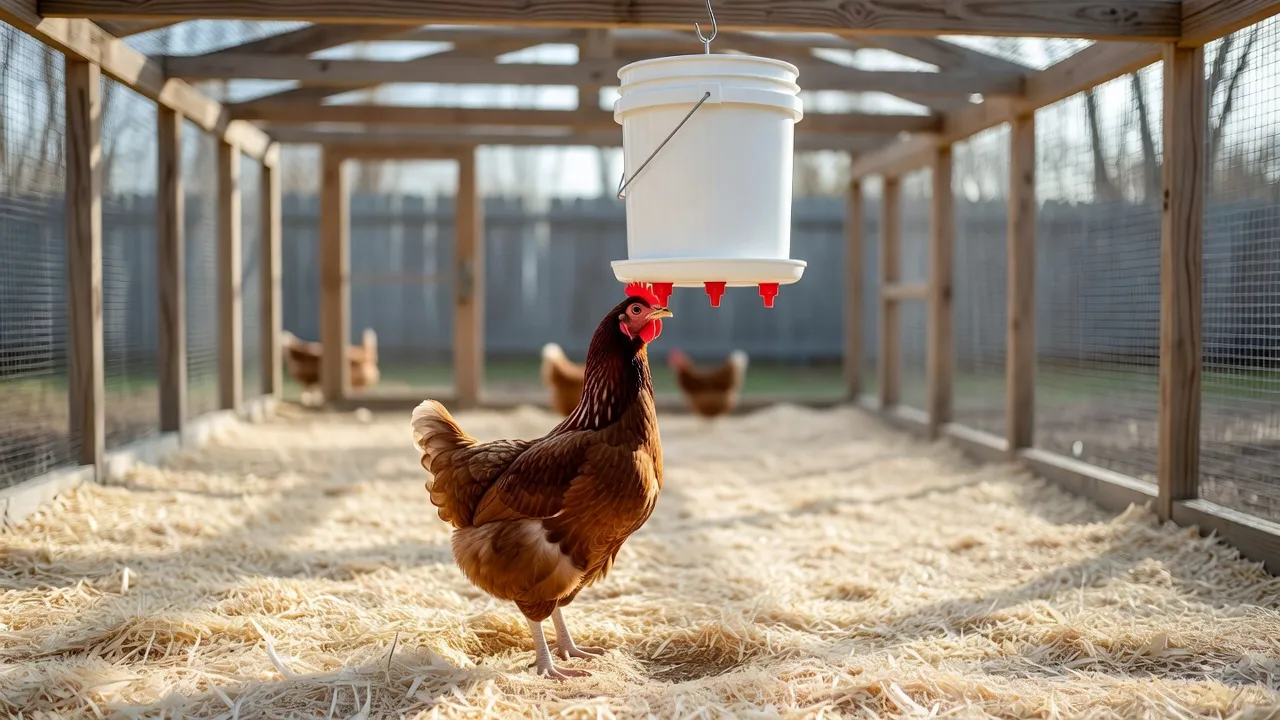
Put this waterer in most coops. The 5-gallon bucket is sealed apart from a top-fill plug, so droppings and bedding stay out. RentACoop lists four auto-fill cups, four horizontal nipples, an adjustable stand, a lid and an anti-roost cone. The cups hold water about three-quarters full, so a hen that never takes to nipples can still drink.
Eight drinking points is far more than a backyard flock needs. Hy-Line asks for one per 10 hens, so the reservoir is the limit. For 10 hens a full bucket lasts about nine days at 68°F and about five days at 89.6°F. The page does not say how many hens the bucket serves, so I used the Kentucky math instead of a marketing number.
The weak spot is plastic around the nipple holes. Mount it once, keep the stand level and do not move it full. Press a nipple each week and watch for a drip.
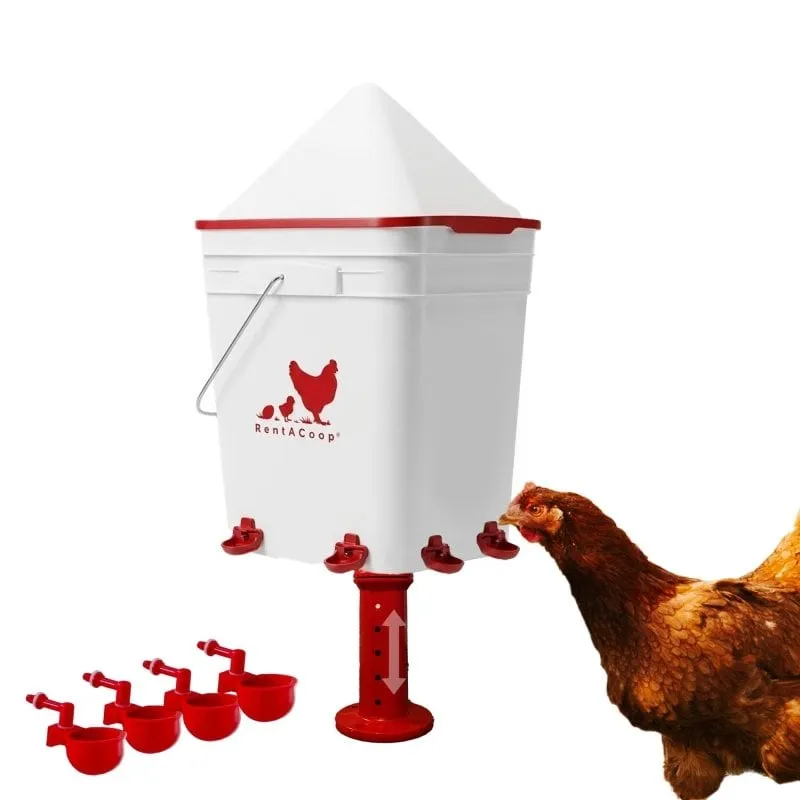
RentACoop 5 Gallon Chicken Waterer (4 Cups, 4 Nipples)
about 6 to 15 hens in a covered run, no water line needed
- Type
- Bucket with 4 auto-fill cups and 4 horizontal nipples
- Reservoir
- 5 gal, BPA-free, food-grade (maker's description)
- Stand
- Adjustable, with wood screws for a coop and ground stakes for outdoors
- Included
- Lid, anti-roost cone, cap plug, stand and hardware
- Winter
- Maker says the nipples work in winter with its Thermo Bucket Belt
- Closed bucket keeps droppings out
- Cups and nipples on one stand
- Full bucket lasts about 9 days for 10 hens at 68°F
- Stand and anti-roost cone included
- Not heated, so it needs a belt below freezing
- Maker does not say how many hens it serves
- Nipples can take training
What owners report
One reviewer on the RentACoop product page reports a bucket cracked after it froze when more than half full, and says heater options were hard to find. Another reviewer says replacement fill plugs cost $3 each.
Best for small flocks and tight budgets: RentACoop 2 Gallon
For four hens or fewer, the 2-gallon bucket at $39.95 is the one to buy. It carries the same four cups and four nipples as the big bucket. Four hens drink about 0.22 gallons a day at 68°F, so a full bucket lasts about nine days. At 10 hens it empties in under four days, so size up as the flock grows.
The reviews are rougher than the 5-gallon’s, so read them before you buy.
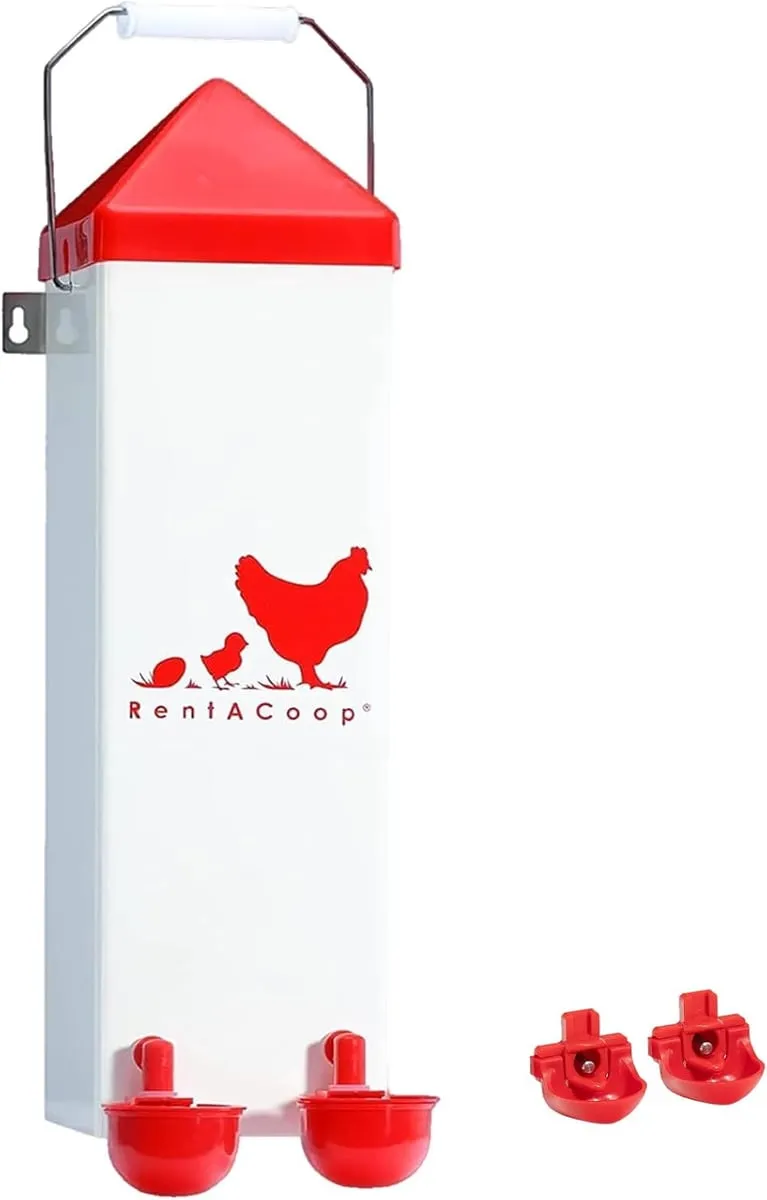
RentACoop 2 Gallon Chicken Waterer (4 Cups, 4 Nipples)
four hens or fewer, or a second station in a bigger flock
- Type
- Bucket with 4 auto-fill cups and 4 horizontal nipples
- Reservoir
- 2 gal, BPA-free, food-grade plastic
- Fill
- Top-fill cap plug, lid stays on
- Stand
- Adjustable, lifts off for cleaning
- Winter
- Maker says the nipples work in winter with its Thermo Bucket Belt
- Lowest price of the picks
- Same cups and nipples as the 5-gallon
- Lifts off the stand for cleaning
- Empties in under 4 days at 10 hens (68°F)
- Reviewers report cracks and leaks
- Smaller bucket is easier to crack when moved
What owners report
Reviewers on the RentACoop 2-gallon page report nipple gaskets that failed after about two months, hairline cracks around nipple holes, and water that stopped flowing when the cap plug sat tight. One says adult hens ignored the nipples until they swapped in cups. Another says the 5-gallon version held up better than the 2-gallon when moved on a cart.
Best for winter: a heated fount
A heated fount is the simplest winter fix: plug it in and it keeps itself open. The 3-gallon Farm Innovators HPF-100 draws 100 W with a thermostat and is rated to keep water from freezing down to 0°F. Farm Innovators also lists a 2-gallon HB-60P at 60 W. A 100 W unit running nonstop costs about $13 a month at 18.16 cents per kWh (EIA), and the thermostat cuts that.
A fount is an open waterer, so it needs a daily rinse (Penn State Extension). Plan on an outdoor-rated extension cord, because one retailer lists the cord at 2 feet. Read NFPA’s blog on coop electrical safety before you run power to a coop.
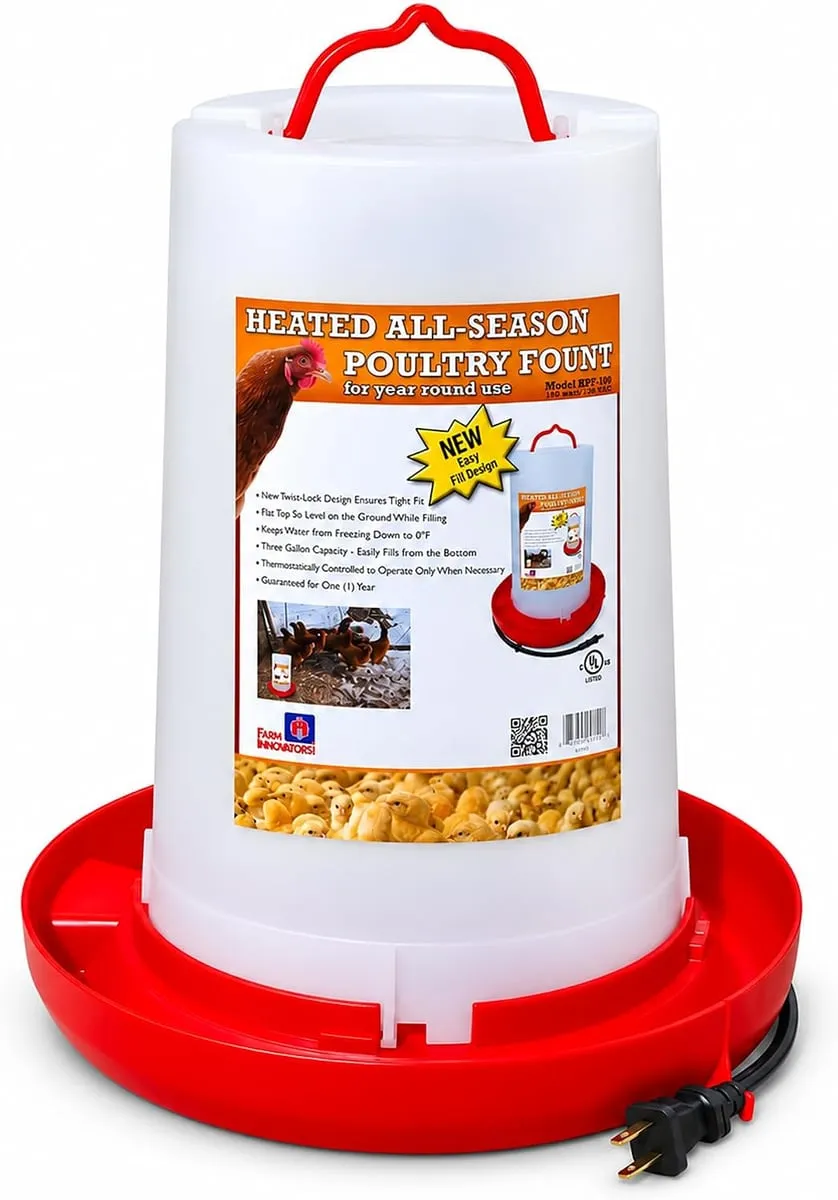
Farm Innovators HPF-100 Heated Poultry Fountain
freezing nights when you want the simplest setup
- Capacity
- 3 gal
- Power
- 100 W, thermostat controlled
- Cold rating
- Listing says it keeps water from freezing down to 0°F
- Running cost
- About $13 a month nonstop at 18.16 cents per kWh, less with the thermostat
- Cord
- One retailer lists 2 ft
- Heat is built into the base
- Thermostat runs it only when needed
- No bucket to modify
- Open fount, so it needs daily cleaning
- Short cord means an extension cord
- Listing does not state a safety certification
Best way to heat a nipple bucket: RentACoop Thermo Bucket Belt
If you already own a nipple bucket, a heater belt costs less than replacing it. The 40 W belt switches on below 38°F and off at 42°F, has a 6-foot cord and fits 2 and 5-gallon buckets 24 to 34 inches around, per RentACoop. RentACoop rates it to -10°F with its insulated wrap. Nonstop, 40 W costs about $5 a month at 18.16 cents per kWh, and the thermostat trims that.
The belt plus the 5-gallon waterer comes to $123.67. Insulation alone is not a plan: the Omlet thread linked in the insulated pick below has an owner reporting frozen nipples on an insulated, unheated waterer.
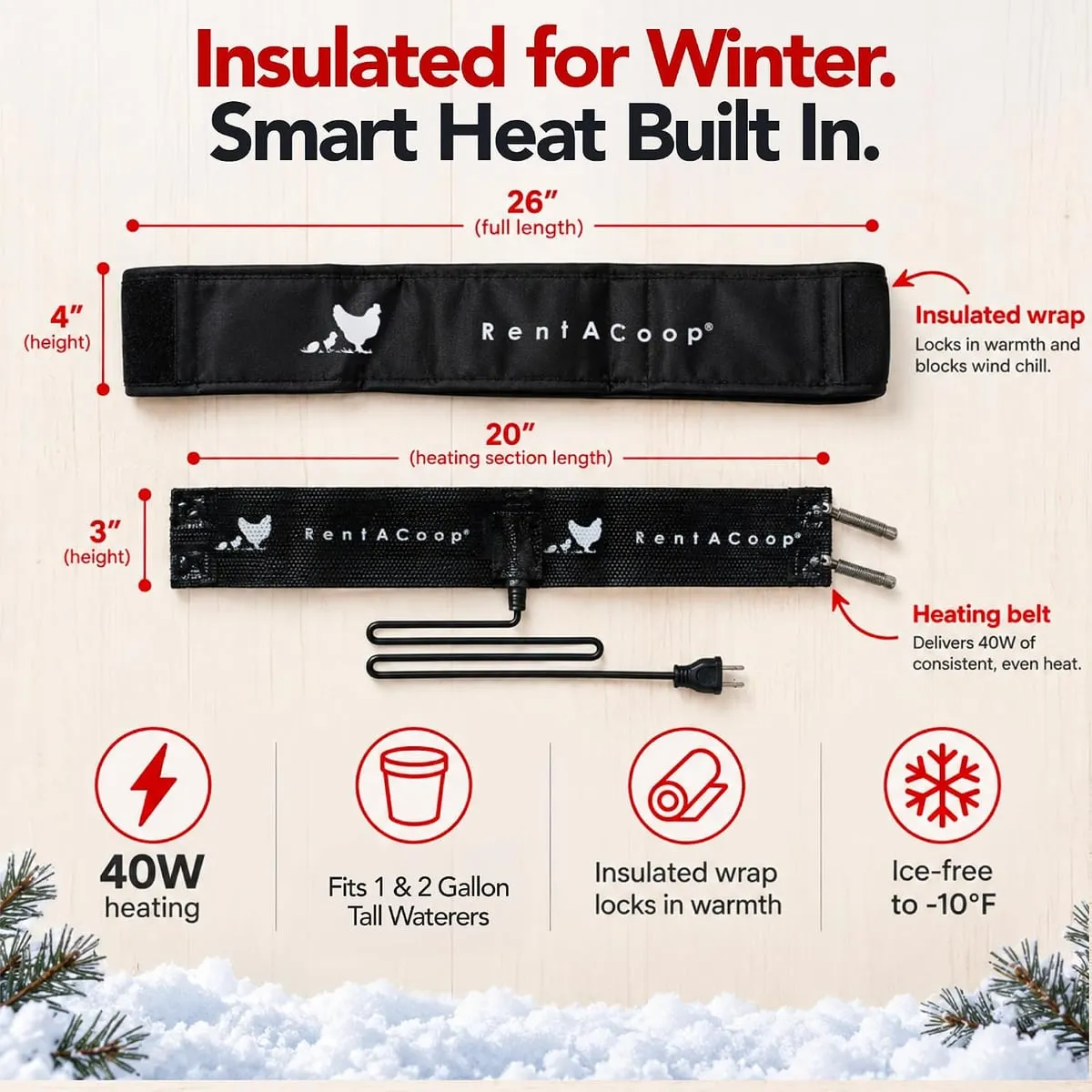
RentACoop Thermo Bucket Belt (40 W)
keeping a 2 or 5-gallon nipple bucket open in winter
- Power
- 40 W
- Thermostat
- On below 38°F, off at 42°F
- Cord
- 6 ft cold-weather cord
- Fits
- 2 and 5-gallon buckets, 24 to 34 in around
- Cold rating
- Maker says -10°F with the insulated wrap
- Keeps your existing nipple bucket
- Thermostat shuts it off in mild weather
- Insulated wrap included
- Page names no safety certification
- Works best on straight-sided buckets
- You have to remove it in warm weather
What owners report
Reviewers on the RentACoop product page report plug wires pulling loose, a belt that struggled in single-digit temperatures, one that did not sit flush on an angled feed-store bucket, and mold after overheating when it was left on in warm weather. One says bowl-style cups froze while nipple cups worked.
Best galvanized fount: FARM-TUFF 2 Gallon
If you want metal instead of plastic, start with this fount. The Amazon listing describes galvanized steel with rolled seams and a vacuum double wall, a cone top that stops hens roosting on it, and a 1.5-inch drinking lip. It stands 13 inches tall and 10.5 inches wide, and it is for ground use only, so you cannot hang it. It was $36.99 on 2026-10-20 and had 4.2 out of 5 from 1,114 ratings on Amazon that day. The same listing also sells 3 and 5-gallon sizes.
It is an open fount, so rinse it and add fresh water daily (Penn State Extension). Two gallons lasts about nine days for four hens at 68°F. Skip vinegar in it, for the reason in the metal-or-plastic section below.
FARM-TUFF Galvanized Double-Wall Poultry Waterer, 2 gal
small flocks whose keeper wants a metal fount on the ground
- Type
- Vacuum double-wall fount
- Capacity
- 2 gal (3 and 5 gal also sold)
- Material
- Galvanized steel, rolled seams
- Size
- 13 in tall x 10.5 in wide
- Drinking lip
- 1.5 in
- Mounting
- Ground use only, not for hanging
- Metal body instead of plastic
- Cone top discourages roosting
- Lowest listed price in this guide
- Open base needs daily cleaning
- Cannot be hung
- No vinegar or ACV in galvanized founts
Biggest reservoir: OverEZ 12 Gallon
For a bigger flock with no hose near the run, a 12-gallon reservoir is the next step up from a 5-gallon bucket. The Amazon listing describes a sealed design in UV-protected, BPA-free plastic with three drinking stations that sits on the ground for filling and cleaning. It measures 22.75 x 12.5 x 16.25 inches. It was $79.99 on 2026-10-20, with 4.1 out of 5 from 1,347 ratings on Amazon. It is not heated.
The listing claims clean water “for up to a month.” Run the Kentucky numbers and a full tank lasts about 11 days for 20 hens at 68°F and about 6 days at 89.6°F. Three drinking stations covers about 30 hens at Hy-Line’s one per 10. Never let a full month go by without a scrub: give fresh water daily (Alabama Extension), because a big tank is still standing water.
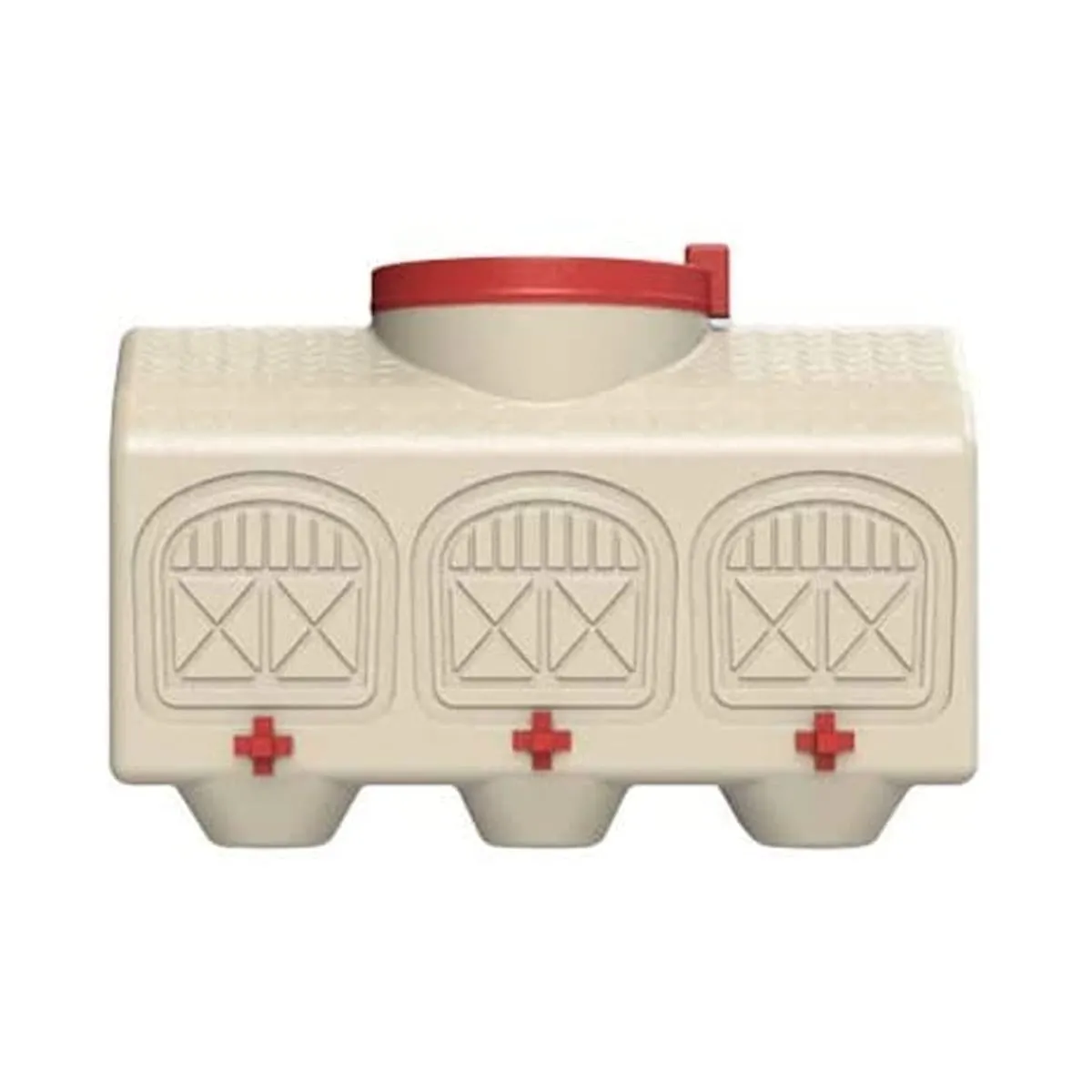
OverEZ Automatic Chicken Waterer, 12 gal
about 15 to 30 hens with no water line at the run
- Reservoir
- 12 gal
- Drinking points
- 3 drinking stations
- Material
- UV-protected, BPA-free plastic
- Size
- 22.75 x 12.5 x 16.25 in
- Placement
- Sits on the ground
- Heat
- None
- Largest reservoir in this guide
- About 11 days for 20 hens at 68°F
- Sealed design keeps droppings out
- Not heated
- Heavy to move when full
- Only 3 drinking stations
Best insulated: Omlet Insulated
An insulated reservoir slows heat gain in summer and heat loss in a mild frost, without a cord. The Amazon listing claims the 3-gallon Omlet keeps water cool in summer and “helps prevent freezing,” and that the body blocks 99% of light, which should mean less algae. It ships with both cups and nipples. It stands on legs or hangs, measures 15.5 x 15.5 x 21.5 inches, and is BPA-free, UV-stable plastic. It was $109.99 on 2026-10-20, with 4.6 out of 5 from 765 ratings on Amazon.
It is not heated, so do not count on it through a hard freeze. Pair it with a heated option if your nights stay below freezing.
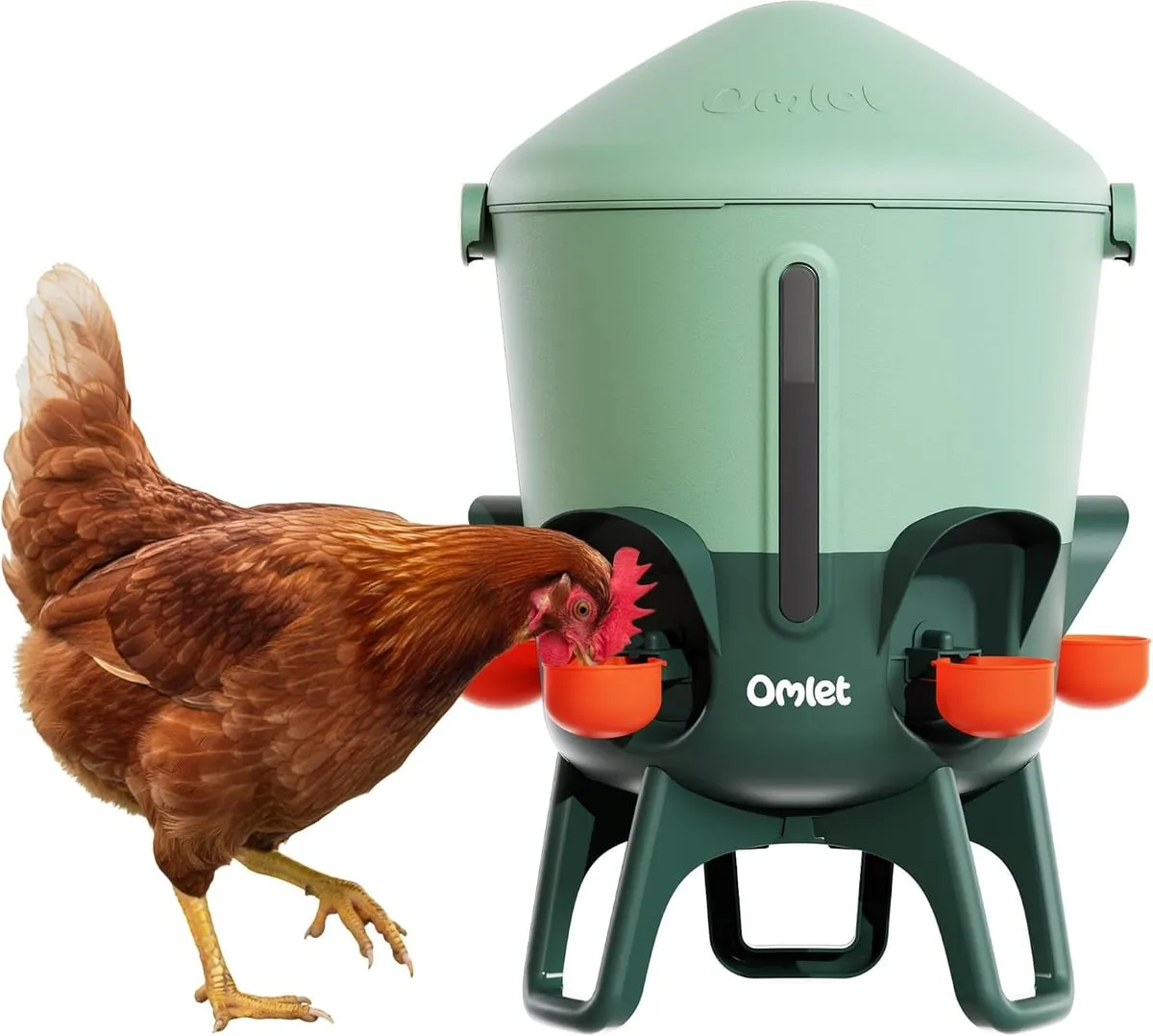
Omlet Insulated Chicken Waterer, 3 gal
sunny runs and places with only light frosts
- Capacity
- 3 gal
- Insulation
- Insulated body, not heated
- Light
- Listing says it blocks 99% of light
- Drinkers
- Cups and nipples both included
- Mounting
- Legs or hanging
- Size
- 15.5 x 15.5 x 21.5 in
- Insulation helps in summer heat
- Opaque body should slow algae
- Cups and nipples in the box
- Highest price of the picks
- Not heated, so it can still freeze
- Only 3 gal
What owners report
An owner in an r/BackYardChickens thread reports the nipples on an insulated Omlet waterer freezing below freezing.
Best for a large flock: go hose-fed
A hose-fed system ends the refilling. At 20 hens a full 5-gallon bucket lasts about 4.5 days at 68°F and about 2.5 days at 89.6°F, and at 30 hens you refill every other day in a heat wave. I would not run a big flock on buckets.
The Chicken Fountain Gen 2 is $99.99 (checked 2026-10-09) and connects to a garden hose or water line with nozzles that release water only when birds drink. The page showed it sold out when I checked and does not state a capacity or flock size. The automatic chicken waterer guide compares it with a float-valve kit and works out refill intervals.
Which 5-gallon chicken waterer fits your setup?
The reservoir tells you how much water it holds. The outlet tells you how hens drink, how litter gets in and which parts need attention. Before buying a chicken waterer in the 5-gallon size, compare the outlet and mount as closely as the bucket.
| Design | Good reason to choose it | What to inspect before buying |
|---|---|---|
| Closed bucket with horizontal nipples | Keeping litter out of the reservoir | Removable lid, replacement valves and a mount that carries a full bucket |
| Bucket with auto-fill cups | Birds can see water in the cup | Cup mounting, seals and access for cleaning |
| Combination cups and nipples | You want different outlets while birds learn | Space around each outlet and parts you can remove separately |
| Gravity fount with an open base | You want a visible drinking rim | Filling method, base seal and how easily the tray separates |
| Float-valve reservoir | You have a water supply at the run | Supply connection, shut-off valve and overflow route |
Our named 5-gallon pick combines cups and nipples: four of each, an adjustable stand and a top-fill plug (RentACoop’s product page). Those are that model’s features, not features every bucket waterer includes.
Capacity should not set your cleaning interval. The refill math below tells you when birds would empty a full reservoir. Give fresh water daily and keep drinkers free of slime and mildew (Alabama Extension). Inspect the water and the inside surfaces even while the bucket still holds plenty.
When you install it, level the mount and verify water delivery at every outlet before moving the birds onto it. Watch each hen drink, check for wet ground below the fittings and confirm that the lid stays accessible. Follow the maker’s cleaning instructions, and repeat the flow check after reassembly. A full bucket with a blocked outlet does not supply drinking water.
For the other half of the station, chicken feeders and waterers compares paired setups by flock size, weather and refill chores.
Four things to check before you buy
Flock size sets the reservoir, and the sizing table below covers it. Four other questions change which design is right: whether chicks will drink from it, whether it sits in sun, whether ducks share it and whether you plan to add anything to the water.
Will chicks drink from it?
Keep chicks on their own waterer until they are big enough for the adult one. A chick that falls into an open trough soaks its down, and a properly designed chick waterer makes drowning rare (Cackle Hatchery). Put marbles or clean gravel in the base for the first few days, set the water level between a chick’s eye and the top of its back, and raise the waterer on a tile or a square of plywood so it does not tip. The chick brooder guide covers the rest of the brooder setup.
Will it sit in the sun?
Shade it. Algae grows faster when sun hits the water. An opaque waterer cuts algae by blocking light, but keeping the waterer out of direct sun matters more than the material (My Pet Chicken). A smaller bucket that you empty and scrub often also leaves algae less time to grow. Shade pays twice in summer, since hens drink nearly double at 89.6°F (University of Kentucky).
Will ducks share it?
A nipple bucket alone is not enough for ducks. Ducks splash an open fount empty and soak the bedding, but they also need water they can dip their heads in. In an Oxford study, the only ducks with crusty eyes or nostrils at six weeks were those raised on nipple drinkers alone, and 3-inch-deep troughs were enough for head dipping (Metzer Farms). Give chickens their closed bucket and give ducks a separate tub they can dunk in. If you keep ducks or other waterfowl, contact The Chicken Fountain’s maker before using its drippers with them.
Metal or plastic?
Plastic is lighter, cheaper and easy to scrub. Galvanized metal suits a heated base built for metal founts, and the heated waterer guide covers which bases fit which founts. If you want metal, the FARM-TUFF 2-gallon double-wall fount above is the galvanized pick. The catch with metal is additives. Never put vinegar in a galvanized fount, and Manna Pro bars it from its poly drinkers too (Harris Farms double-wall drinker page). If you add vinegar or supplements, read the maker’s instructions for your exact waterer first.
Nipples vs cups vs founts
Nipples and cups keep water cleaner than open founts, founts are the easiest to heat, and all three need cleaning. Here is how the designs compare on the five questions that matter.
| Type | Water stays clean | Cleaning | Freezing | Training |
|---|---|---|---|---|
| Nipples | Best: sealed bucket, no droppings | Inspect daily, clean as needed and check that every nipple releases water | Tips freeze, so heat the bucket | Some hens need teaching |
| Cups | Good: small open cup that refills from the bucket | Rinse the cups, which collect debris | Open cup water freezes first | Easy: hens see the water |
| Open founts | Fair: open base collects litter | Daily clean and fresh water, per Penn State | A heated base fixes it | None |
Nipple systems remove the chore of cleaning waterers but take more careful management than most open systems (University of Tennessee Extension bulletin on broiler houses). In a backyard that means checking each nipple for a drip. For training hens, see the nipple waterer guide.
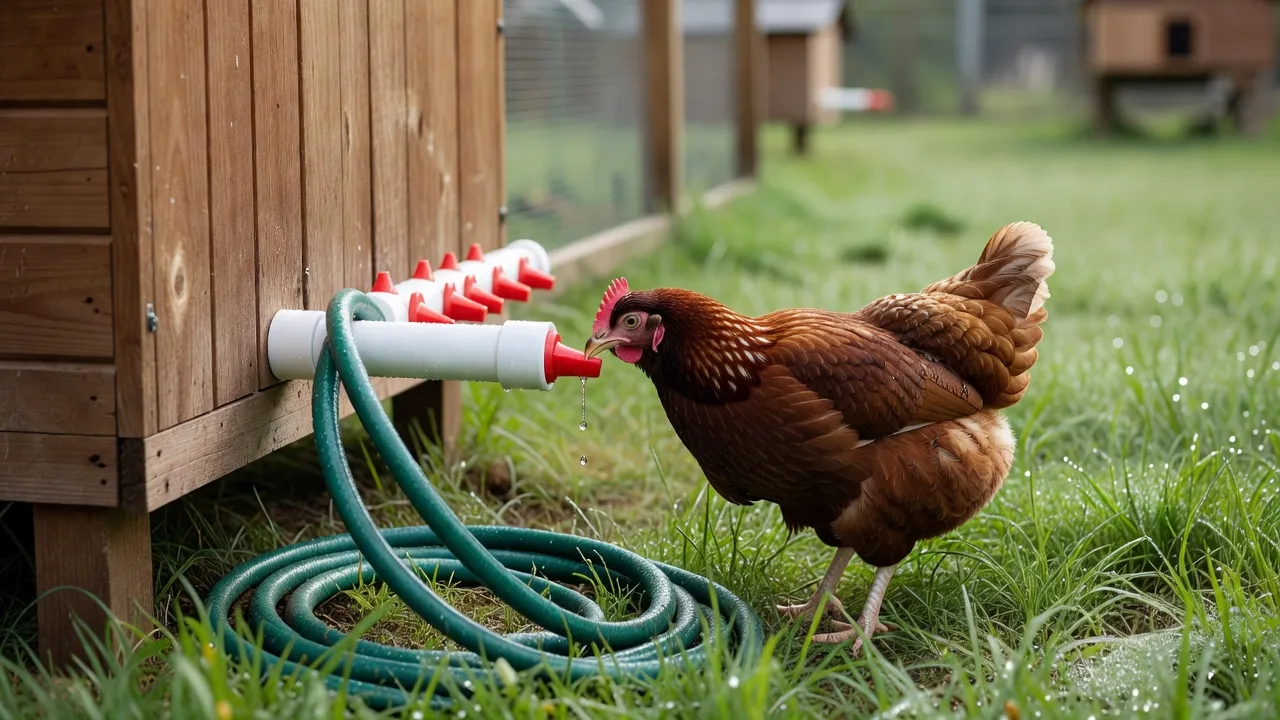
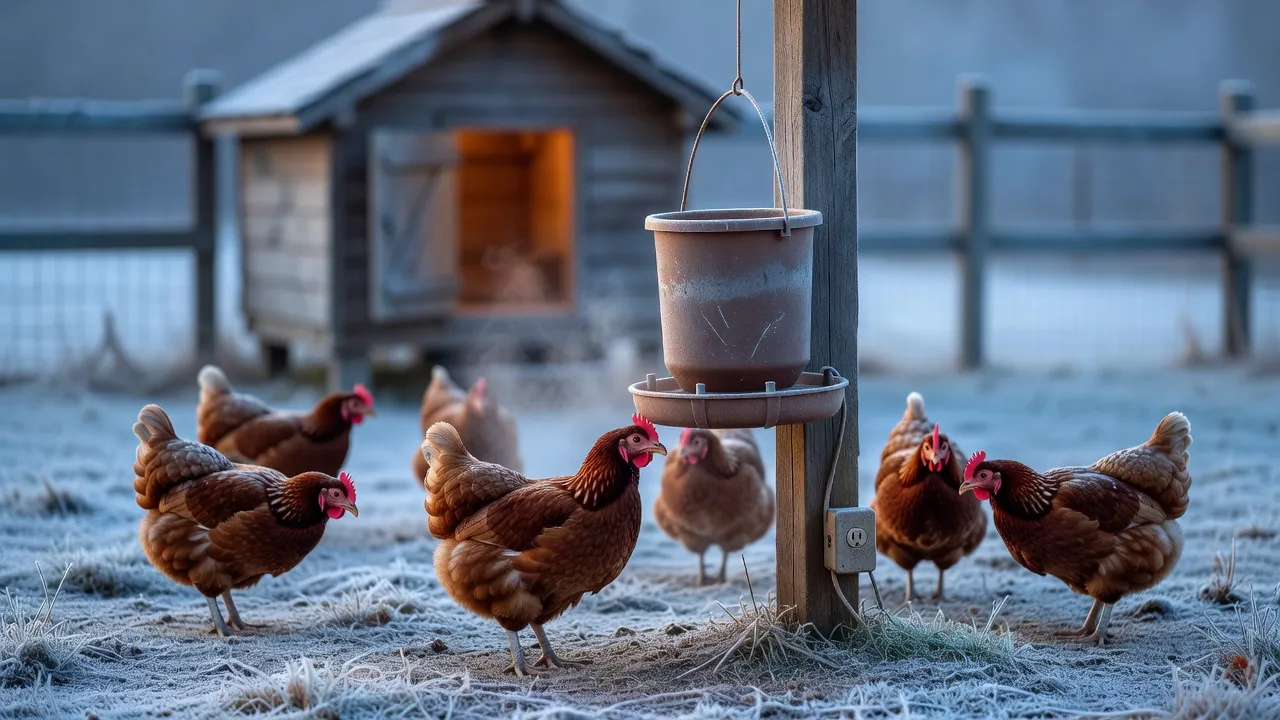
Freezing hits nipples first at the outside lip, where a drop of water hangs. The freeze-proofing guide ranks the fixes.
How much water your flock needs
Plan on 5.55 gallons per 100 hens a day at 68°F and 10.57 gallons at 89.6°F. Those are the University of Kentucky’s layer figures, and Penn State Extension sets a floor of 5 gallons per 100 birds daily. Feed drives it too: hens drink about twice their feed weight, so check the feeder guide when you size the flock.
| Hens | Gallons per day at 68°F | Gallons per day at 89.6°F | What to buy |
|---|---|---|---|
| 4 | 0.2 | 0.4 | RentACoop 2 Gallon |
| 6 | 0.3 | 0.6 | RentACoop 5 Gallon |
| 10 | 0.6 | 1.1 | RentACoop 5 Gallon |
| 15 | 0.8 | 1.6 | RentACoop 5 Gallon, refill about every 3 days in heat |
| 20 | 1.1 | 2.1 | Two buckets or a hose-fed system |
| 30 | 1.7 | 3.2 | Hose-fed system |
I size for a refill no more than twice a week in summer. In hot weather that is about 13 hens per 5-gallon bucket. These are full-reservoir figures, so round down a day.
For drinking points, Hy-Line asks for one nipple or cup per 10 hens, and the US Poultry Industry Manual allows up to 12 per cup or nipple for hens over 18 weeks. An open waterer needs 1 inch of water space per hen, per Penn State. A 5-gallon chicken waterer with eight drinking points can serve more hens than its reservoir can keep supplied.
Where to put it and how to keep it clean
Put the waterer in the run under cover, with the lip at hen-back height and the stand off the floor. Set the lip at the birds’ back height (Penn State Extension), and a raised stand keeps litter out of the water.
Water in the coop adds moisture to the air. Keep open water in the run and the coop dry. The ventilation guide covers the winter side. Shade the bucket in summer: layers drink nearly twice as much at 89.6°F as at 68°F.
For cleaning, inspect a closed bucket daily and clean it as its condition and the maker’s instructions require. Do not wait for the reservoir to run empty. Rinse an open fount daily and renew the water (Alabama Extension).
What owners complain about
Five complaints repeat across the reviews and threads linked above:
- Reviewers on the 2-gallon page report cracks around nipple holes, especially after moving the bucket.
- Cups can leak when they do not sit level, and failed gaskets can make nipples leak.
- Keep cups available for hens that ignore nipples; the nipple guide covers training.
- Heat the bucket or choose a heated fount when nipples freeze.
- Plastic waterers get brittle with age and need repair, so check yours each season.
Buy a spare set of nipples with the bucket. The hub page links every waterer guide in one place.
Questions people ask
What is the cleanest type of chicken waterer?
A closed bucket with nipples keeps droppings out best, and cups come second because a small open cup refills from the bucket. Open founts need cleaning and fresh water every day (Penn State Extension). The nipple waterer guide covers how nipples work and how to train hens to use them.
How many chickens per nipple waterer?
Plan on one nipple or cup per 10 hens. Hy-Line's laying guide uses that ratio, and the US Poultry Industry Manual caps it at 12 hens per cup or nipple. A bucket with four cups and four nipples clears that bar for any backyard flock, so the reservoir size sets your limit, not the nozzle count.
How often should I clean a chicken waterer?
Clean open waterers and refill them with fresh water every day (Penn State Extension), more often in summer (Alabama Extension). Inspect closed buckets too, clean them as their condition and instructions require, and remove slime or mildew. Do not wait for a large reservoir to run empty.
Should the waterer be inside the coop?
Put it in the run, under cover, with the lip at hen-back height. Water inside the coop adds moisture to the air, and a cracked or leaking bucket soaks the bedding. If your run has no roof, mount the waterer under the coop overhang. See the ventilation guide for why damp air is a winter problem.
How much water does a hen drink?
Hens drink about twice their feed weight. Layers drink 5.55 gallons per 100 birds a day at 68°F and 10.57 gallons at 89.6°F (University of Kentucky). That is about 7 ounces per hen in mild weather and about 13.5 ounces in heat.
Can baby chicks use an adult chicken waterer?
Not at first. Chicks can fall into a large open trough, so give them a chick waterer in the brooder. Put marbles or clean gravel in the base for the first few days, and keep the water level between the chick's eye and the top of its back (Cackle Hatchery). The brooder guide covers the setup.
Sources
- Alabama Extension: Feeding the laying hen and clean drinking water
- University of Kentucky, Poultry Chapter 12: Water
- Penn State Extension: Management Requirements for Laying Flocks
- Hy-Line Brown Commercial Layers, Alternative Systems Performance Standards Guide (May 2026)
- US Poultry Industry Manual: Feed and water (Iowa State CFSPH and USDA APHIS)
- University of Tennessee Extension PB 1533: Management of Nipple Watering Systems for Broilers
- EIA Electric Power Monthly, 2026 YTD US residential average
- RentACoop 5 Gallon Chicken Waterer (product page and reviews, checked 2026-10-09)
- RentACoop 2 Gallon Chicken Waterer (product page and reviews, checked 2026-10-09)
- RentACoop Thermo Bucket Belt (product page and reviews, checked 2026-10-09)
- Farm Innovators HPF-100 3-gallon heated poultry fountain (Blain's Farm & Fleet listing)
- The Chicken Fountain (maker page, checked 2026-10-09)
- Cackle Hatchery: Tips on watering baby chicks in a brooder
- My Pet Chicken: Algae in the waterer
- Metzer Farms: Do ducks prefer a shower or a bath? (Oxford study summary)
- Manna Pro: Harris Farms double wall metal drinker (vinegar warning)
- The Chicken Fountain: FAQs
- FARM-TUFF Galvanized Double-Wall Poultry Waterer, 2 gal (Amazon listing, checked 2026-10-20)
- OverEZ Automatic Chicken Waterer, 12 gal (Amazon listing, checked 2026-10-20)
- Omlet Insulated Chicken Waterer, 3 gal (Amazon listing, checked 2026-10-20)

Written by Kyle
Kyle has kept backyard chickens on his own small farm for five years. He reads the extension research, the spec sheets and the owner complaints, then tells you what he would buy and what he would skip.