On this page
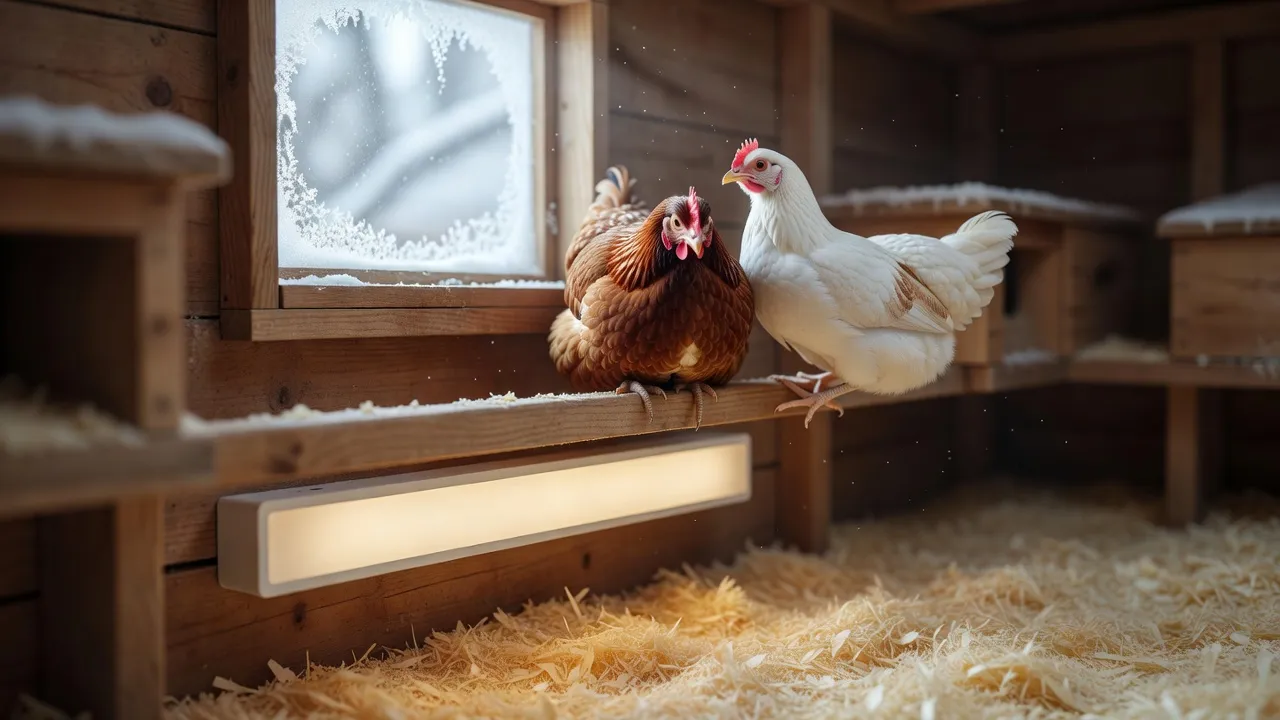
A radiant chicken coop heater is a flat panel that warms the hens in front of it, not the air in the coop. The four panels here run 100 to 200 W, which costs about $13 to $26 a month at full power, and the right one depends on how wide your roost is, not how big your coop is. This page compares them by watts, running cost, safety listing and mounting. If you are still deciding whether to heat at all, start with should you heat a chicken coop.
Radiant panels compared
The four panels differ most in watts, listing and price. Specs and prices come from each maker’s page, checked 2026-10-09, and the monthly figure assumes full power at 18.16 cents per kWh, the EIA’s 2026 year-to-date US residential average.
| Panel | Watts | Size | Price | Safety listing (per maker) | Control | Cost per 30 days |
|---|---|---|---|---|---|---|
| Sweeter Heater SM1130 | 100 W | 11 x 30 in | $147.00 | None named on pages checked | Overheat cutoff | about $13 |
| Cozy Chickens panel | 150 W | 19 x 8 in | $59.99 (showed sold out) | ETL-listed, zero-clearance | None listed | about $20 |
| Sweeter Heater SM1140 | 150 W | 11 x 40 in | $161.00 | None named on pages checked | Overheat cutoff | about $20 |
| Chickcozy Smart Coop Heater | 200 W | 16 x 11 in | $79.99 | UL and FCC certified | Built-in sensor | about $26 |
A thermostat that runs a panel half the time halves the last column. For the full roundup, with fire-safety rules and a cost calculator, read the safest chicken coop heaters.
What a flat panel can and can’t do
A flat panel makes a warm spot, not a warm room. University of Minnesota Extension says radiant heaters, a group that includes panels, brooder plates and hanging heaters, warm the birds but not the surrounding air. That is the whole product. Hens choose the warm spot or skip it, and University of Maine Extension’s Donna Coffin points to wall-mounted coop heaters for this reason: they sit on the wall so the chickens can go toward them if they want.
Some makers call these infrared chicken coop heaters. Sweeter Heater describes its output as infrared radiant heat, and the idea is the same: surface heat reaches what is in front of the panel.
The limit is reach. One viewer of a coop heater review video wrote that it will not heat a coop unless the coop is tiny. A panel will not raise the air temperature of a drafty coop, and Chickcozy puts its effective radiant reach within 40 cm, about 16 inches. A viewer on a Cozy Coop 200 W review asked how to lower the humidity after ordering a panel, which is a ventilation problem. How much ventilation a coop needs and how to insulate a chicken coop cover the fixes a panel cannot do.
Keepers who use panels describe them as a warming station. One keeper in a Small Farm group says panel heaters are very safe while in good repair and uses one as a warming station, not a space heater. Another in the Everything Backyard Chicken group mounted a panel near but slightly below one roost, and most of the hens crowd onto that roost. These are owner reports from search-result snippets, not controlled results.
How many watts do you need?
Match the panel to the roost, not the coop. No extension source or maker page in this research gives a watts-per-square-foot rule for a coop, and a made-up rule would be worse than none. What the sources do give is spot-heating geometry. UMN says to heat at nest-box or lower-roost height. Sweeter Heater lists each panel’s heated area as the size of its face and says to mount it about 6 to 20 inches over the animals. Chickcozy says its reach is within 40 cm.
| Panel | Watts | Maker’s heated area or reach | Price | Cost per 30 days |
|---|---|---|---|---|
| Sweeter Heater 11 x 11 (maker aims it at brooders and single small pets) | 32 W | 121 sq in | $113.00 | about $4 |
| Sweeter Heater SM1130 | 100 W | 330 sq in | $147.00 | about $13 |
| Cozy Chickens panel | 150 W | Not stated | $59.99 | about $20 |
| Sweeter Heater SM1140 | 150 W | 440 sq in | $161.00 | about $20 |
| Chickcozy Smart Coop Heater | 200 W | Within 40 cm | $79.99 | about $26 |
Do the roost arithmetic. UMN says each bird needs 9 inches of roost, so a 30 inch panel face spans roughly three birds’ worth of roost and a 40 inch face roughly four. That is arithmetic, not a heating guarantee, and a wider roost wants a second panel or a lower expectation. Sweeter Heater rates heated area by the size of the face, so a wider face covers more roost.
Mounting and clearance
Mount a panel on the wall near the roost, follow the maker’s manual and keep bedding and cords off it. These rules come from the makers, UMN and NFPA.
- UMN says nest-box or lower-roost height. Sweeter Heater says 6 to 20 inches above the animals. Put a thermometer on the wall at the same height to see what the birds feel.
- Wall, not floor. The Cozy panel stands on included feet and the Chickcozy on four legs. On a coop floor with bedding, a freestanding panel sits close to flammable litter, and UMN says to keep wires away from poultry, water and flammable litter. Wall mounting avoids that.
- The Cozy page says the panel can sit near walls and combustible materials. Follow the manual’s PDF anyway and keep bedding off the face. Sweeter Heater says the unit is safe as long as it is positioned so heat can escape, and its snap-action control shuts it off if heat is trapped, so never cover a panel.
- Sweeter Heater’s own FAQ says failures are rare and mostly come from a chewed cord, abuse or power failures. Route cords where birds cannot peck them. The Cozy panel’s cord is 6 feet, so the outlet has to sit close.
- Use a GFCI-protected outlet on a circuit an electrician installed. NFPA says all coop receptacles should have GFCI protection, and UMN says never to run power to a coop with an extension cord.
- NFPA says to clean dust off electrical parts regularly. Chickcozy ships a dust cover.
- NFPA says to use listed equipment according to its listing instructions. The Cozy page says ETL-listed and the Chickcozy page says UL certified. The Sweeter Heater pages checked name no UL or ETL listing, so ask the maker before you wire one in.
A panel is not a heat lamp, but it still needs a safe install
The Maine Fire Marshal’s office lists extension cords and bedding among the four top coop fire causes. Keep the cord short, the outlet GFCI-protected and the bedding away from the panel.What to check on any panel before you buy
Five lines on the spec sheet decide most of it.
- Look for UL or ETL on the maker’s page, because NFPA says to use listed equipment. The Cozy page says ETL, the Chickcozy page says UL and the Sweeter Heater pages checked name neither.
- A thermostat or sensor cuts run time, and UMN says thermostats, built in or bought separately, reduce electricity costs. Chickcozy has a sensor and says it works with timers and controllers. The Cozy page lists none, so read its manual before you add a plug-in controller. Sweeter Heater’s snap-action control protects the heater by shutting it off when heat cannot escape. It does not hold a temperature.
- The Cozy cord is 6 feet and the Chickcozy page does not state one. Sweeter Heater’s warranty excludes power cords. UMN says extension cords do not belong between the house and the coop, so the outlet has to be where the cord reaches.
- Wall slots or brackets beat feet, and the maker’s instructions rule on clearance.
- Sweeter Heater gives three years, and its product page says damage from mishandling, abuse or animal damage voids it. Hens peck, so mount the panel and route the cord out of reach. The Cozy page links a warranty policy without stating terms, and the Chickcozy site advertises a two-year warranty on all products.
The panels
These cards cover fit, not rankings. If you want Kyle’s pick for most small coops, the safest chicken coop heaters roundup has it.
Sweeter Heater Side Mount SM1130
a short roost of about three birds, where 100 W is enough
- Power
- 100 W, 0.9 A
- Size
- 11 x 30 in, 6 lb
- Heated area
- 330 sq in (per maker)
- Mounting
- Flush to wall or ceiling, brackets included
- Warranty
- 3 years, cord excluded
- Lowest running cost of the coop-size panels, about $13 for 30 days
- Three-year warranty
- Overheat cutoff per the maker
- Costs more than the 150 W Cozy panel
- Pages checked name no UL or ETL listing
- Covers a narrow roost only
Cozy Chickens Coop Heating Panel
a keeper who wants an ETL-listed 150 W panel at the lowest price here
- Power
- 150 W, 120 V AC
- Wall-mount size
- 19 x 8 x 1 in
- Cord
- 6 ft
- Listing
- ETL-listed, zero-clearance (per maker)
- Mounting
- Wall keyhole slots or included feet
- ETL listing with a zero-clearance rating on the maker page
- Cheapest panel in this comparison
- Slim 1 inch wall profile
- No thermostat listed on the product page
- Showed sold out on 2026-10-09
- Short cord
Sweeter Heater Side Mount SM1140
a longer roost of about four birds, where you want the widest face here
- Power
- 150 W, 1.4 A
- Size
- 11 x 40 in, 8 lb
- Heated area
- 440 sq in (per maker)
- Lens surface
- 160 to 180°F (per maker)
- Warranty
- 3 years, cord excluded
- Widest face of the four, so it covers the most roost
- Three-year warranty
- Overheat cutoff per the maker
- Highest price of the four
- No room thermostat listed
- Pages checked name no UL or ETL listing
Chickcozy Smart Coop Heater
a keeper who wants a sensor in the heater and may reuse it as a brooder plate
- Power
- 200 W, 110/120 V
- Size
- 16 x 11 x 1.2 in
- Reach
- Within 40 cm, about 16 in (per maker)
- Listing
- UL and FCC certified (per maker)
- Mounting
- Wall mount or four legs, dust cover included
- Built-in temperature sensor
- UL certification on the maker page
- Dust cover in the box
- Most watts of the four, about $26 for 30 days at full power
- Short reach, within about 16 inches
- Cord length not stated on the product page
One panel for chicks and hens?
Only if the maker sells it that way. Chickcozy describes its panel as flat mode for newborn chicks, height-adjustable for growing hens and wall-mounted or standing mode for adults. The Sweeter Heater maker lists chicken brooders among its uses and says to suspend its panel about 6 to 8 inches above newborn chicks in its FAQ. Chick temperatures are tighter than adult ones, so follow the maker’s height and temperature guidance and read how brooder heat plates work before you buy one panel for both jobs.
The winter hub, winter chicken coop gear, links every guide on heat, ventilation and insulation.
Questions people ask
Are flat panel heaters safe in a chicken coop?
They are the safer way to add heat, not a risk-free one. University of Maine Extension points keepers who insist on heat toward wall-mounted radiant heaters made for coops, and the Maine Fire Marshal's office lists heat lamps among the four top coop fire causes. Pick a listed panel, plug it into a GFCI-protected outlet, keep bedding and the cord away from it and follow the clearance in the manual.
How many watts does a chicken coop heater need?
No extension source gives a watts-per-square-foot rule for a coop, and I won't invent one. Radiant panels spot-heat birds at roost height, so match the panel's face to your roost: the 100 to 150 W Sweeter Heater panels list heated areas of 330 and 440 square inches, the size of their faces, mounted 6 to 20 inches above the animals.
Will a flat panel heat my whole coop?
No. University of Minnesota Extension says radiant heaters warm the birds but not the surrounding air. A panel makes a warm spot at roost height and the hens choose whether to use it. For drafts and damp air, fix ventilation and insulation first.
How much does a flat panel heater cost to run?
At 18.16 cents per kWh, the EIA's 2026 year-to-date US residential average, a 100 W panel costs about $13 for 30 days at full power, a 150 W panel about $20 and a 200 W panel about $26. A thermostat that runs the panel half the time halves those.
Can I use a flat panel heater for chicks?
Only a panel the maker sells for chicks. Chickcozy describes its panel as flat mode for newborn chicks and wall-mounted or standing mode for adults, and the Sweeter Heater maker lists chicken brooders among its uses. Follow the maker's height and temperature instructions, and see how brooder heat plates work.
Sources
- University of Minnesota Extension: Caring for chickens in cold weather
- Bangor Daily News: Don't put heat lamps in your chicken coop (UMaine Extension and the Maine Fire Marshal's office)
- NFPA: DIY chicken coop fire and electrical safety
- EIA Electric Power Monthly: average price of electricity by sector (2026 year to date)
- Cozy Products: Cozy Chickens Chicken Coop Heating Panel (maker page)
- Chickcozy: Smart Chicken Coop Heater and Chick Brooder (maker page)
- Sweeter Heater: Side Mount 11x30 SM1130 (maker page)
- Sweeter Heater: Side Mount 11x40 SM1140 (maker page)
- Sweeter Heater: Side Mount model (maker specs)
- Sweeter Heater: FAQ (maker page)
- YouTube: Chicken coop heater review (EconoHome, viewer comments)
- YouTube: Cozy Coop 200W Flat Panel Space Heater Review (striker1211, viewer comments)
- Facebook group (Small Farm): heater recommended for a chicken coop in cold climates (owner post)
- Facebook group (Everything Backyard Chicken): mounting a coop heater next to roosting bars (owner post)

Written by Kyle
Kyle has kept backyard chickens on his own small farm for five years. He reads the extension research, the spec sheets and the owner complaints, then tells you what he would buy and what he would skip.