On this page
- Quick picks
- How I chose these heat plates
- Best overall: Brinsea EcoGlow Safety 600
- Best for larger batches: Brinsea EcoGlow Safety 1200
- Best budget pick: RentACoop 12x12 Adjustable Heating Plate
- Best one heater for chicks and the coop: Chickcozy Smart Coop Heater & Brooder
- Heat plate vs heat lamp: cost, fire risk and light
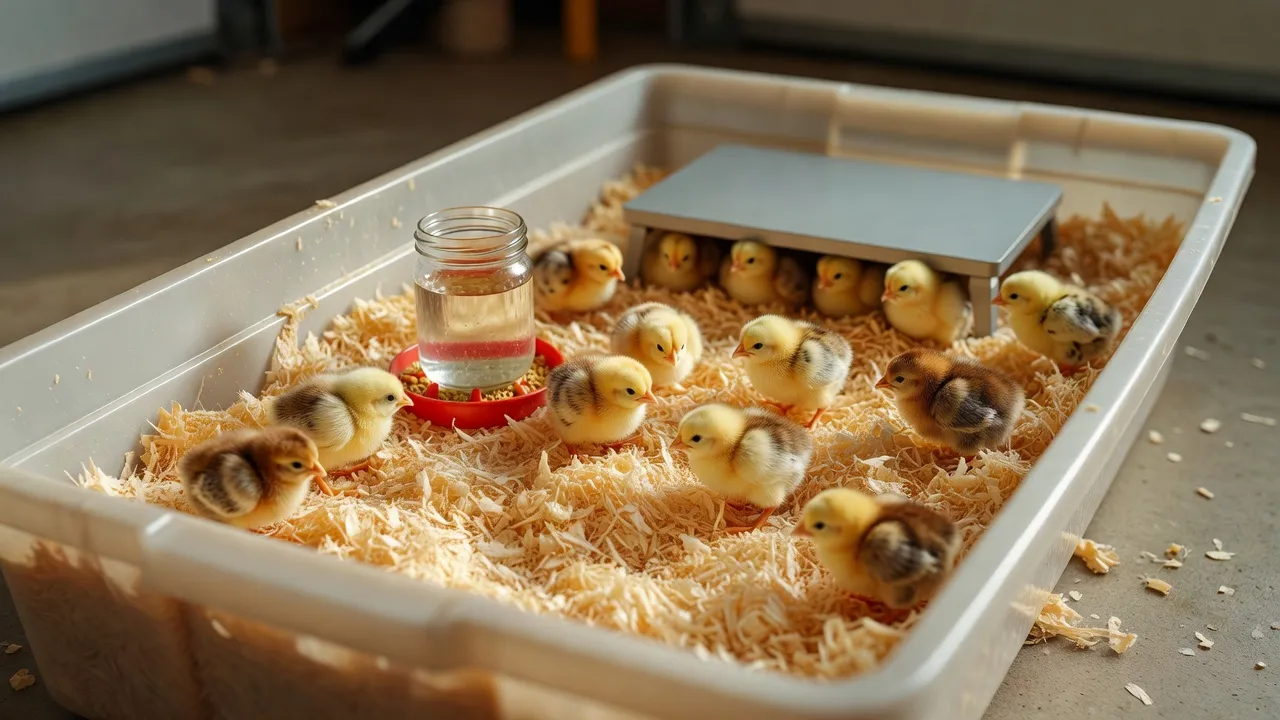
- How many chicks fit under a plate, by age
- What to look for in a heat plate
- Can a plate work in an unheated coop?
- How to set the height and read the chicks
The best chick brooder heat plate for most backyard batches is the Brinsea EcoGlow Safety 600: 12 W, rated for about 20 newly hatched chicks, $79.99 on sale ($99.99 regular), checked 2026-10-09. A plate like that uses about 12 kWh in six weeks, roughly $2. A 250 W heat lamp running the same six weeks uses 252 kWh, roughly $46 at the EIA’s 18.16 cents per kWh. Makers give a chick count with no age attached, so this page also turns each count into plates needed for your batch size. It is part of the chick brooder guide.
Quick picks
Capacity is the maker’s number, and it drops as chicks grow. The sections below show how far.
| Pick | Best for | Watts | Maker’s chick count | Price, checked 2026-10-09 |
|---|---|---|---|---|
| Brinsea EcoGlow Safety 600 | Best overall | 12 W | About 20 newly hatched; 10 to 12 older | $79.99 sale, $99.99 regular |
| Brinsea EcoGlow Safety 1200 | Larger batches | 18 W | About 35 newly hatched; 20 to 25 older | $111.99 sale, $139.99 regular |
| RentACoop 12x12 Adjustable Heating Plate | Budget pick | 22 W | Up to 20 (reviewers say 10 to 15) | $59.95 |
| Chickcozy Smart Coop Heater & Brooder | One heater for chicks and the coop | 200 W with thermostat | Not stated | $79.99 sale, $89.99 regular |
Stock changes. On 2026-10-09 the Chickcozy page showed “sold out” while still displaying add-to-cart buttons, so check it before you plan around it. Need the box too? The brooder box and kit picks cover floor space by chick count.
How I chose these heat plates
I compared the maker spec pages, extension brooding bulletins and the electric-rate data, and I wrote “not stated” where a maker leaves a number out. I have not run a controlled comparison of any of these plates, and the method is on the how we research page. What mattered most:
- Watts: what it costs to run for six weeks.
- Chick count by age: does the maker separate newly hatched chicks from older ones?
- Height control: legs or settings that let you raise the plate as chicks grow.
- Safety and warranty: a listing, a warranty term and an indoor-use note, where the maker gives them.
- Price: checked 2026-10-09, with the regular price noted when a sale is running.
Best overall: Brinsea EcoGlow Safety 600
The Brinsea EcoGlow Safety 600 is the best chick brooder heat plate for most batches because it pairs 12 W of draw with a maker count that separates newly hatched chicks (about 20) from older ones (10 to 12). It runs on 12 V from a supplied transformer, sits on four adjustable legs, carries a 3-year warranty and costs $79.99 on sale (Brinsea).
The catches are in the fine print. It is indoor only, and Brinsea says the room should not drop below 50°F. It heats the chicks under it, not the air, so you set it by watching them. Nonstop for six weeks it uses about 12 kWh, around $2.
Brinsea EcoGlow Safety 600
6 to 20 chicks in a draft-free room above 50°F
- Power
- 12 W, 12 V (transformer supplied)
- Maker's chick count
- About 20 newly hatched; 10 to 12 older chicks
- Size
- 9 x 8 x 12 in (H x W x D)
- Height
- Four adjustable legs
- Warranty
- 3 years
- Use
- Indoor only, room above 50°F
- About $2 of power over six weeks
- Maker gives separate counts for newly hatched and older chicks
- Legs set the height as the chicks grow
- Heats chicks, not the air, so a thermometer will not tell you much
- Capacity roughly halves for older chicks
- Indoor only
Best for larger batches: Brinsea EcoGlow Safety 1200
The Brinsea EcoGlow Safety 1200 is the plate for 15 to 30 chicks. It draws 18 W, covers about 35 newly hatched chicks or 20 to 25 older ones, and costs $111.99 on sale ($139.99 regular) per Brinsea. It is about $32 more than the 600 on sale, and it covers about 15 more newly hatched chicks and 10 or more older ones. Brinsea does not recommend putting more than four EcoGlow brooders together (Brinsea), so a very large batch needs a different plan.
Brinsea EcoGlow Safety 1200
15 to 30 chicks in a pen or trough
- Power
- 18 W, 12 V (transformer supplied)
- Maker's chick count
- About 35 newly hatched; 20 to 25 older chicks
- Size
- 9 x 12 x 17 in (H x W x D)
- Warranty
- 3 years
- About $3 of power over six weeks
- Covers a batch a 12 W plate cannot
- Same low-voltage design as the 600
- Needs a big box to match the chick count
- About $32 more than the 600 on sale
- Indoor only, like the 600
Best budget pick: RentACoop 12x12 Adjustable Heating Plate
The RentACoop 12x12 plate is the cheapest pick at $59.95. The listing says 22 W, “warms up to 20 chicks” and offers 25 height settings from 1 to 9, and it comes with a foldable anti-roost cone (RentACoop). Nonstop for six weeks it uses about 22 kWh, around $4. I could not find a safety listing, warranty term, voltage or cord length on the product page, so ask before you buy. The count of 20 is the maker’s. Reviewers on the same page put the real number nearer 10 to 15.
RentACoop 12x12 Adjustable Heating Plate
a small first batch on a tight budget
- Power
- 22 W
- Maker's chick count
- Up to 20
- Size
- 12 x 12 in plate
- Height
- 25 settings, 1 to 9 in
- Included
- Foldable anti-roost cone
- Lowest price of the four
- 25 height settings
- About $4 of power over six weeks
- Safety listing, warranty, voltage and cord length not found on the product page
- Maker's count of 20 runs high by reviewer accounts
- Anti-roost cone draws reviewer complaints
What owners report
Reviewers on RentACoop's own product page say 10 to 15 chicks is a more realistic load than the 20 in the title, and some question the anti-roost cone's quality and fit.
Best one heater for chicks and the coop: Chickcozy Smart Coop Heater & Brooder
The Chickcozy Smart Coop Heater & Brooder is two tools in one panel at $79.99 on sale ($89.99 regular), but it is a coop heater first. It draws 200 W, plugs into 110/120 V, has a 16 x 11 x 1.2 in plate, flat mode for newborn chicks and four legs, and holds a preset range with a built-in sensor (Chickcozy). The maker gives 70 to 95°F as the chick range and does not say where that temperature is read, so I’d still go by the chicks.
Power is the trade-off. At 200 W nonstop for six weeks it would use about 202 kWh, up to about $37. The thermostat will cycle it off, and the maker gives no duty cycle. If you also heat a coop, see the radiant flat panel coop heater guide.
Chickcozy Smart Coop Heater & Brooder
one panel for a brooder now and a winter coop later
- Power
- 200 W, 110/120 V
- Maker's chick count
- Not stated
- Size
- 16 x 11 x 1.2 in plate
- Control
- Built-in smart sensor; maker's chick range 70 to 95°F
- Certification
- UL and FCC
- Warranty
- 2 years
- Thermostat holds a preset range
- Flat mode for newborn chicks, wall mount or legs for adults
- UL and FCC listed
- 200 W is far above the 12 to 22 W plates
- No chick count on the page
- Showed sold out on 2026-10-09
Heat plate vs heat lamp: cost, fire risk and light
A plate wins on cost and fire exposure. A lamp wins on light and on extension-style temperature readings. Pick by what your setup can handle, not by which one a forum thread loves.
Six weeks is 1,008 hours. Nonstop is the worst case, and a thermostat or a dropping heat schedule lowers it.
| Heat source | Watts | Six weeks, nonstop | Cost at 18.16 cents |
|---|---|---|---|
| 250 W heat lamp | 250 | 252 kWh | about $46 |
| Chickcozy Smart (maker’s maximum) | 200 | up to 202 kWh | up to about $37 |
| 125 W heat lamp | 125 | 126 kWh | about $23 |
| RentACoop 12x12 | 22 | 22 kWh | about $4 |
| Brinsea EcoGlow 1200 | 18 | 18 kWh | about $3 |
| Brinsea EcoGlow 600 | 12 | 12 kWh | about $2 |
Alabama Extension lists 125 or 250 W lamps for brooders, so a lamp is not off-limits, but it carries the fire risk below. Brinsea, a plate maker, calls 250 W lamps a significant fire hazard, which is the maker’s view and not an independent study. A 12 V plate has no bulb to fall into the bedding.
If you hang a heat lamp
UMaine wants a porcelain fixture on a chain, hung 18 to 20 inches above the bedding and never closer than 15 inches, and it advises against brooders in living areas for fire safety. Penn State wants heat lamps at least 20 inches from anything flammable.
A plate does not light the box. Alabama says chicks need adequate lighting to find feed and water, so the room needs light. It also says a red heat lamp can help prevent pecking, which a plate cannot do.
How the heat reaches the chicks. Brinsea says lamps heat the air and its plate warms the chicks directly, like a hen. That is why the extension charts, which read air temperature, do not map straight onto a plate.
How many chicks fit under a plate, by age
Brinsea gives the clearest numbers, and they drop by about half as chicks grow. The table lists the makers’ counts. “Older” is Brinsea’s word, with no weeks attached.
| Plate | Newly hatched | Older chicks |
|---|---|---|
| Brinsea EcoGlow 600 | About 20 | 10 to 12 |
| Brinsea EcoGlow 1200 | About 35 | 20 to 25 |
| RentACoop 12x12 | Up to 20 (the maker’s single count) | 10 to 15 by reviewers |
| Chickcozy Smart | Not stated | Not stated |
Here is how many Brinsea plates a batch needs. I used the low end of each range (20 and 10 for the 600, 35 and 20 for the 1200) and rounded up.
| Batch | 600, newly hatched | 600, older | 1200, newly hatched | 1200, older |
|---|---|---|---|---|
| 6 chicks | 1 | 1 | 1 | 1 |
| 15 chicks | 1 | 2 | 1 | 1 |
| 30 chicks | 2 | 3 | 1 | 2 |
The plate is only one part of the box. UMaine wants 0.5 sq ft of floor per chick to week 4, so 15 chicks need 7.5 sq ft whatever plate you buy. The floor-space table works it out by chick count and age.
What to look for in a heat plate
Check five things on the product page before you pay.
- The plates here draw 12 to 22 W, and the Chickcozy panel draws 200 W. Watts times 1,008 hours, divided by 1,000, gives kWh for six weeks, and kWh times 0.1816 gives dollars.
- A chick count with an age. “Up to 20” means little. Brinsea’s split between newly hatched and older chicks is the useful kind of number. Plan on the low end.
- Chicks need the plate low at first and higher as they grow. Brinsea uses four screw-in legs, and RentACoop lists 25 settings from 1 to 9.
- Safety listing and warranty. Chickcozy lists UL and FCC and a 2-year warranty, and Brinsea lists a 3-year warranty and a low-voltage 12 V supply. If a page lists neither, ask the maker.
- Where it can sit. Brinsea’s plates are indoor only in a room above 50°F. That rules out a bare winter coop, covered below.
Can a plate work in an unheated coop?
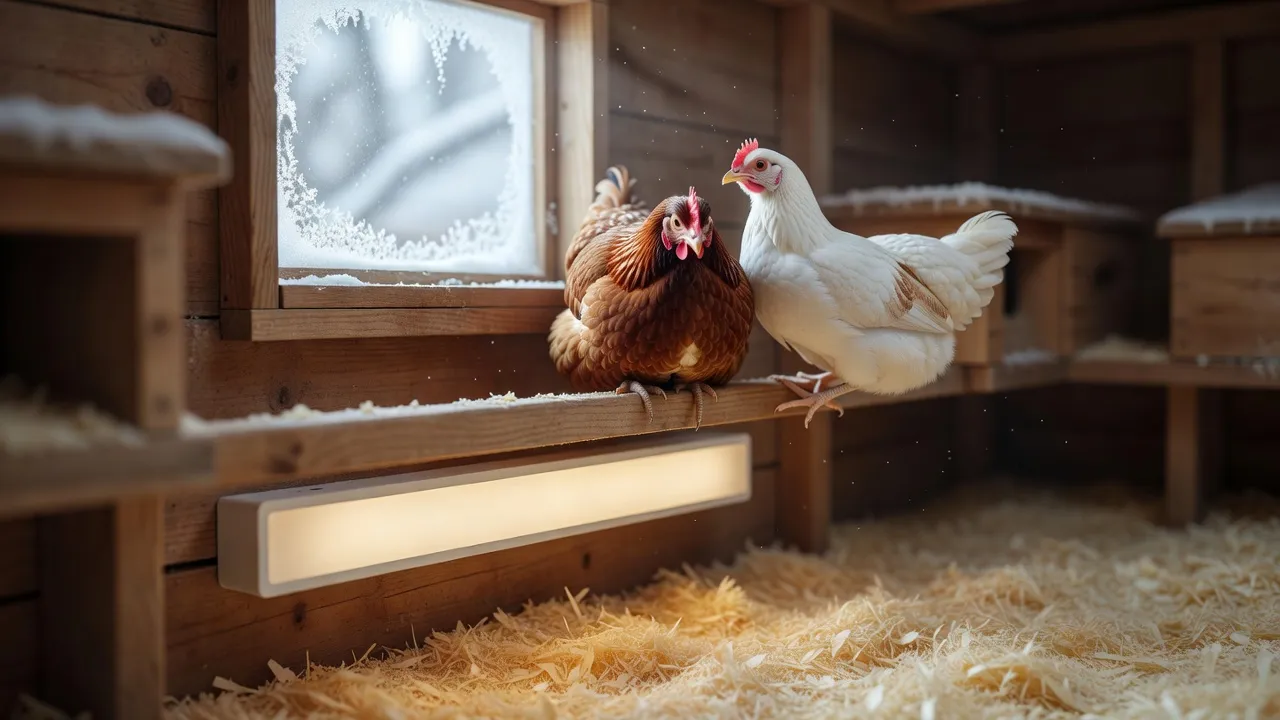
Not the Brinsea plates in a cold coop. Brinsea says its plates are for indoor use only and the room should not drop below 50°F (Brinsea). If chicks move to a coop in cold weather, they need a heated space or a heater rated for it. Alabama Extension says to keep stepping down the heat until the chicks are comfortable at the temperature of the coop they will live in. Penn State says to avoid chilling chicks on extremely cold nights and large temperature swings for the first 6 weeks. The heating a chicken coop guide covers what a coop needs once the brooder phase ends.
How to set the height and read the chicks
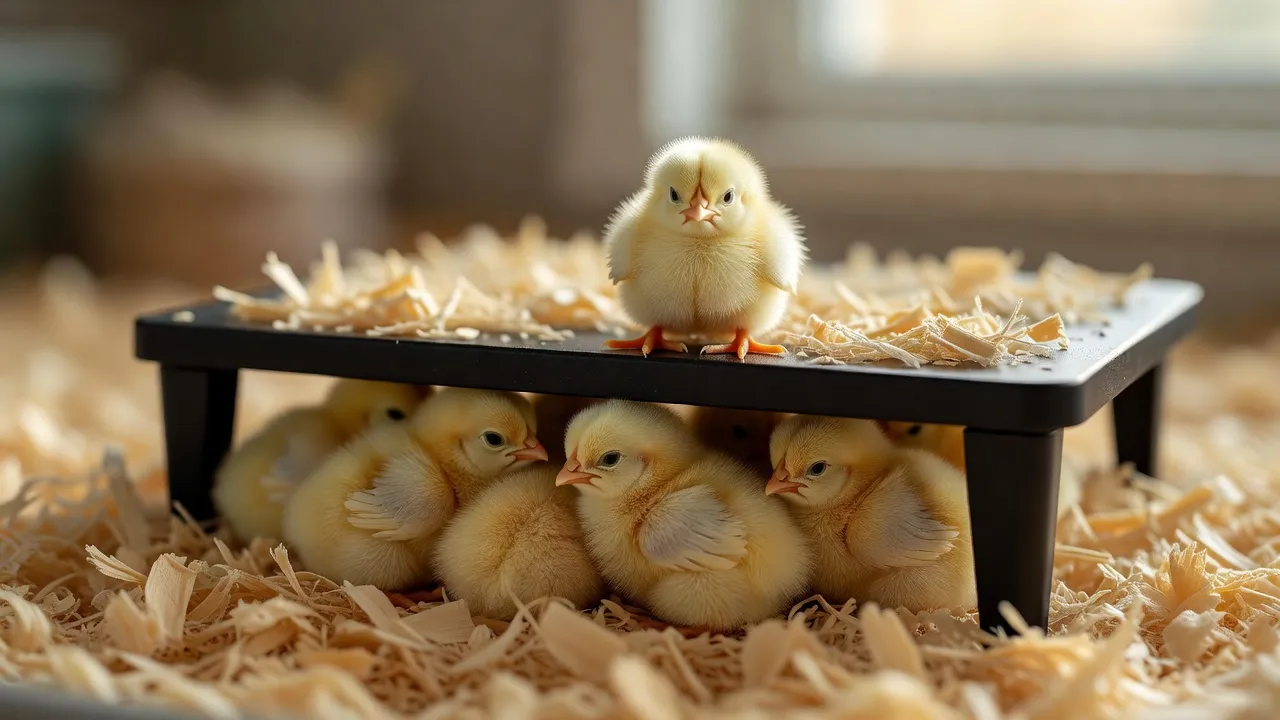
Start the legs near 3 inches for standard-sized chicks, per Brinsea. Lower the plate if chicks huddle together and raise it if they pant. For mixed sizes, set one side higher than the other so chicks can pick a spot. Keep the room above 50°F and keep the plate indoors.
Where the extension numbers fit
UMaine and Alabama start at 95°F at chick level and drop 5°F a week. That is an air temperature, which a plate does not set. Use the temperature chart to know how the heat should step down and the chicks to know whether it has.
Not vet advice
If several chicks are lethargic, stop eating or die even when the heat looks right, call a vet or take the chicks to your state diagnostic lab. Alabama Extension gives that advice for excessive losses.
Questions people ask
Are heat plates better than heat lamps?
For a backyard batch, a plate wins on cost and fire exposure. A 12 W plate uses about 12 kWh in six weeks (about $2) and a 250 W lamp uses 252 kWh (about $46) at 18.16 cents per kWh (EIA). A lamp gives light and an air temperature you can read with a thermometer, and Alabama Extension still lists lamps as the standard, so a careful lamp setup works too.
How many chicks fit under a heat plate?
Brinsea rates the 12 W EcoGlow Safety 600 for about 20 newly hatched chicks or 10 to 12 older ones. The 18 W Safety 1200 covers about 35 newly hatched or 20 to 25 older. Plan on the low end of the older range. Reviewers on RentACoop's page say 10 to 15 is realistic for its 12x12 plate, which is listed for up to 20.
Is a heat plate warm enough for day-old chicks?
Yes, if the plate is set low and the room stays above 50°F (Brinsea). Brinsea says to start near 3 inches for standard-sized chicks, lower the plate if they huddle and raise it if they pant (Brinsea). The temperature chart shows how the heat should step down each week.
Do I need a thermometer with a heat plate?
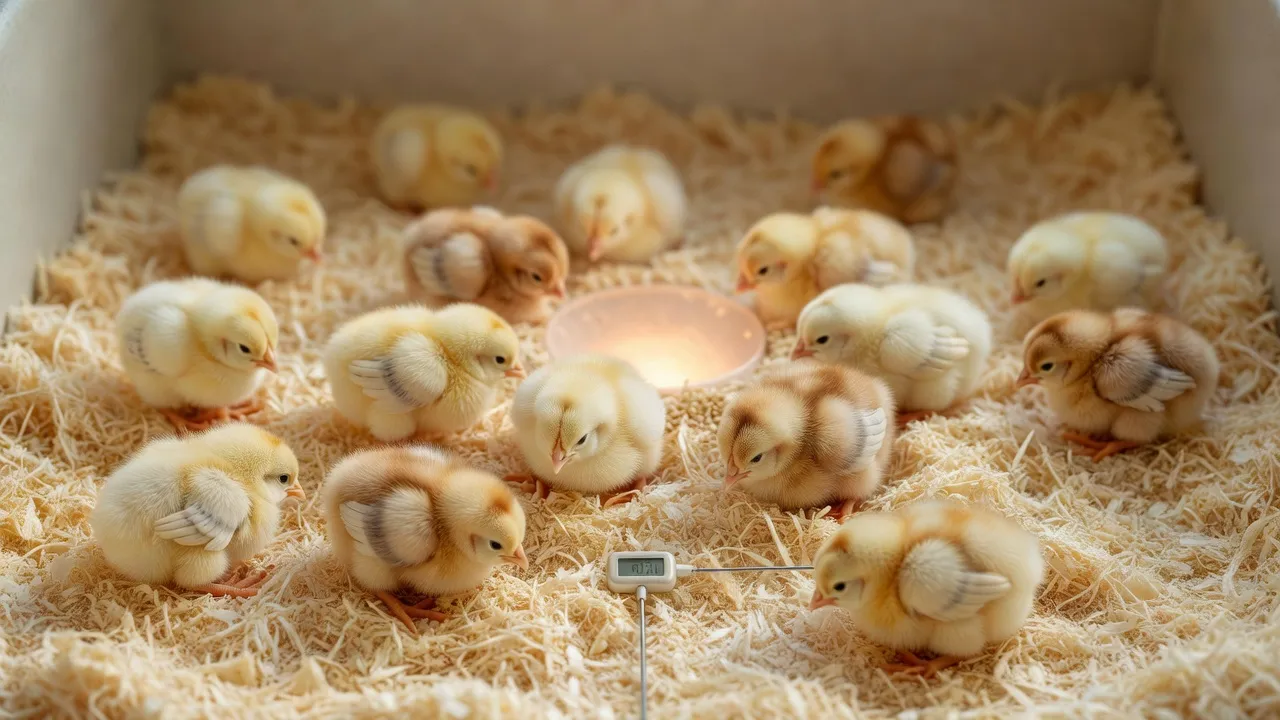
A thermometer will not tell you much. Brinsea says its plate does not heat the air, so you cannot measure it with a thermometer, and that chick behavior is the best indicator of comfort (Brinsea). A thermometer still helps for the room, which should stay above 50°F, and for any lamp setup.
Sources
- Brinsea EcoGlow Safety 600 (maker's product page)
- Brinsea EcoGlow Safety 1200 (maker's product page)
- Brinsea: Getting the best out of your EcoGlow brooder
- RentACoop 12x12 Adjustable Heating Plate (maker's product page)
- Chickcozy Smart Chicken Coop Heater & Chick Brooder (maker's product page)
- UMaine Extension Bulletin 2219: Giving Chicks a Good Start
- UMaine Extension Bulletin 2221: Simple Steps to Starting Healthy Chicks in Maine
- Alabama Extension ANR-2920: Brooding Tips for Successful Bird Performance
- Penn State Extension: Brooding of Domestic Fowl
- EIA Electric Power Monthly, Table 5.3: average residential price by state

Written by Kyle
Kyle has kept backyard chickens on his own small farm for five years. He reads the extension research, the spec sheets and the owner complaints, then tells you what he would buy and what he would skip.