On this page
The best chicken coop flooring is a sealed, waterproof surface under a thick bed of litter. Pour concrete for a permanent coop. For a raised wooden coop, cover exterior plywood with sheet vinyl or linoleum run up the walls. Bare plywood rots, and bare dirt holds manure and lets rats dig in.
This guide covers what the floor is made of. What goes on top of it has its own page, what to put in a chicken coop floor, and both belong to the coop gear guides. The floor is one of the few parts of a coop you can’t swap later without emptying it, so it is worth deciding before you build or buy.
Short answer
Sealed floor, deep litterthe pairing University of Kentucky Extension describes for impervious coop floors
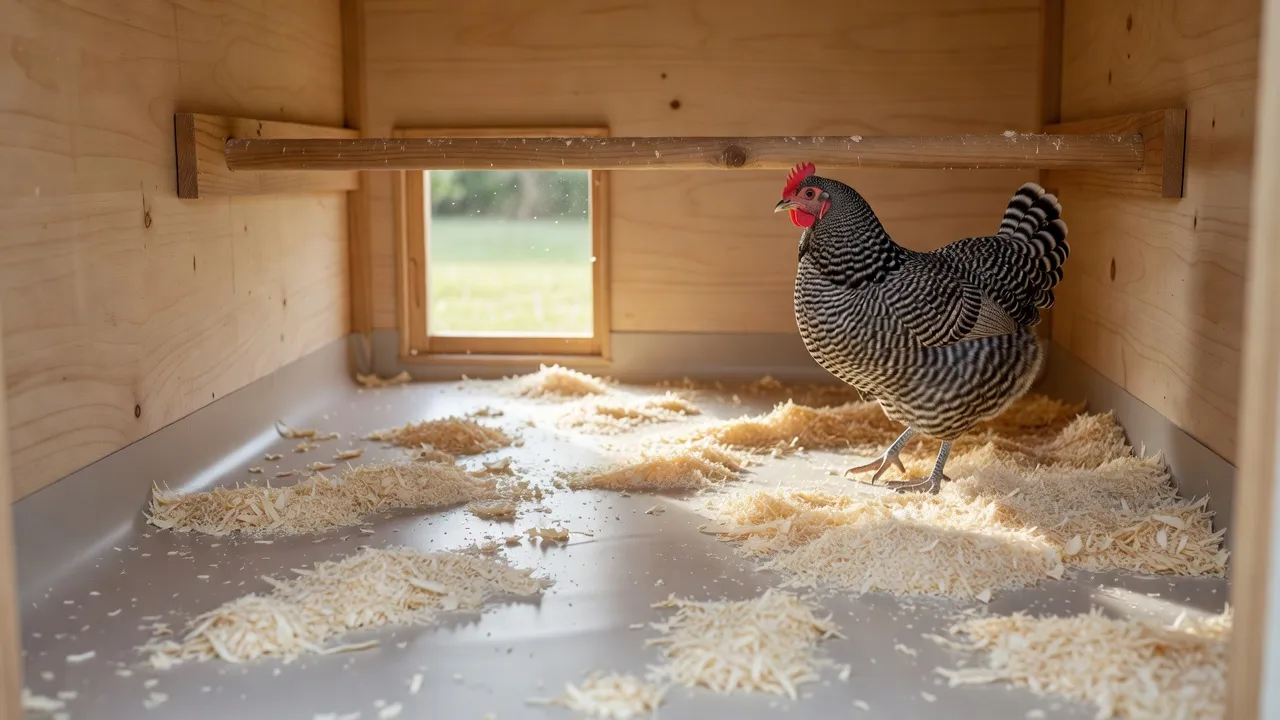
Concrete wins for a coop that will never move. On a raised wood coop, seal the plywood and lay sheet vinyl or linoleum over it, turned up the walls a few inches, then add 2 to 4 inches of dry shavings and let the bed build.
The short version
- Poultry manure is about 70 to 80 percent water, so the floor has to shed or handle moisture (University of Kentucky AEN-161).
- Concrete is the best floor for a permanent coop: easy to clean, impervious to vermin and a good predator barrier, but the most expensive (Merck Veterinary Manual).
- Wood rots easily, and any solid floor must be sealed and waterproofed, then bedded (University of Kentucky).
- Rats enter through a 1/2 inch hole and burrow into dirt floors and loose litter (Mississippi State Extension).
- Raise a coop at least 1 foot and use concrete or solid wood to discourage rats, snakes, raccoons and skunks (Oregon State EC 1644).
- Deep litter starts at 2 to 4 inches of dry bedding and builds to 6 to 8 inches or more (University of Kentucky).
What is the best floor for a chicken coop?
Concrete, if the coop stays put. Concrete cleans easily, keeps vermin out and stops predators from digging in, though it costs the most and takes the most effort to put in and keep up (Merck Veterinary Manual). For permanent runs, agriculture has no cheaper, more durable, easier-to-clean surface (University of Kentucky). A concrete floor with the wall started on one or two concrete blocks stops rodents, snakes and predators from digging under the walls (Penn State Extension).
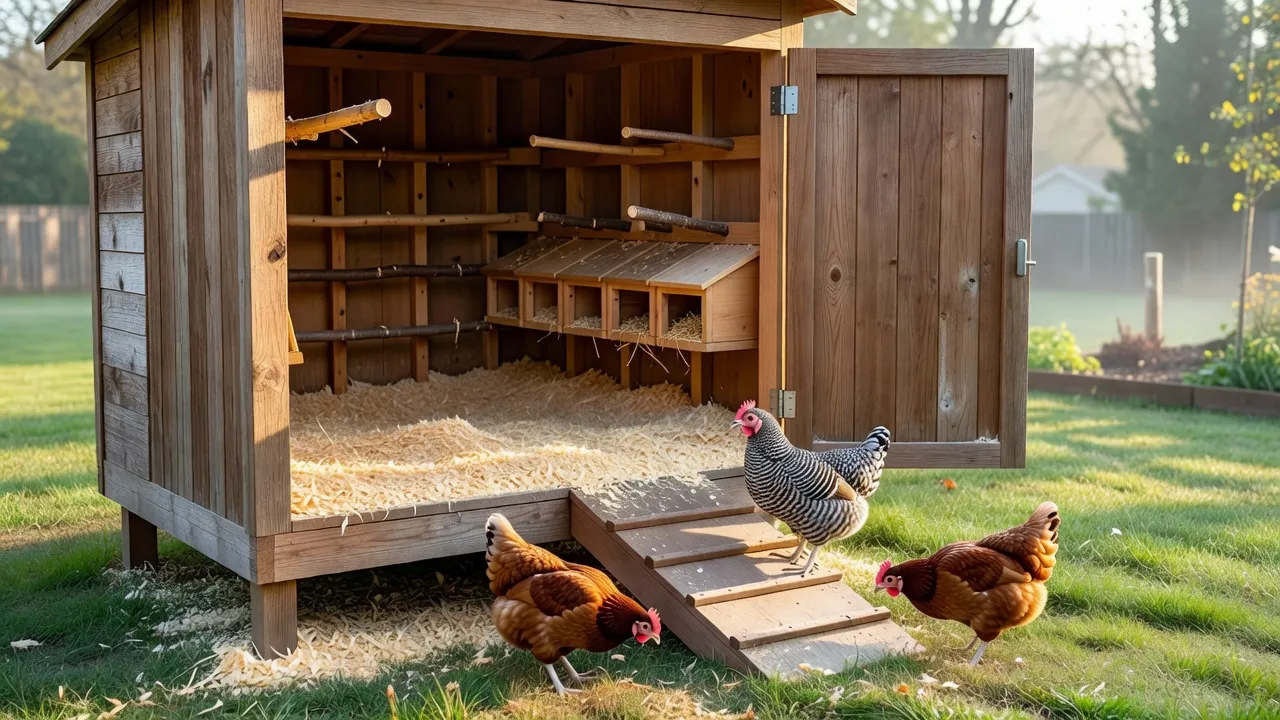
Most backyard coops aren’t slabs, though. Kits, raised coops and tractors sit on wood. For those, the best floor is plywood you seal and cover, so manure and water never soak into the wood itself.
| Floor | Cleans | Rot or wear risk | Rats and diggers | Relative cost | Best for |
|---|---|---|---|---|---|
| Concrete slab | Easiest; hose and disinfect | Lowest | Best barrier | Highest of the common options | A permanent walk-in or shed coop |
| Plywood under sheet vinyl | Scrape and wipe | Low if seams and edges stay sealed | Good once raised and tight | Moderate | Raised kits and DIY coops |
| Plywood under linoleum | Scrape and wipe | Low if kept dry; no slip rating for wet areas | Good once raised and tight | Moderate | Raised coops in a dry climate |
| Plywood with a rubber or epoxy coating | Wipe, if the coating holds | Depends on prep and cure | Good once raised and tight | Moderate | A DIY coop where you can let the coating fully cure |
| Rubber stall mat over plywood | Lift and hose | Moisture can sit under the mat | Good once raised and tight | Moderate | A walk-in coop with room to lift mats out |
| Bare plywood | Hard to disinfect | High; wood rots and harbors pathogens | Fair | Low | Short term only |
| Dirt | Hard; disinfectants fail on soil | Turns to mud | Poor unless wire is buried under it | Lowest | A run, or a coop with buried hardware cloth |
| Gravel and geotextile pad | Drains, but scraping is slow | Shorter life than concrete | Fair | Less than concrete | Under a run or a coop on skids |
The concrete, wood, dirt and gravel rows come from the Merck Veterinary Manual and University of Kentucky AEN-161. The cost column ranks only what those sources compare. I list no dollar figures because sheet goods and concrete prices swing by region and by season, so price your own floor before you buy.
Is vinyl or linoleum safe for chickens?
Both work under bedding, and neither has a chicken study behind it. I found no extension or veterinary source that tests vinyl or linoleum coop floors on hens, so treat any claim that one is toxic or perfectly safe as opinion.
What they’re made of differs. True linoleum is pressed from linseed oil, pine rosin and wood flour with limestone, on a woven jute backing (Forbo). Sheet vinyl is PVC, a synthetic polymer made from petroleum and salt, often printed and layered (Forbo). Shoppers call both “lino,” so read the spec sheet.
The real risks are the same for either. A loose corner gets pecked, and a hen will swallow what she pulls off. Water under a seam soaks the plywood and rots it from below. Lay the sheet in one piece where you can, run it a few inches up the walls, tack or glue the edges, and keep it covered with litter so hens scratch shavings, not the floor. For a coop where the floor stays wet near the waterer, vinyl is the safer pick. Linoleum offers no particle-based slip resistance for wet areas, and the maker steers wet rooms to vinyl (Forbo).
How do you keep a plywood floor from rotting?
Keep water out of the wood and air under it. Wood rots easily, and any solid poultry floor has to be sealed so it is waterproof (University of Kentucky). Old wood also harbors pathogens and is hard to disinfect, because urine and manure soak into it (Merck Veterinary Manual).
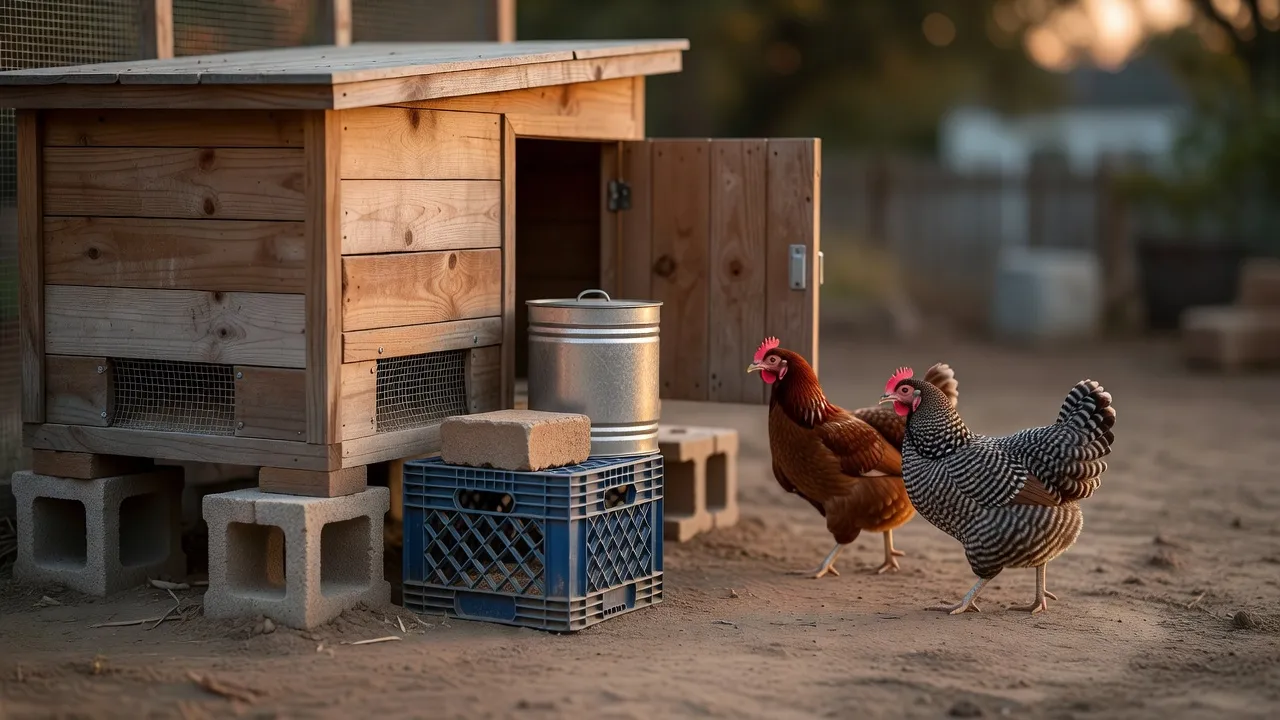
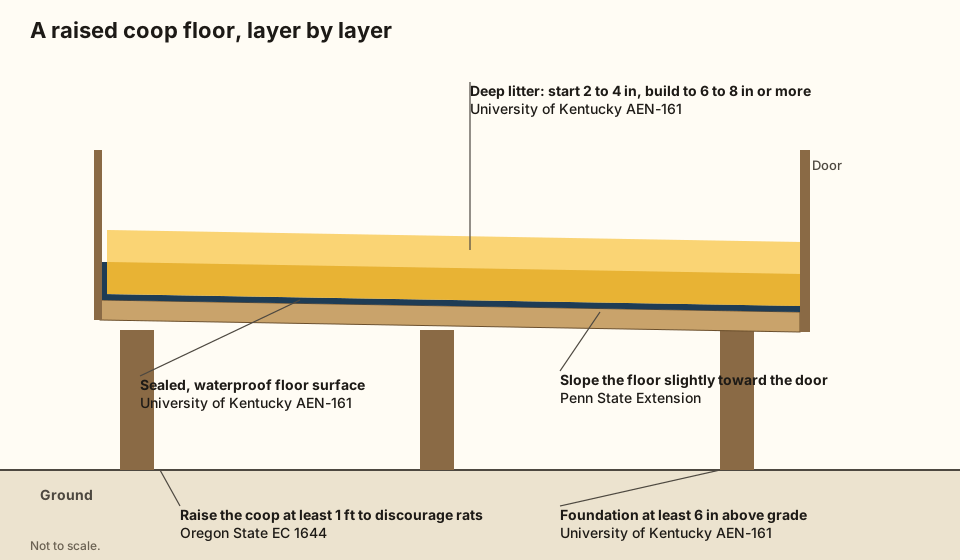
- Lift the coop. Set the foundation at least 6 inches above grade (University of Kentucky), and raise the coop at least 1 foot so rats and skunks can’t live under it (Oregon State).
- Use exterior-grade plywood, and seal the top, edges and underside before you install it.
- Slope the floor slightly toward the door so wash water runs out instead of puddling (Penn State Extension).
- Cover the sealed plywood with sheet vinyl, linoleum or a cured coating, turned up the walls.
- Put a droppings board under the roost. It keeps the heaviest manure off the floor and lowers ammonia and moisture (Merck Veterinary Manual).
- Fix the source of any wet patch: a leaking drinker, a roof drip or a door that lets rain in. The ventilation guide covers moisture from the birds’ breath.
Swipe sideways to see the whole figure, or open it full size.
Treated lumber is a judgment call, and the sources split. Wood in the coop should not be treated, because chemicals such as lead can harm birds (Merck Veterinary Manual). Pressure-treated roost poles appear in Oregon State’s coop guide as easy to clean. I’d use treated lumber for skids and posts that touch the ground, then keep birds off it with a sealed floor and bedding.
Rubber coating, epoxy or stall mats?
All three can work, and none has extension testing in coops behind it, so judge them on how they handle water and cleaning.
Rubber roll-on coatings and epoxy give one continuous surface with no seams that runs up the walls, which is exactly what you want. The catch is curing. Paints, solvents and wood preservatives release volatile organic compounds, and high indoor levels can linger long after the job is done (US EPA). Follow the label’s full cure time, ventilate hard, and keep the flock out until the coating has cured and the smell is gone. A coating over damp or dirty plywood peels, and peeling flakes are something hens will eat.
Rubber stall mats are heavy and tough, and they lift out for a hose-down. Lift one now and then to check the plywood beneath it, because a mat can hold moisture against the wood. Mats suit a walk-in coop with a door wide enough to drag them out.
Does a coop on dirt need a floor?
It needs something between the dirt and the rats. Dirt and sand floors are cheap and easy, but manure is hard to remove, they turn muddy, and contaminated soil needs tilling and new soil (Merck Veterinary Manual). Disinfectants don’t work well on earthen floors because the soil neutralizes them, and the top layer should be removed and replaced after a year or two (University of Kentucky). Once inside, rats burrow into dirt floors and loose litter (Mississippi State Extension).
If you keep a dirt floor, bury hardware cloth under it or lay an apron around the base so rats can’t enter from below (Utah State Extension). The predator-proof coop guide covers burial depth and aprons, the hardware cloth guide covers mesh size, and the guide to getting rid of rats in a chicken coop covers the feed and trapping side. A gravel and geotextile pad drains better than bare soil and costs less than concrete, though it doesn’t last as long (University of Kentucky).
What goes on top of the floor?
Bedding, deep enough to soak up manure and cushion the hens. A solid floor must be bedded for the birds’ comfort and for sanitation (University of Kentucky). The deep litter method starts at 2 to 4 inches of dry bedding, adds more as needed, and builds to about 6 to 8 inches or more, with periodic stirring and a full cleanout now and then.
Check the litter with your hand. Ideal litter holds 20 to 25 percent moisture: grab a handful, and it should clump briefly and then crumble (Merck Veterinary Manual). Wet litter breeds bacteria, fungi and parasites and causes footpad problems. Bone-dry sawdust gets dusty and irritates the airways.
Pine shavings are the usual starting point. The chicken coop bedding guide compares shavings, straw and sand, and the cleaning supplies guide lists the scraper and tools that suit each floor.
Which floor should you choose?
Match the floor to how long the coop stays put and how you clean.
| Your coop | Floor I’d build | Why |
|---|---|---|
| A new walk-in or shed you will never move | Concrete, walls started on a block course, sloped to the door | Easiest to clean, no rat or digger can get under it (Penn State) |
| A raised kit or DIY coop | Sealed exterior plywood under one sheet of vinyl turned up the walls | No seams, wipes clean, light |
| A raised coop in a dry climate | Sealed plywood under linoleum | Works well as long as it stays dry |
| A chicken tractor you move often | Open bottom in the run, solid sealed floor in the sleeping box | Moving it does the cleaning outside; the box stays tight at night |
| A coop already sitting on dirt | Buried hardware cloth under the soil, or a raised floor added | Stops rats burrowing in from outside |
If you’re still choosing a coop, look at the floor in the listing before the paint color. The OverEZ Medium and OverEZ Large kits list a resin-treated wood floor, which still benefits from bedding and a droppings board. The chicken coop kits comparison lists floor area and materials for every kit it covers, and the walk-in chicken coop guide covers concrete and raised floors for bigger flocks.
Questions people ask
What is the best flooring for a chicken coop?
Concrete is the best floor for a permanent coop: it cleans easily, rodents can't get through it, and predators can't dig under it. For a raised wooden coop, use exterior plywood with a sealed, waterproof top layer such as sheet vinyl or linoleum, then cover it with deep litter.
Is vinyl flooring safe for chickens?
I found no extension or veterinary study that tests vinyl coop floors on hens. The practical risks are pecking and moisture: hens can peel and swallow a loose edge, and water trapped under a seam rots the plywood. Run the sheet up the walls, hold the edges down and keep it under bedding.
Is linoleum the same as vinyl?
No. True linoleum is made from linseed oil, pine rosin, wood flour and limestone on a jute backing. Sheet vinyl is PVC, a plastic made from petroleum and salt. Many people call both lino, so check the label or spec sheet for the material.
Should a chicken coop have a dirt floor?
Only if you accept the trade-offs. Dirt is cheap and easy, but it turns muddy, holds manure, can't be disinfected well and lets rats burrow in. If you keep a dirt floor, bury hardware cloth under it or around the base and plan to replace the top soil every year or two.
Can I use pressure-treated wood for a coop floor?
Use it for posts and skids that touch the ground, and keep the birds off it. Wood in a coop should not be treated, because chemicals such as lead can harm birds (Merck Veterinary Manual). Cover any treated surface inside the coop with a sealed layer and bedding.
What do you put on top of a chicken coop floor?
Bedding. Start a deep litter bed at 2 to 4 inches of dry pine shavings and let it build to 6 to 8 inches or more. The chicken coop bedding guide compares shavings, straw and sand.
Sources
- University of Kentucky Cooperative Extension: Planning and designing suburban-urban poultry housing (AEN-161, revised April 2024)
- Merck Veterinary Manual: Management of backyard poultry (modified November 2024)
- Penn State Extension: Small-scale poultry housing (updated June 2026)
- Oregon State University Extension: Backyard chicken coop design (EC 1644, reviewed 2023)
- Mississippi State University Extension: Controlling rodents on the poultry farm (Publication 2824)
- Utah State University Extension: Backyard chicken ranching, rodents and COVID-19 (January 2021)
- Forbo Flooring: Marmoleum raw materials (manufacturer's composition page)
- Forbo Flooring: Linoleum vs vinyl flooring (manufacturer's comparison)
- US EPA: Volatile organic compounds' impact on indoor air quality (updated June 2026)
- Cooperative Extension: Litter material for small and backyard poultry flocks

Written by Kyle
Kyle has kept backyard chickens on his own small farm for five years. He reads the extension research, the spec sheets and the owner complaints, then tells you what he would buy and what he would skip.