On this page
The best nesting box for chickens is a roll-out box with at least 12 by 12 inches of room inside, sized to your flock. The lowest-price metal roll-out here is the EggHouse galvanized box for up to 10 birds at $29.99 (checked 2026-10-09), but its 20 by 11 inch overall footprint cannot hold a 12 by 12 inch nest floor, so treat it as a budget compromise. If you want a sloped-floor box that mounts on a wall or stands free, Best Nest Box Small costs $184. The cheapest box on the list is an open plastic one from $19.99.
I picked these from seller spec pages, extension rules and dated prices, and I rank them on what those pages say. Not every spec is listed, so each card flags what is missing. This page sits in the coop gear hub and pairs the picks with the size and count rules from nesting box dimensions.
Quick picks
| Pick | Best for | Material | Price (checked 2026-10-09 unless noted) | Buy |
|---|---|---|---|---|
| EggHouse Galvanized, up to 10 birds | Lowest-price metal roll-out | Galvanized steel, plastic tray | $29.99 | Check price |
| Best Nest Box Small | A sloped-floor roll-out, wall mount or free standing | Not stated on the page | $184 | Check price |
| EggHouse Galvanized, up to 20 birds | Two bays on a budget | Galvanized steel, plastic trays | $52.99 | Check price |
| Best Nest Box Medium | A bigger flock in one unit | Not stated on the page | $226 | Check price |
| Brower 6-Hole Galvanized | Big flocks, six separate nests | Galvanized steel | $99.99 (2026-10-20) | Check price |
| Hatching Time Roll Out value pack | A plastic roll-out | ABS plastic | From $29.99 | Check price |
| Cimuka Eco value pack | The cheapest open box | ABS plastic | From $19.99 | Check price |
Kyle’s picks
Specs and prices come from the seller page linked in each card, checked 2026-10-09, except the Brower, which comes from its Amazon listing checked 2026-10-20. Owner reports show on a card only where a link backs them, and none of these cards has one yet.
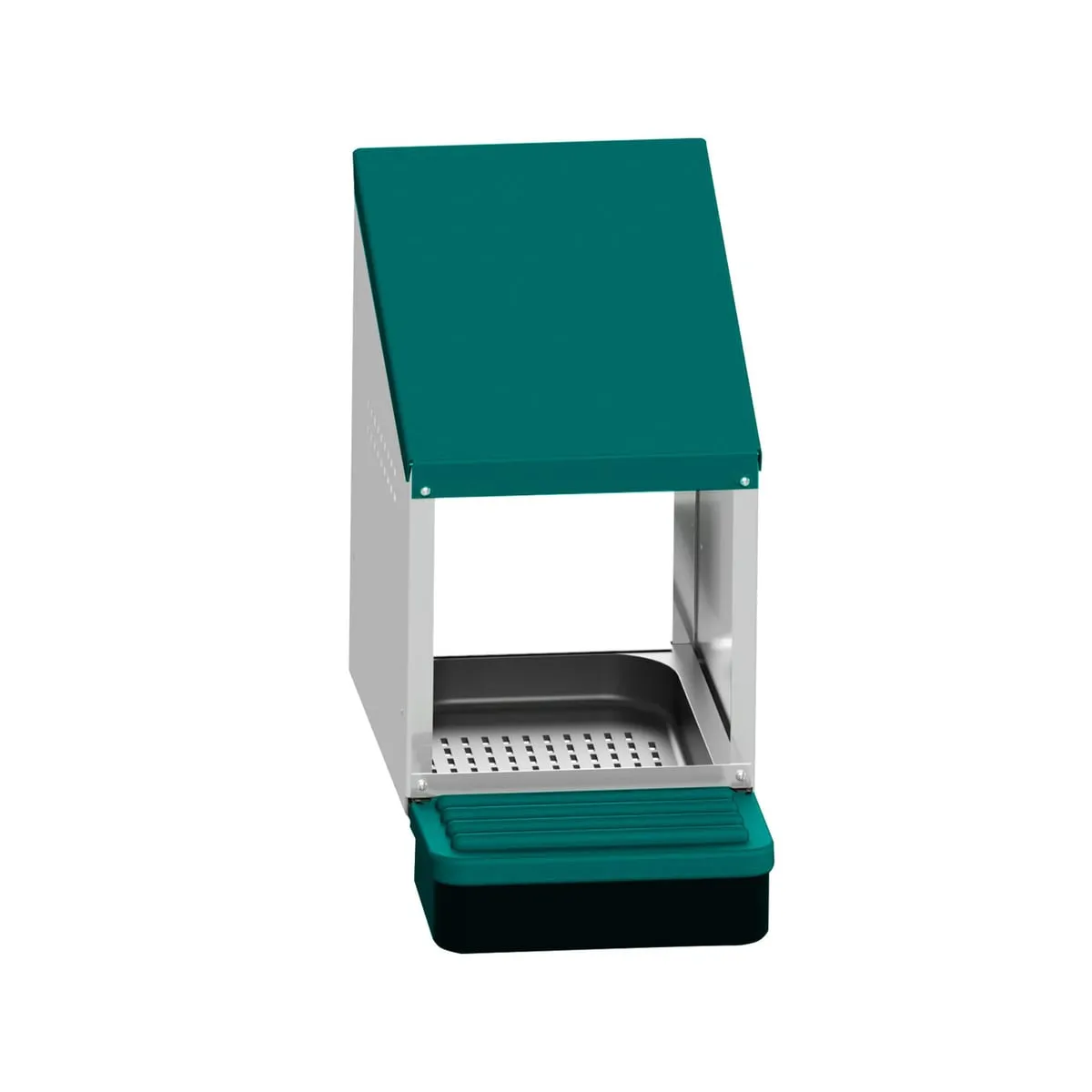
EggHouse Galvanized Nesting Box (Up to 10 Birds)
a small flock that wants a roll-out tray at a low price
- Overall size
- 20 L × 11 W × 17 H in
- Material
- Galvanized steel with a PP plastic tray
- Maker's rating
- Up to 10 hens
- Layout
- Single bay
- Roll-out
- Plastic roll-out tray
- Mounting
- Wall mount, or with legs; hardware included
- Warranty
- 1 year, per the seller
- Roll-out tray, metal frame and a listed warranty for $29.99
- Mounts on a wall or stands on legs
- Mounting hardware included
- The 20 by 11 inch overall footprint leaves under 12 inches on one side, so the nest floor falls short of Penn State's 12 by 12 inch minimum
- Inside nesting space is blank on the seller page
- A single bay, against the four nests Penn State counts for 10 hens
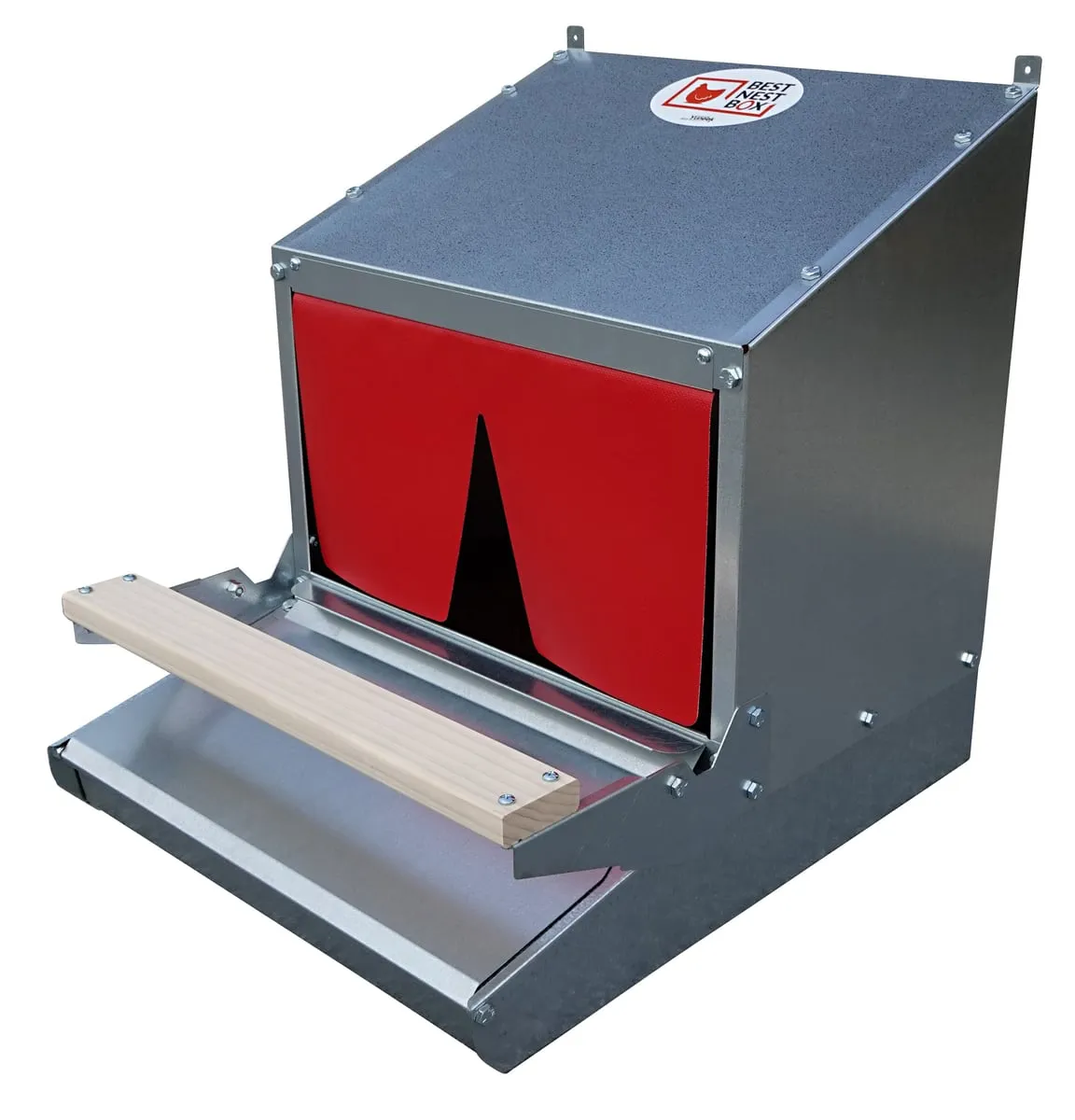
Best Nest Box Small Reversible Roll Out
keepers who want a sloped-floor roll-out with a front or rear collection side
- Size
- 17-5/16 in long, 21 in deep, 19-3/4 in tall
- Maker's rating
- Up to 10 hens
- Laying area
- One open space, no dividers
- Roll-out
- Sloped floor to a protected collection area, front or rear
- Mounting
- Wall tabs built in, or free standing
- Weight
- 17 lb
- Material
- Not stated on the page
- Sloped floor rolls eggs to a protected collection area
- Collection side can be set to front or rear
- Wall tabs built in, or use it free standing
- Costs several times more than the plastic and galvanized boxes here
- The seller page gives no overall material and no inside size
- The maker rates it for 10 hens in one open laying area, and Penn State counts four nests for 10 hens
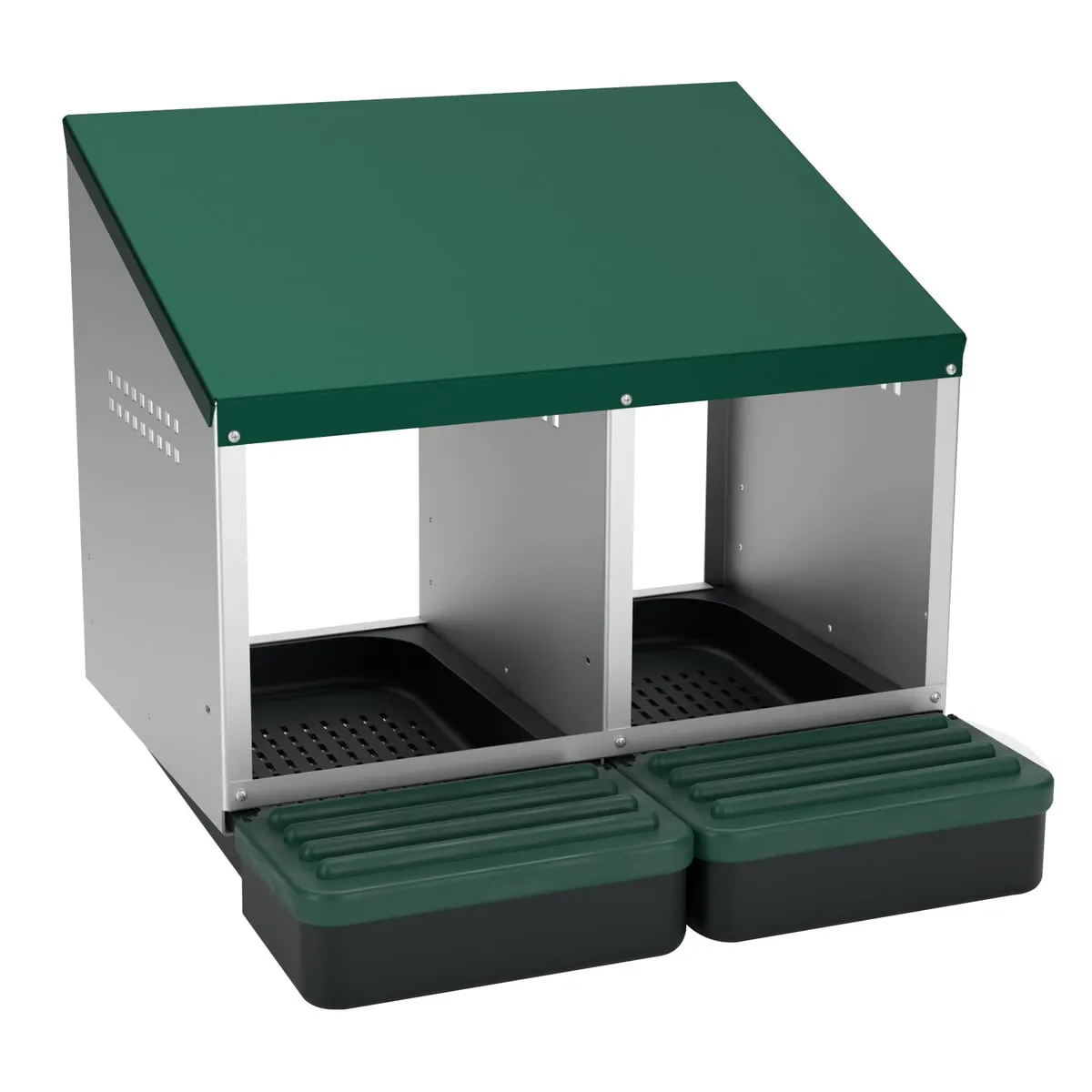
EggHouse Galvanized Nesting Box (Up to 20 Birds)
a mid-size flock that wants two bays and two removable trays
- Overall size
- 20 L × 21 W × 17 H in
- Material
- Galvanized steel frame with PP plastic trays
- Maker's rating
- Up to 20 hens
- Layout
- 2 bays
- Roll-out
- Two ventilated plastic trays, removable for cleaning
- Mounting
- Wall mount, or with four legs; hardware included
- Weight
- 9 lb
- Two bays with a roll-out tray for each
- Trays lift out for cleaning
- Wall mount or four-leg freestanding versions
- Two bays share a 20 by 21 inch footprint, so an equal split leaves each bay under 12 inches on one side
- Image captions on the seller page give sizes that do not match its spec table, so confirm before you cut a mounting space
- Inside nesting space is not listed
- Two bays, against the six nests Penn State counts for 20 hens
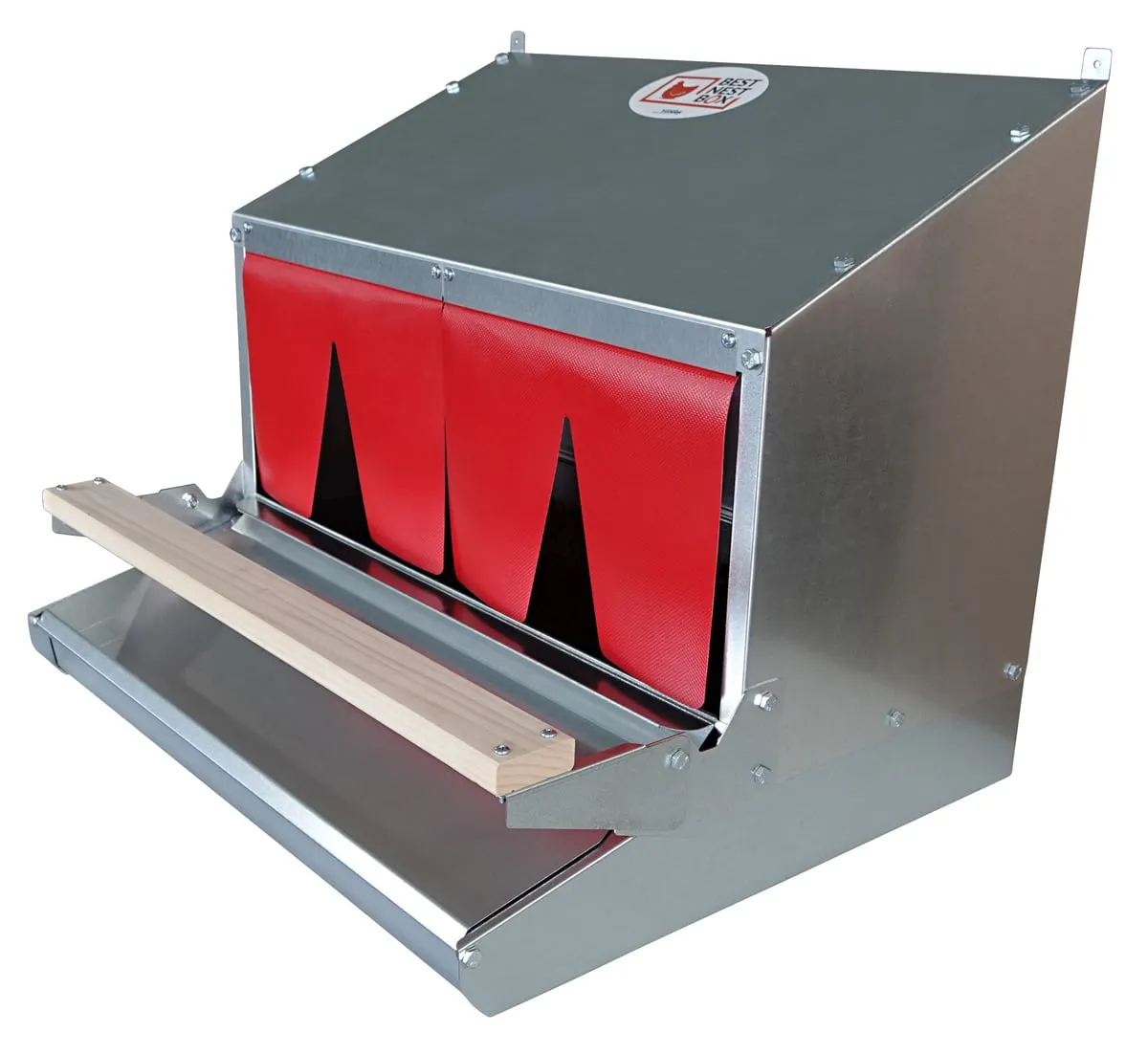
Best Nest Box Medium Reversible Roll Out
a larger flock in one wall-mounted or free-standing roll-out unit
- Size
- 24-5/16 in long, 21 in deep, 19-3/4 in tall
- Maker's rating
- Up to 20 hens
- Laying area
- One open community-style space, no dividers
- Roll-out
- Sloped floor, front or rear collection
- Mounting
- Wall tabs built in, or free standing
- Weight
- 22 lb
- Material
- Not stated on the page
- One unit covers a larger flock
- Same sloped floor and front-or-rear collection as the Small
- Wall tabs built in, or free standing
- Heaviest box here at 22 lb, so plan the wall mount
- Highest price on the list
- No overall material or inside size on the seller page
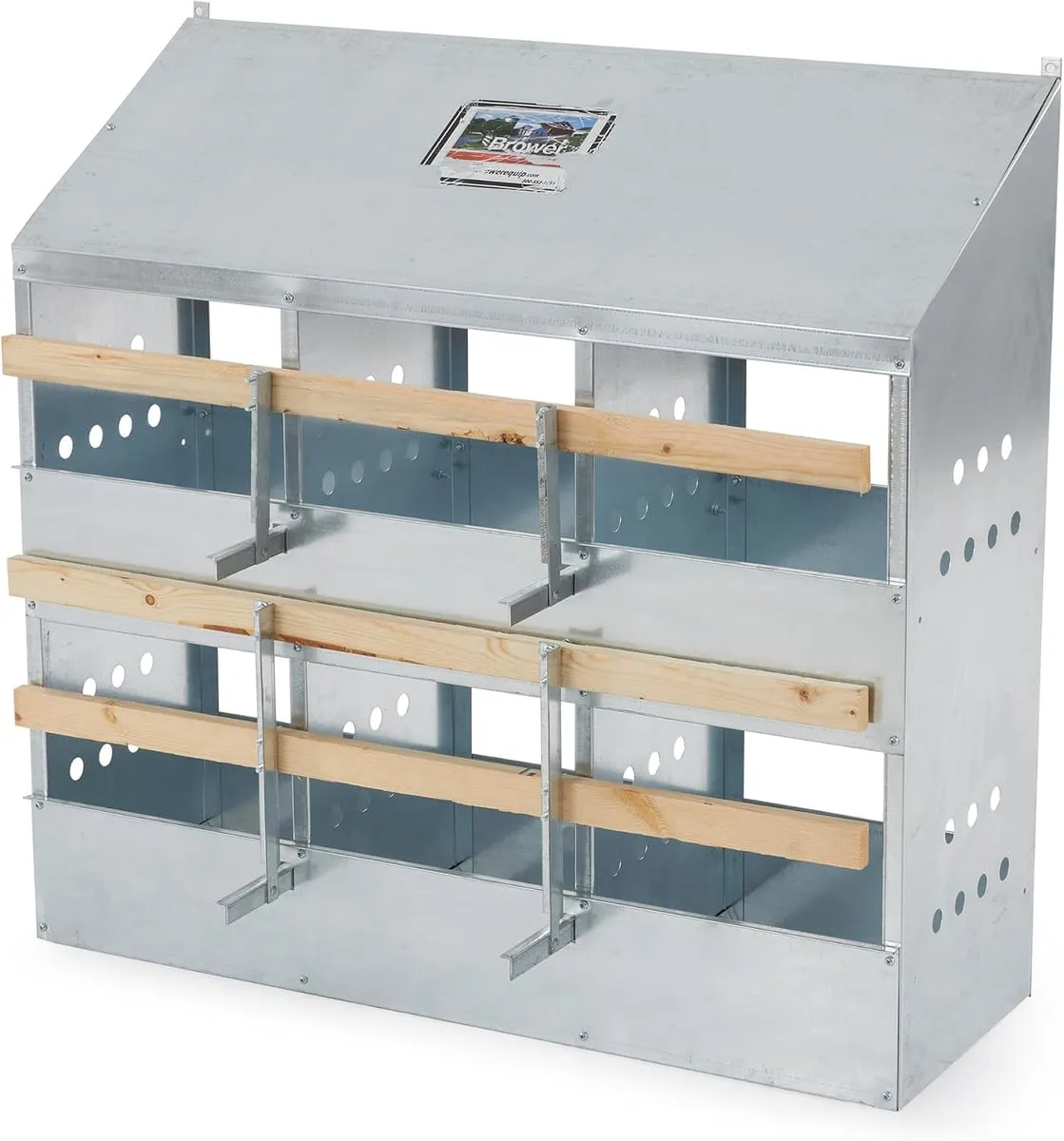
Brower 2-Tier 6-Hole Galvanized Nesting Box
a flock of about 20 hens that needs six separate nests in one unit
- Overall size
- 37 × 33 × 24.5 in
- Material
- Galvanized steel, made in USA (listing)
- Layout
- 6 nests in 2 tiers
- Maker's rating
- 30 to 40 hens
- Perches
- Fold-back, double-bolted; close them at night
- Roof
- Sloped to discourage roosting on top
- Roll-out
- None
- Assembly
- 30 to 45 min with a screwdriver and wrench (listing)
- Six separate nests, the Penn State count for 20 hens
- Fold-back perches close the nests at night
- Sloped roof and side vents
- Not a roll-out, so it needs nesting material
- Inside nest size is not listed
- Maker's 30 to 40 hen rating runs well above Penn State's count for six nests
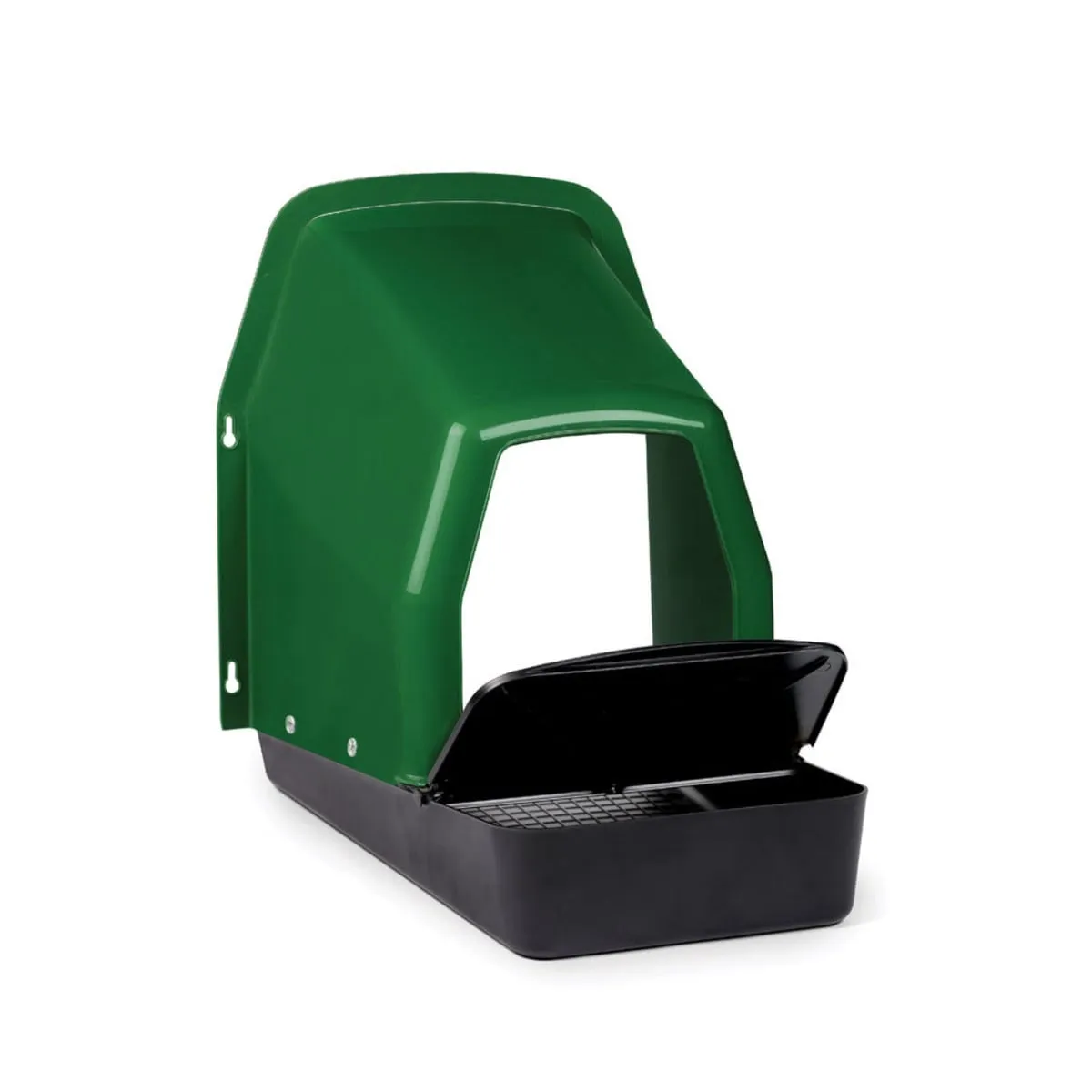
Hatching Time Roll Out Nesting Boxes Value Pack
a plastic roll-out that you can buy in packs of 1, 3, 5 or 10
- Overall size
- 17.3 L × 19.6 W × 14.5 H in
- Material
- ABS plastic
- Roll-out
- Front collection tray with a sloped bottom
- Pack sizes
- 1, 3, 5 or 10
- Weight
- 3 lb
- Pack prices
- 3 for $79.99, 5 for $124.99, 10 for $229.99
- Cleaning
- Seller says power-washable and no-rust
- Plastic that the seller says is power-washable and rust-free
- Sloped bottom rolls eggs to the front tray
- Sold in packs, so you can buy the whole count at once
- The seller page conflicts on capacity, with up to 5 hens per box in one place and holds one chicken in another
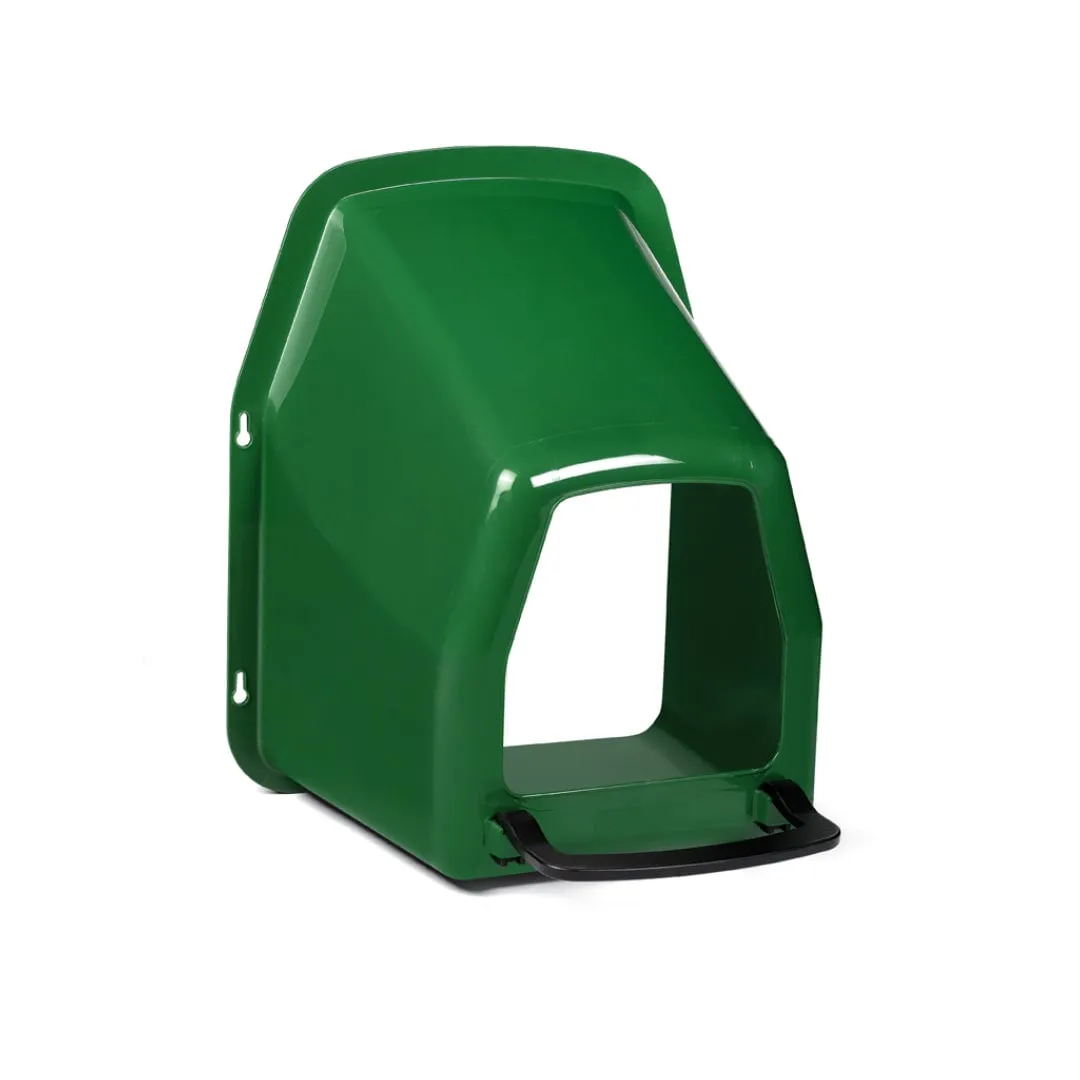
Cimuka Eco Nesting Boxes Value Pack
the lowest price for a plain open box in packs of 1, 3, 5 or 10
- Overall size
- 14 L × 13 W × 17 H in, including the handle
- Material
- ABS plastic
- Maker's rating
- Up to 5 hens per box
- Roll-out
- None
- Pack sizes
- 1, 3, 5 or 10
- Weight
- 1.4 lb per box
- Pack prices
- 3 for $55.99, 5 for $89.99, 10 for $169.99
- Cleaning
- Seller says power-washable and no-rust
- Lowest price on the list
- 1.4 lb per box, easy to move and wash
- Packs of up to 10 let you buy the full count
- No roll-out, so it needs 2 inches of clean nesting material to cushion eggs
- Inside nesting space is not listed
How many nesting boxes you need
Count your nests with Penn State’s rule: two nests for the first four hens, then one more for every four additional hens. That makes 2 nests for 4 hens, 3 for 8, 4 for 12 and 6 for 20. Each nest should measure at least 12 by 12 inches.
The maker ratings in the picks run higher than that count. Here is each box against the rule.
| Box | Maker’s rating | Penn State nests for that many hens | Layout |
|---|---|---|---|
| EggHouse up to 10 birds | 10 hens | 4 | 1 bay |
| EggHouse up to 20 birds | 20 hens | 6 | 2 bays |
| Best Nest Box Small | 10 hens | 4 | One open laying area |
| Best Nest Box Medium | 20 hens | 6 | One open laying area |
| Brower 6-Hole Galvanized | 30 to 40 hens | 9 to 11 | 6 nests in 2 tiers |
| Hatching Time Roll Out | 5 hens per box (the page also says it holds one chicken) | 3 for 5 hens | 1 box |
| Cimuka Eco | 5 hens per box | 3 for 5 hens | 1 box |
The open-laying-area boxes are easiest to check by floor space. Best Nest Box Small measures about 17 by 21 inches overall, roughly 364 square inches before you subtract the collection area. Four 12 by 12 nests add up to 576. The Medium is about 24 by 21 inches overall, roughly 511 square inches against 864 for six nests.
Not sure how many to buy for a flock between those numbers? Round up. The full table for how many nesting boxes per chicken runs from 4 hens to 100, and the nesting box dimensions page has a cut list if you would rather build a three-box unit. If you are shopping for a whole coop, count its nests against this rule first; the chicken coop kits roundup is the place to compare kits.
Roll-away boxes for egg eaters
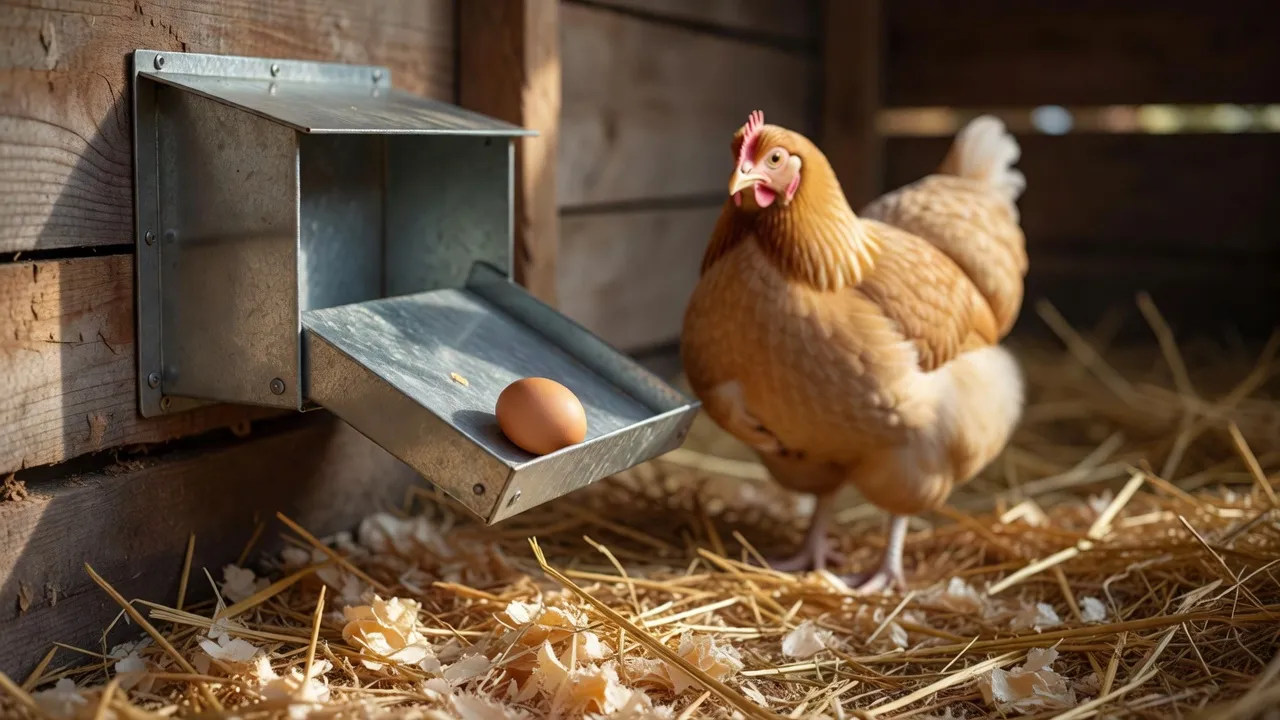
A roll-away box moves the egg out of the hen’s reach after she lays it. That makes it the one case where you can skip thick bedding (eXtension), but no extension source shows that it stops egg eating, so keep collecting.
In a roll-away nest the egg rolls out after the hen leaves, which makes it the exception to the rule of keeping enough clean bedding to cushion the eggs (eXtension poultry guidance). Collect eggs as often as you can, at least once a day and preferably twice (eXtension; Penn State also calls for two collections daily).
If you use an open box instead, keep 2 inches of clean, dry nesting material in the nests at all times as egg padding, and keep bright lights out of the coop, especially near the nesting area (eXtension).
Roll-away boxes
- The egg leaves the hen's reach once she steps off
- Needs less bedding for cushioning, per eXtension
What to know
- Costs more than an open box here, from $29.99 against $19.99
- You still collect eggs at least once a day, and twice is better
If you build your own roll-away, scale the plans to the number of boxes you need, and size each laying space to the 12 by 12 inch minimum.
Plastic vs metal vs wood
Plastic has the lowest price here, galvanized steel runs from $29.99 to $99.99, and wood means building your own. The claims below are the sellers’, not owner results.
| Material | Boxes here | Price | What the seller says |
|---|---|---|---|
| ABS plastic | Hatching Time Roll Out, Cimuka Eco | $19.99 to $29.99 (“from” prices) | Power-washable and no-rust; 1.4 to 3 lb per box |
| Galvanized steel with plastic trays | EggHouse 10-bird and 20-bird | $29.99 to $52.99 | Roll-out plastic trays; the 20-bird trays are removable; 1-year warranty on the 10-bird page |
| Galvanized steel | Brower 6-Hole | $99.99 | Made in USA; side vents, sloped roof and fold-back perches; no roll-out |
| Not stated | Best Nest Box Small and Medium | $184 to $226 | Vinyl curtains, an angled metal egg guard and a wire mesh collection area; 17 to 22 lb |
I have no wood box I can source to rank, so wood here means a build. The cut list for a three-box unit uses one sheet of plywood. Keepers in Facebook groups also name milk crates, plastic bins and wooden boxes as cheap stand-ins, and any of them has to meet the same 12 by 12 inch rule.
Where to install nesting boxes
Mount the boxes at least 2 feet off the ground and at least 4 feet from the roosts, in a darker, secluded part of the coop (Penn State Extension). Texas A&M AgriLife puts nests 24 inches above the litter, the same height.
Heavy hens change that number. Heavier breeds cannot jump as high, so keep nests within their reach, no more than 18 inches for a heavy meat-type hen, unless you add a ramp (UGA Extension). Give a raised nest a perch at the entry for the hen to land on and inspect the nest from; nests that are hard to reach push hens to lay elsewhere (UGA).
Two build details matter on any box. Put a 3 to 4 inch lip at the front to hold nesting material in, and remove perching spots such as nest box tops where you can (Penn State). A sloped top or a top tight to the wall does that. Do not make the box too large, because several birds will crowd in and break more eggs (Penn State).
Nesting box bedding
Keep about 2 inches of clean, dry nesting material in each open nest, preferably pine shavings (Penn State). Bedding is not just padding. Hens like to build a nest before they lay, so litter makes the box attractive, and bare nests encourage floor laying (UGA Extension). Replace the litter periodically to keep it clean and free of parasites (UGA). Shavings or hay both work if you replace them often to keep eggs clean (Texas A&M).
Roll-out boxes are the exception. eXtension treats roll-away nests as the one case where thick bedding is optional, because the egg has to roll, so follow the maker’s guidance for the tray.
When to add nesting boxes, and how to train hens to use them
Put the boxes in before the first egg. Hens begin to lay at about 5 months of age (Texas A&M), and pullets need a couple of weeks to investigate the nests before they start (UGA). Pullets that begin laying before they know the nests can be hard to break of floor laying (UGA).
Put a fake egg in each nest. Ceramic eggs work best, because they look and feel like real ones. Start the nests on or near the floor, raise them 18 to 20 inches once most pullets use them, and hang fabric flaps where sunlight or overhead lights brighten the nests (Poultry Producer).
Nesting box problems and fixes
Hens laying on the floor
Floor eggs come from too few nests, nests that are hard to reach or other dark corners that look like nests. Competition pushes subordinate hens to lay elsewhere, so give at least one nest for every five hens (UGA Extension). Cut down on enclosed spots under structures and behind equipment, avoid shadowy corners and keep loose litter out of other secluded places. Floor eggs get dirty and cracked, and broken floor eggs can start egg eating (UGA).
Every hen using the same box
When hens crowd one favorite nest, look at what makes the others less appealing. In a larger flock, a little variation among nests in appearance and inside light helps individual hens pick sites they will use (UGA). Fake eggs in the empty boxes are the other common fix (Poultry Producer). A shared favorite is a problem only when hens give up and lay on the floor, so keep the count at Penn State’s number and watch for floor eggs.
Hens sleeping in the nesting boxes
Hens that sleep in the nests leave droppings in them, and the eggs come out dirty. Place roosts away from the nesting areas, with the 4 foot gap, to keep birds out of the boxes (Penn State). Make the roosts the most inviting perch in the coop. If the habit has already started, block the nest openings at dusk for a week or two, then open them before the morning laying run. The Brower 6-hole box above builds that in: its perches fold back to close the nests at night, so you flip them up at dusk and down in the morning.
Egg eating
Egg eating usually starts with an accidental break, then other hens learn it (eXtension). The fixes are about the nest: enough 12 by 12 inch nests, 2 inches of clean padding, no bright lights near the nesting area and no startling hens while they sit. Feed a complete feed with free-choice oyster shell for calcium, and limit scratch grains (eXtension). A roll-out box takes the egg out of reach, covered in the roll-away section above.
Broody hens
A broody hen holds a nest for days, which cuts nesting space and adds traffic to the remaining nests (eXtension). If you do not want chicks, count the broody hen’s box out of your total and add a nest if the rest get crowded.
Dirty or broken eggs
Dirty eggs point to bedding, sleeping hens or floor laying. Broken eggs point to thin padding, crowding or oversized boxes. Fix the cause from the sections above, then collect twice a day (Penn State).
What to check before you buy
Check four numbers on the listing before you pay, because the spec pages above leave some of them blank.
- Inside size: at least 12 by 12 inches per nest. Several listings give only outside sizes.
- Count: nests for your flock by the table above, not the maker’s hen rating.
- Mount height: at least 2 feet off the ground and at least 4 feet from the roosts, per Penn State.
- Location: a darker, secluded spot, never across from bright sunny windows or near high-traffic areas, per Penn State.
Prices change. Every price here was checked on 2026-10-09 and comes from the seller page linked above. The Best Nest Box pages also show a 10% fall sale on nest boxes through October 31, applied at checkout, so the $184 and $226 prices are the list prices.
Questions people ask
How many nesting boxes per chicken?
Two nests for the first four hens, then one more nest for every four additional hens, per Penn State Extension. That is 3 nests for 8 hens and 4 nests for 12. The eXtension poultry guidance is looser at one nest per five hens, so build to Penn State's higher count. The full table is in nesting box dimensions.
Do roll-away nesting boxes work?
They do what the name says: the egg rolls out of the nest after the hen leaves. Roll-away nests are the one case where thick bedding is optional (eXtension). No extension source shows that a roll-away stops egg eating, so pair one with egg collection at least once a day, and twice is better.
What size nesting box should I buy?
Look for at least 12 by 12 inches of inside space, the Penn State Extension minimum for a chicken nest. Several seller pages list only outside sizes, so confirm the inside space before you buy.
Are plastic or metal nesting boxes better?
The spec pages do not crown a winner. The plastic boxes start at $19.99, weigh 1.4 to 3 lb and are sold as power-washable and rust-free. The EggHouse galvanized boxes use steel frames with plastic trays and one lists a one-year warranty, and the Brower is all galvanized steel. Pick on price, the roll-out tray and whether the inside space meets 12 by 12 inches.
Where should nesting boxes go in a coop?
In a darker, secluded spot at least 2 feet off the ground and at least 4 feet from the roosts (Penn State Extension). For heavy breeds, keep nests no more than 18 inches up unless you add a ramp, and put a perch at the entry of any raised nest (UGA Extension).
How do I get my hens to use the nesting box?
Have the boxes in place before the first egg. Let pullets explore the nests for a couple of weeks before they start laying; empty nests without litter encourage floor eggs (UGA Extension). Put a fake egg in each nest to train them (Poultry Producer).
Sources
- Penn State Extension: Small-scale poultry housing
- eXtension: Safe handling of eggs from small and backyard flocks
- eXtension: Egg eating by chickens in small and backyard flocks
- Penn State Extension: Management requirements for laying flocks
- Best Nest Box: Reversible roll-out nest boxes (price list)
- Best Nest Box: Small (17 in) roll-out chicken nest box
- Best Nest Box: Medium (24 in) roll-out chicken nest box
- Brower 2-Tier 6-Hole Galvanized Nesting Box (Amazon listing, checked 2026-10-20)
- Hatching Time: Nesting boxes collection
- Hatching Time: EggHouse Galvanized Nesting Box (Up to 10 Birds)
- Hatching Time: EggHouse Galvanized Nesting Box (Up to 20 Birds)
- Hatching Time: Roll Out Nesting Boxes Value Pack
- Hatching Time: Eco Nesting Boxes Value Pack (Cimuka)
- UGA Extension Backyard Flock Tip: Egg laying behavior (2007)
- Texas A&M AgriLife Extension PSS.250: The Small Laying Flock
- Poultry Producer: How to train hens to lay in a nest, not on the floor

Written by Kyle
Kyle has kept backyard chickens on his own small farm for five years. He reads the extension research, the spec sheets and the owner complaints, then tells you what he would buy and what he would skip.