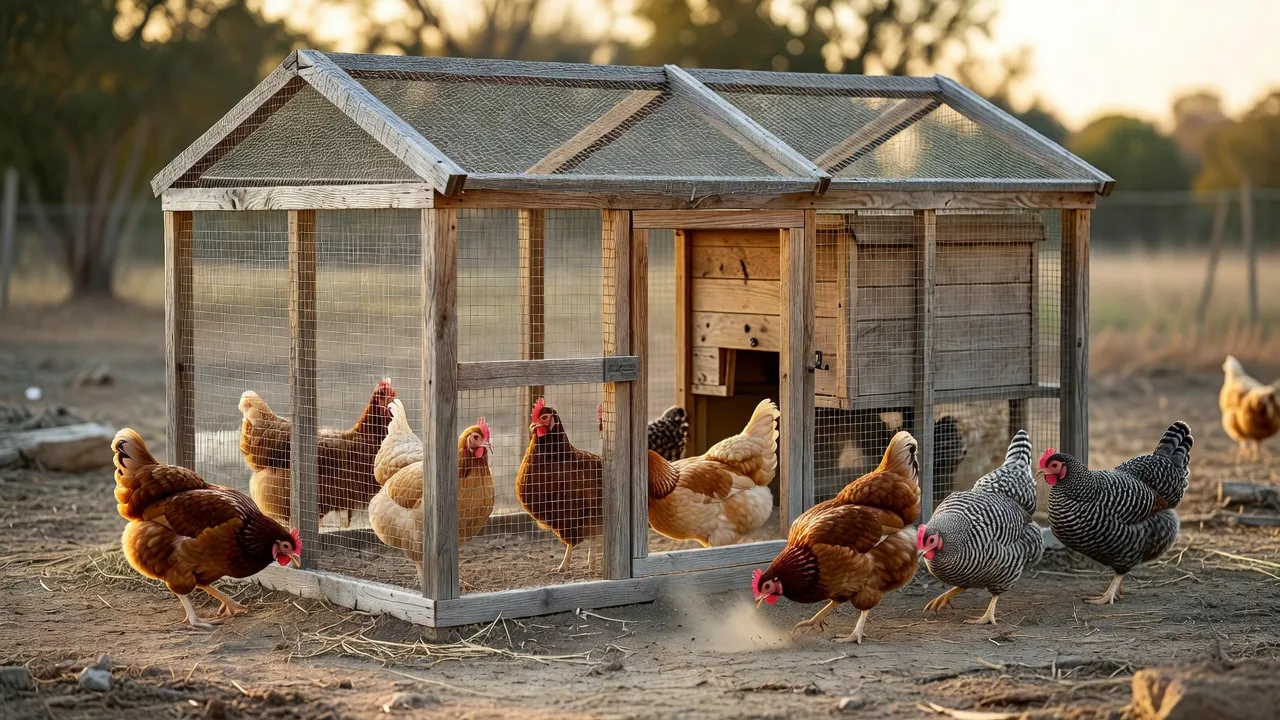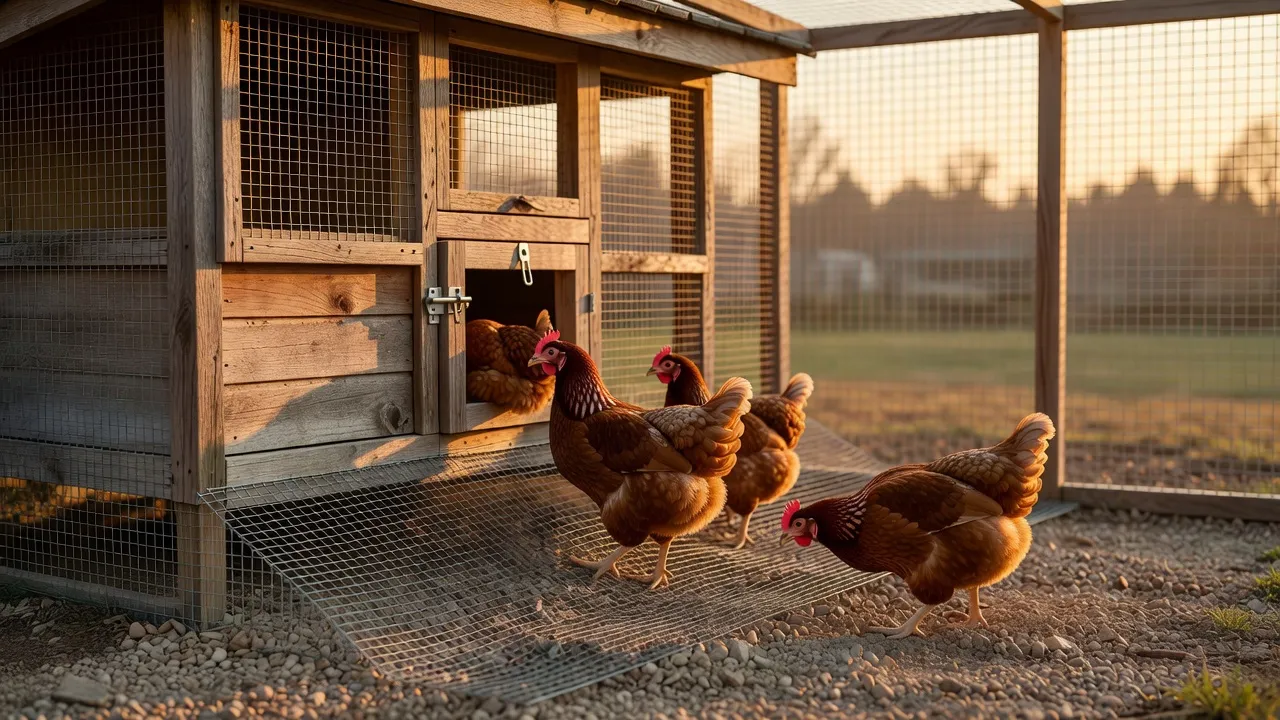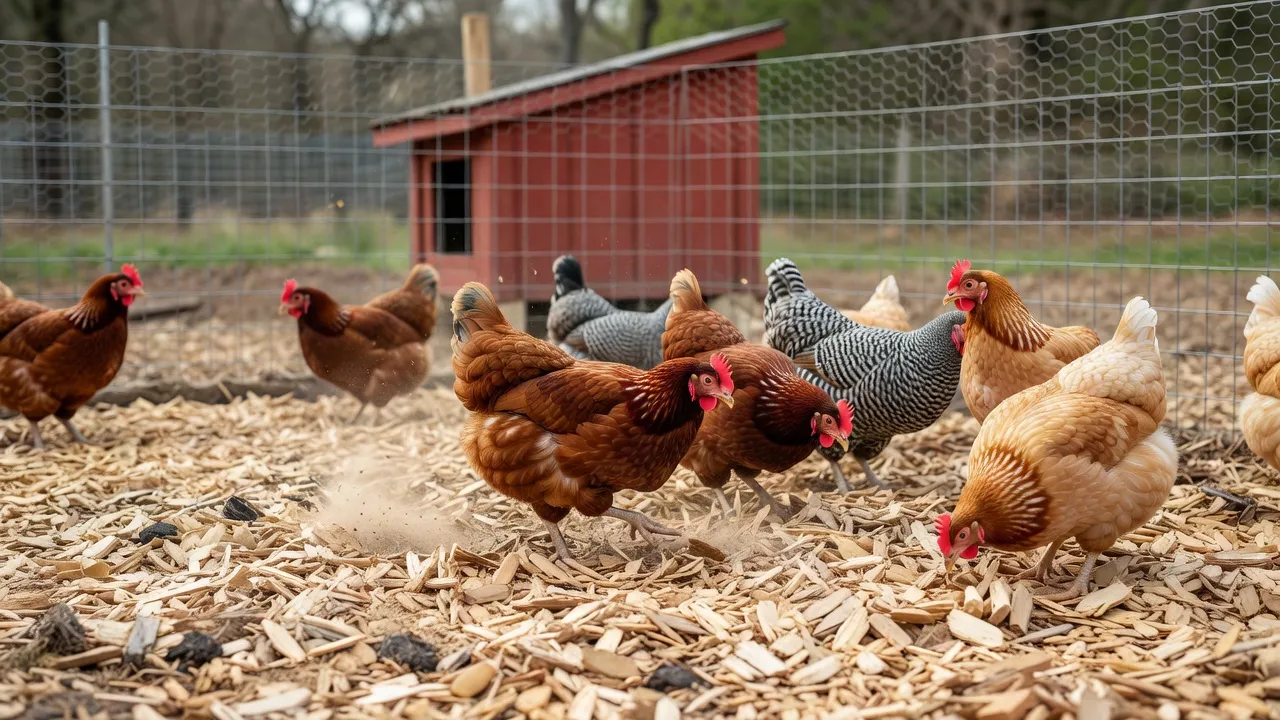
Woodchips for a chicken run are safe when they stay dry and clean, and risky when they sit wet and go moldy. Mold spores in damp bedding get into the air your hens breathe, and the Merck Veterinary Manual says moldy bedding should not be used for poultry. So the job is simple: pick clean chips, lay them over ground that drains, and replace them when they go damp. This page covers the mold risk, which chips to use, and depth, drainage and turnover. It is one part of Kyle’s chicken run guide.
Short answer
Yes, if dry and mold-freeKiln-dried pine is the safest pick
An Ask Extension reply says kiln-dried pine chips and shavings are best for poultry, and that other wood chips can carry fungus and molds. Put chips over ground that drains, and replace any that turn damp, matted or musty.
Mold risk explained
The risk is aspergillosis, a lung disease birds get by breathing in mold spores, and wet-then-dry bedding is what builds the spores up. The Merck Veterinary Manual says infection happens by inhaling spores, and that it does not pass from bird to bird. It also says healthy adult birds that inhale small numbers of spores usually do not get sick. Trouble starts when the numbers climb.
Here is how the numbers climb, according to Merck:
- Large numbers of spores form when bedding gets wet and then dries out.
- Stirring or disturbing that bedding puts the spores into the air.
- Letting contaminated bedding go wet and dry creates a major risk for both young and mature poultry.
- The fix for an outbreak is to move the birds out of the contaminated area and remove the contaminated material.
Merck’s prevention advice is one sentence long: do not use moldy bedding or ranges. A run that soaks in a storm and then bakes in the sun runs through that wet-then-dry cycle, so the ground cover that holds water is the problem, not the wood itself.
Not vet advice
I am not a vet, and I cannot diagnose a bird from a description. If a hen is struggling to breathe or declines fast, call a vet and move her away from the suspect bedding while you wait.
Keepers raise the alarm in threads such as PSA: Wood chips can kill your chickens on r/chickens. A forum post is not a diagnosis, so build on the vet source above and treat threads like that as a reason to check your own chips.
Which chips to use
Kiln-dried pine is the safest pick, and fresh-cut chips are the free option you have to inspect before you spread them. The Ask Extension reply, written by Darrin M. Karcher, PhD, says pine chips and shavings are best for poultry because they are kiln-dried. It adds that other wood chips can carry fungus and molds that hurt poultry and can give off harmful gases.
That reply does not rank hardwood against softwood. It separates dried wood from wood that has not been dried. So the useful question for any pile is how dry it is and whether it has sat wet.
| Option | What the sources say | Kyle’s call |
|---|---|---|
| Kiln-dried pine chips or shavings | Ask Extension rates them best for poultry because they are kiln-dried. | The easiest one to trust. |
| Fresh arborist or landscaper chips | Ask Extension says other wood chips can carry fungus and molds. | Free is tempting. Check every load for a musty smell or visible mold, and refuse a bad one. |
| Straw or cut grass | Ask Extension lists both as bedding that soaks up moisture and cuts mud. | Fine if you keep them dry. A damp pile has the same mold problem as damp chips. |
| Cedar or eucalyptus | No extension source clears them. Keepers in a Facebook poultry group call them toxic or problematic. | I’d skip them. No extension source clears them, and other options exist. |
| Cypress or hardwood chips | The same Facebook group answer recommends them. That is an owner report, not an extension finding. | Fine if they pass the dry-and-clean check. |
Depth, drainage and turnover
Drainage matters more than depth, because chips on ground that holds water will go bad however deep you lay them. Penn State Extension says to build the coop on high, well-drained ground, and to face the coop, windows and run south so the sun warms and dries the soil. An Ask Extension reply recommends a gravel base under the chips to cut the water that makes mud. Cornell Cooperative Extension calls dry sand an ideal ground cover for the outdoor area, so chips are not your only choice.
Chips, sand, gravel or straw?
Chips are one of four run floors with extension backing, and none of them works on soggy ground. Here is what the sources say about each:
| Run floor | What the sources say | Watch for |
|---|---|---|
| Wood chips | Kiln-dried pine is rated best for poultry. Other chips can carry fungus and molds (Ask Extension). | Wet-then-dry cycles. See the mold section above. |
| Dry sand | Cornell Cooperative Extension calls it an ideal ground cover for the outdoor area (Cornell). | Sand stays dry only if the ground under it drains. |
| Gravel base | Ask Extension recommends a gravel base to reduce the water that causes mud. | Gravel is a base layer, so pair it with a top layer. |
| Straw or cut grass | Ask Extension lists both as bedding that absorbs moisture and cuts mud. | Merck’s wet-then-dry warning applies to any organic cover. |
If your run floods, fix the water first. Chips laid over a puddle will not help, and the same checks apply to straw and grass.
How to lay a run floor
Lay the floor in this order so the water has somewhere to go:
- Pick the highest, best-drained spot you can for the run, and face it south if you can.
- Level the ground and add a gravel base if the soil holds water.
- Spread your chosen cover, then add more only where the ground still looks bare.
- Roof at least part of the run so rain does not soak the whole floor.
- Check the floor after every big rain. A wet bottom layer is your cue to act.
How deep should the chips be?
I could not find an extension number for run chip depth, so I will not invent one. The calculator below opens at 6 inches because it needs a starting point, and you can change it. For scale, a 10 by 20 foot run at 6 inches deep holds 100 cubic feet of chips. That is 3.7 cubic yards, or 50 two-cubic-foot bags, or 34 three-cubic-foot bags.

Wood chip calculator
Run size and depth in, cubic yards and bags out.
Wood chips needed
3.7 cubic yards
- Volume100 cu ft
- 2 cu ft bags50
- 3 cu ft bags34
Volume is length × width × depth. Bag counts round up to whole bags.
When to replace the chips
Replace chips by how they look and smell, not by the calendar. Merck’s warning about wet-then-dry bedding gives you the checks:
- Dig down a hand’s depth after a wet stretch. If the bottom layer is soaked or matted, it is the danger zone.
- Sniff the pile. A musty or sour smell means it is time.
- Look for visible mold. If you see it, remove those chips. Do not use them.
- Check high-traffic spots first, such as the gate, the pop door and around the waterer. Top up thin patches.
When you do pull bad chips, scoop them out with the hens shut away. Merck says spores become airborne when contaminated bedding gets stirred, so I would not rake a musty pile around with the flock in the run.
A roof helps more than any schedule. Rain that never reaches the chips cuts the wet-then-dry cycle at the source. The chicken run build guide covers roofing options.
Can the run double as compost?
Keepers discuss turning run bedding into compost in threads such as Composting Chicken Run “Soil” on r/BackYardChickens. Compost is damp by design, and damp bedding is the exact condition Merck warns about. Keep composting out of the run. Pull spent chips out and compost them somewhere the hens do not breathe them in.
Questions people ask
Are wood chips safe for chickens?
Yes, when the chips are clean, dry and free of mold. The Merck Veterinary Manual says moldy bedding should not be used and calls bedding that gets wet and then dries a major risk. An Ask Extension reply rates kiln-dried pine shavings best for poultry and warns that other wood chips can carry fungus and molds.
How often should I replace run wood chips?
No extension service gives a calendar, so replace by condition. Pull out chips that are wet at the bottom, matted, musty or showing mold, and top up thin spots. Merck says spores become airborne when contaminated bedding is stirred, so remove bad chips instead of raking them around.
What goes under wood chips for drainage?
A gravel base. An Ask Extension reply recommends one to cut the water that causes mud. Penn State Extension also says to build on high, well-drained ground.
Can I use free arborist chips in my chicken run?
You can, but inspect every load. Ask Extension warns that wood chips other than kiln-dried pine can carry fungus and molds. Skip any pile that smells musty or shows visible mold, because Merck says moldy bedding should not be used.
Sources

Written by Kyle
Kyle has kept backyard chickens on his own small farm for five years. He reads the extension research, the spec sheets and the owner complaints, then tells you what he would buy and what he would skip.