On this page
Bird flu reaches backyard chickens through wild birds, their droppings and anything that carries them in: boots, borrowed tools, feed and water. USDA APHIS says detections climb in fall and spring as wild birds migrate, so October is the month to tighten up. Keep wild birds off your feed and water, wear coop-only boots, keep visitors out, isolate new birds and report sudden deaths the same day.
Short answer
Wild birds out, coop boots on, call 1-866-536-7593USDA's toll-free line for sick or dying birds, per Defend the Flock
Most of the work is keeping wild-bird droppings out of the coop and run, and not carrying them in yourself. If birds start dying or stop eating, call your state veterinarian or USDA the same day.
This guide sits with the other coop gear guides because the fixes are mostly equipment and routine. It covers highly pathogenic avian influenza (HPAI), the H5N1 strain behind the current outbreaks.
Not vet advice
This page explains prevention and reporting. It cannot diagnose a sick bird. If birds die suddenly or show the signs below, call your state veterinarian or the USDA line at 1-866-536-7593 before you move, sell or bury any birds, and ask your own vet or extension office for help with the next steps.
What is happening this fall
Fall migration brings detections back to backyard flocks. Wisconsin’s DATCP detection table lists a 121-bird backyard flock in Racine County confirmed on 2026-10-03 and still under quarantine, three weeks after a commercial detection in Barron County. Check your own state agriculture department’s page for current local cases, and the APHIS confirmations page for the national list.
A case near you is not a reason to panic. It is a reason to run the routine below every day until spring migration ends.
How bird flu gets into a backyard flock
Defend the Flock lists the routes: contact with infected birds, and contaminated equipment, clothing, vehicles, feed or water. Wild birds can bring the virus in without looking sick. The CDC puts it plainly: backyard flocks can be exposed to wild birds that have bird flu.
That gives you three jobs. Keep wild birds and their droppings away from your chickens, their feed and their water. Stop the virus riding in on you, your visitors and your tools. Notice early when something is wrong.
Keep wild birds away from feed and water
An open feeder is a wild-bird feeder. Sparrows, starlings and pigeons that eat from it leave droppings in the run, and ducks and geese that land in a yard pond share water your hens may drink. APHIS’s biosecurity basics tells owners to keep birds protected against pests and wildlife, and Wisconsin’s DATCP asks owners to keep birds indoors when possible during outbreaks.
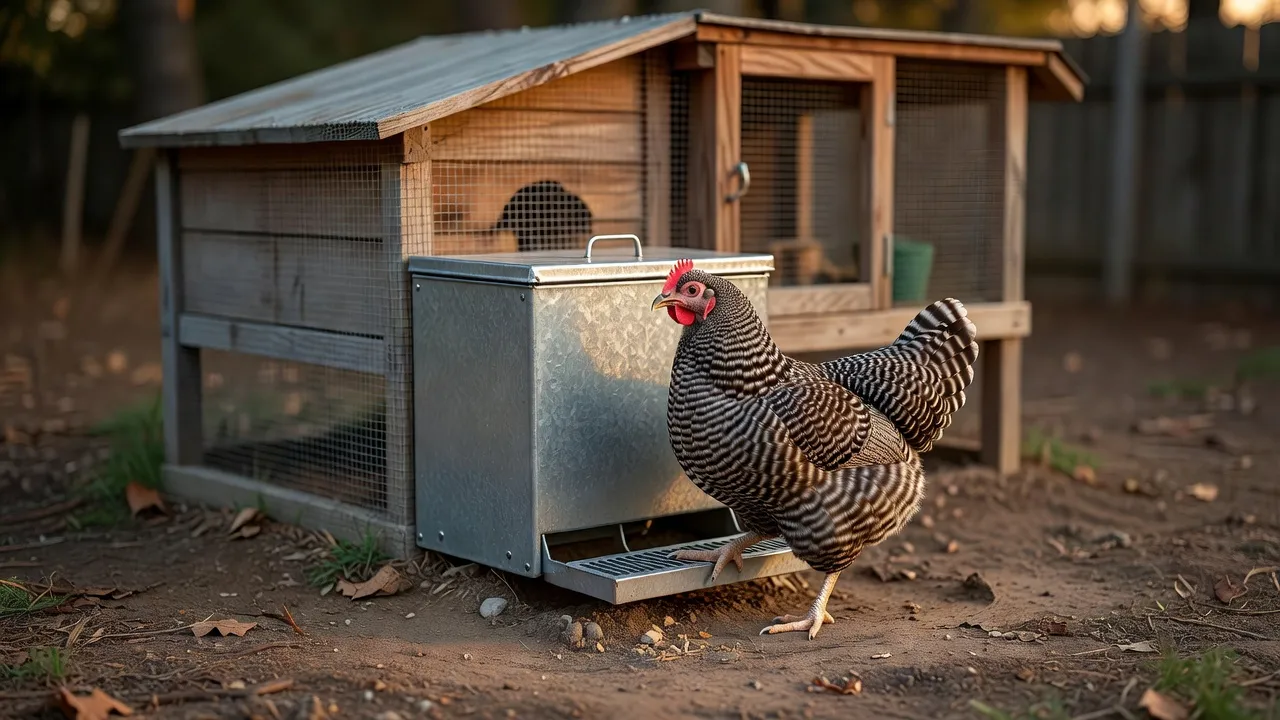
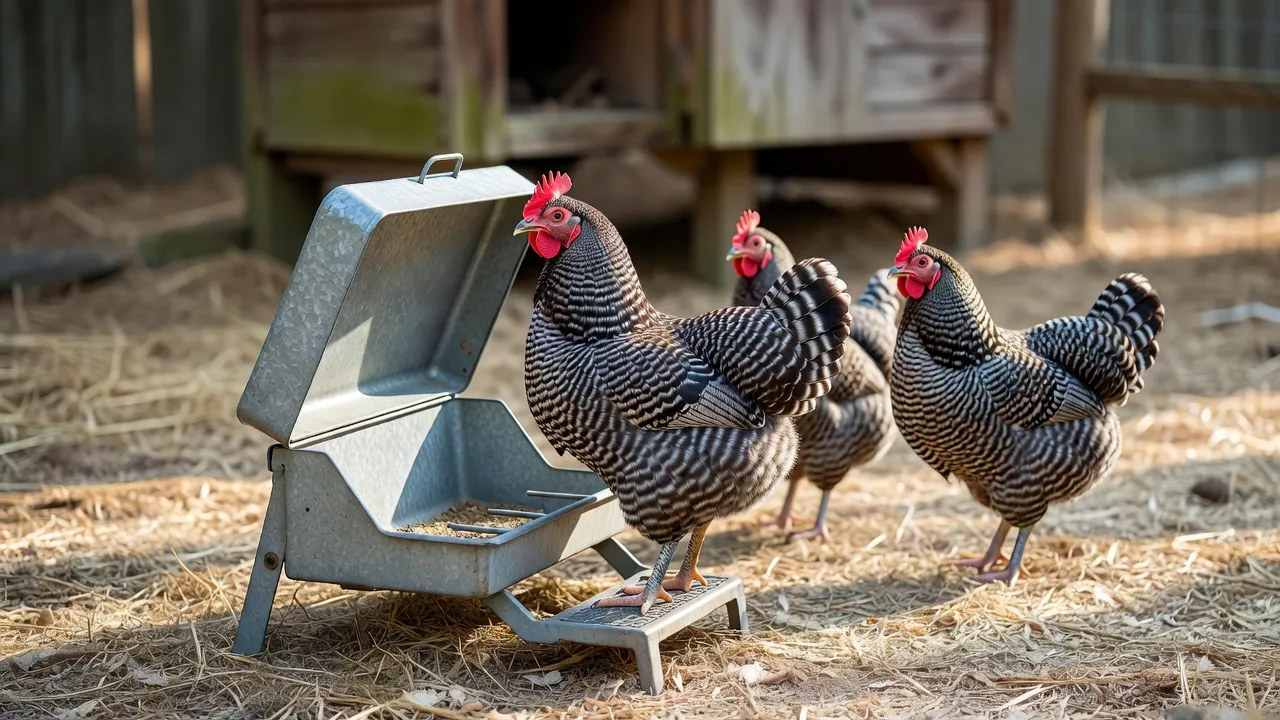
- Switch to a closed feeder that only opens for a chicken. A rat-proof chicken feeder or a treadle feeder keeps the lid shut against small wild birds and rodents.
- Feed and water inside the coop or under a solid roof, not in the open run where droppings fall.
- Clean up spilled feed right away. University of Kentucky extension notes that spilled feed draws rodents, and it draws wild birds too.
- Store feed in a closed bin, and keep it away from where wild birds roost.
- Take down wild bird feeders near the coop for the season. Kentucky extension calls a feeder for local wild birds “not a good idea” around a flock, per Poultry Extension.
- Fence chickens away from ponds, ditches and puddles that wild ducks and geese use.
A covered run is the next step. Solid roofing keeps droppings from overhead birds out; wire alone does not. Use the predator-proof coop guide when you plan the roof so it also stops hawks and raccoons.
Stop it riding in on you
You are the most frequent visitor your flock has. APHIS’s biosecurity basics asks you to check that clothes, shoes, tools and hands are clean before you enter the flock area, and to limit visitors to people who need to be there.
- Keep one pair of boots that never leaves the coop area. Kentucky extension advises clothes and boots that “never leave the clean areas” for whoever works with the flock, per Poultry Extension.
- Put a boot tray or boot brush at the gate, and use it every time.
- If you have been near other birds, at a farm store, a fair, a friend’s coop or a hunting spot, wash your shoes and clothes, hat included, before going near your flock, per Poultry Extension.
- Ask visitors who keep birds to stay out of the run, or give them clean boots or disposable booties.
- Do not borrow tools, carriers or feeders from other bird owners this season. If you must share, wash and disinfect them before they touch your flock.
- Wash your hands with soap and running water after every coop visit, per the CDC.
The scraper, brush and bucket you use for routine chores belong to the coop. The chicken coop cleaning supplies guide covers what to buy and the order for a full clean. For disinfecting during an outbreak, use a product whose label covers the job and follow its contact time.
Quarantine new and returning birds
New birds are a direct route in. Wisconsin’s DATCP asks owners to separate new additions for at least 30 days. University of Kentucky extension sets a two-week minimum for new birds and birds coming home from shows, per Poultry Extension. During fall migration I would use the 30-day figure.
Quarantine means a separate pen with its own feeder, waterer and boots, as far from the main flock as your yard allows. Do chores for the main flock first and the quarantine pen last, so you never carry anything from new birds to old ones. Better still, wait until spring to add birds at all.
Know the signs
APHIS lists these signs of sickness to report:
- Sudden death, or more birds dying than normal
- Lack of energy or appetite
- Fewer eggs, or soft-shelled and misshapen eggs
- Swelling of the head, neck, eyelids, comb, wattles or shanks
- Purple color on the wattles, comb or legs
- Gasping, nasal discharge or sneezing
- Stumbling, falling, or a twisted head and neck
- Greenish, watery diarrhea
The CDC’s list adds eating or drinking less and ruffled feathers. Plenty of everyday problems cause one of these signs. Several birds dying fast is the pattern to act on right away.
Count your birds every evening at lockup. A daily headcount is the cheapest early warning you have.
If you think your flock has bird flu
Do not handle sick or dead birds bare-handed
The CDC says to avoid touching sick or dead birds, their droppings or litter, or contaminated surfaces without protective equipment. Do not move birds off your property while you wait for advice.
- Call your state veterinarian or the USDA toll-free line at 1-866-536-7593, per Defend the Flock. Report sick or dying birds, not just confirmed cases.
- Keep everyone else out of the coop area, and stop sharing eggs, birds and equipment.
- If you must go in, wear protective equipment. The CDC’s list for flock owners is snug safety goggles, disposable gloves, rubber boots or boot covers, an N95 respirator, disposable fluid-resistant coveralls and a head cover.
- Leave used protective gear outside, never in your home, and shower after removing it.
- Watch yourself for symptoms for 10 days after your last exposure, per the CDC, and tell your doctor about the bird contact if you feel ill.
Wild birds count too. In Wisconsin, DATCP routes sick or dead wild birds to the DNR at (608) 267-0866. Other states have their own wildlife lines; your extension office can tell you which to call.
Protect your household
Keep chickens out of the house, especially where food and drinks are prepared or stored, per the CDC. Adults should supervise young children’s handwashing after they help with chores. Clean feeders, waterers and buckets outdoors, not in the kitchen sink.
The short version
- Detections rise in fall and spring with wild bird migration, per USDA APHIS.
- Close the feeder, cover feed and water, and keep chickens away from ponds.
- Wear coop-only boots, keep visitors out and stop borrowing equipment.
- Separate new birds for at least 30 days.
- Count birds every evening, and call 1-866-536-7593 or your state veterinarian when birds die suddenly.
Questions people ask
Can backyard chickens get bird flu?
Yes. Highly pathogenic avian influenza (HPAI) has been confirmed in backyard flocks as well as commercial farms, and USDA APHIS says detections rise in fall and spring as wild birds migrate. Wisconsin confirmed a 121-bird backyard flock in Racine County on 2026-10-03, per DATCP.
What are the signs of bird flu in chickens?
Sudden death, more deaths than normal, low energy, poor appetite, fewer or misshapen eggs, swelling or purple color on the head, comb, wattles or legs, gasping, nasal discharge, stumbling, twisted necks and greenish watery diarrhea, per USDA APHIS.
Who do I call if my chickens might have bird flu?
Call your state veterinarian or the USDA toll-free line at 1-866-536-7593, per Defend the Flock. Your own vet or county extension office can help you make that call.
Can I catch bird flu from my chickens?
Owners exposed to an infected flock are at higher risk, per the CDC. Avoid touching sick or dead birds, droppings or litter without protective equipment, and wash your hands with soap and running water after every coop visit.
How long should I quarantine new chickens?
Wisconsin's agriculture department advises separating new additions for at least 30 days. University of Kentucky extension sets two weeks as the minimum. I would use the longer figure during fall migration.
Sources
- USDA APHIS: Defend the Flock
- USDA APHIS: Biosecurity basics
- USDA APHIS: How to spot sickness
- USDA APHIS: Confirmations of HPAI in commercial and backyard flocks
- CDC: Backyard flock owners and bird flu
- CDC: Backyard flock owners, protect yourself from bird flu
- Wisconsin DATCP: Highly pathogenic avian influenza in poultry
- Wisconsin DATCP: HPAI confirmed in Racine County (biosecurity and 30-day separation advice)
- Poultry Extension (University of Kentucky): How can you keep your flock from getting the flu?
- Poultry Extension (University of Kentucky): Biosecurity for small poultry flocks

Written by Kyle
Kyle has kept backyard chickens on his own small farm for five years. He reads the extension research, the spec sheets and the owner complaints, then tells you what he would buy and what he would skip.